Safe Strength Training During Pregnancy: What You Need to Know
⚕️ Heather is an ISSA Certified Personal Trainer, not a physician or medical professional. This content is for educational purposes only and is not intended to diagnose, treat, or replace medical advice. Please consult your doctor before making changes to your exercise or health routine — especially if you have an existing health condition.
Safe strength training during pregnancy can help many women stay active, maintain strength, and support their changing bodies throughout pregnancy.
Pregnancy changes your body in ways that are hard to fully explain until you experience it yourself. Your energy changes. Your balance changes. Your breathing changes. And sometimes movements that once felt easy suddenly feel very different.
Still, many women can safely continue exercising during pregnancy with appropriate modifications and guidance from their healthcare provider.
That does NOT mean pregnancy workouts need to be extreme. In fact, for many women, pregnancy fitness becomes less about pushing harder and more about supporting the body through one of the biggest physical changes possible. And honestly, that matters too.
A quick but important note: I am a certified personal trainer, not a doctor. Everything in this article is general coaching guidance, not medical advice. Your OB-GYN or midwife knows your specific pregnancy and should always be your first source of approval before starting or continuing any exercise program.

Can You Strength Train During Pregnancy?
In many cases, yes. Many women can safely continue strength training during pregnancy with modifications and approval from their doctor or qualified healthcare provider.
According to the American College of Obstetricians and Gynecologists (ACOG), physical activity during pregnancy can provide important health benefits for many women.
Read ACOG’s pregnancy exercise guidance here.
Every pregnancy is different. What works safely for one woman may not be appropriate for another.
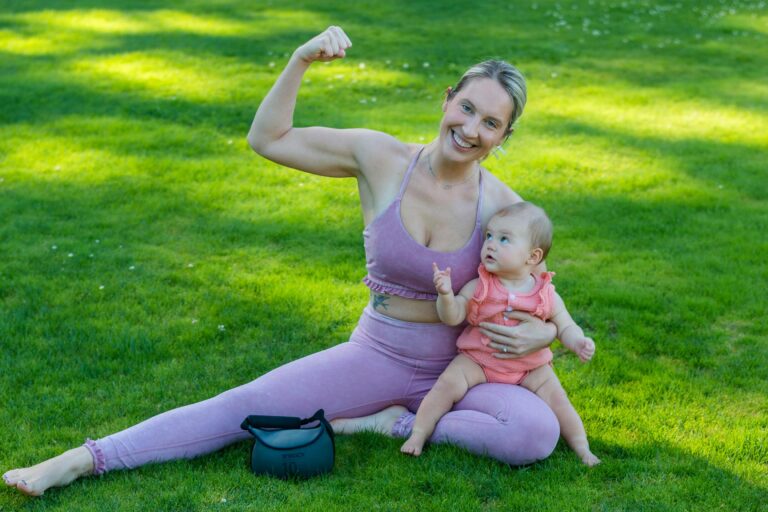
I stayed active throughout my pregnancies as well. If you visit my Meet Heather page, you can even see a video of me finishing a treadmill run at 40 weeks pregnant.
That does NOT mean every woman should try to do that. It simply shows that movement during pregnancy can still be possible with proper medical guidance and by listening carefully to your body. My job as your coach is to help you move well within whatever guidelines your doctor sets — not to push you past them.
Benefits of Safe Strength Training During Pregnancy
Safe strength training during pregnancy may help support:
- posture
- core stability
- glute and hip strength
- mobility
- back support
- overall energy
- mental well-being
Pregnancy places additional stress on the lower back, hips, pelvis, and core. Building supportive strength can sometimes help women feel more stable and capable throughout pregnancy.
Safe movement can also help many women feel more connected to their bodies during pregnancy instead of feeling afraid to move at all.
What a Modified Strength Routine Can Look Like
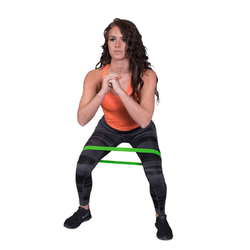
Once your healthcare provider has given you the okay to continue exercising, a typical pregnancy-friendly strength session might include exercises like these. Remember: these are general examples of movements many women use — not a prescription. Modify based on how you feel and what your provider has approved for your stage of pregnancy.
- Bodyweight or chair squats — supports legs and hips without straining the core
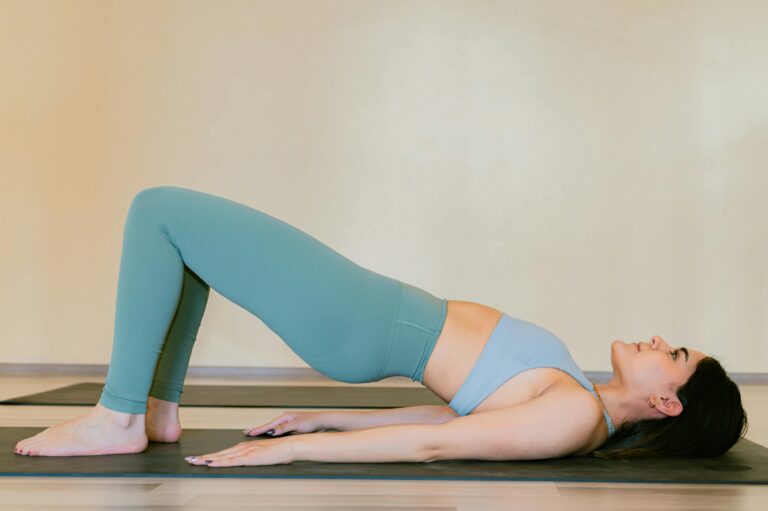
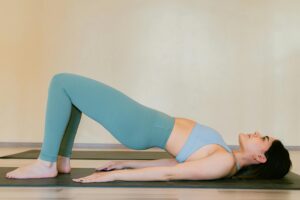
- Glute bridges — strengthens the glutes and lower back support, generally well-tolerated in early and mid-pregnancy
- Seated or standing rows with a light band — supports posture as your center of gravity shifts
- Wall push-ups — gentle upper body work without lying flat on your back
- Side-lying leg lifts — hip strength that works well in later trimesters when lying on your back is no longer comfortable
A common approach for many women: 2 sets of 8-12 reps per exercise, moving slowly and stopping well before fatigue or strain. Rest as much as needed between exercises — there is no rush.
If you are unsure where to begin once you have medical clearance, my How to Start Strength Training at Home article walks through the same beginner movements with full instructions — just remember to scale intensity down and check each exercise against your provider’s guidance.
Exercises May Need to Change as Pregnancy Progresses
One of the most important things to understand about safe strength training during pregnancy is this: your workouts may need to evolve as your pregnancy progresses. That is completely normal.
- Balance changes.
- Joint stability changes — a hormone called relaxin loosens ligaments throughout pregnancy.
- Core pressure changes.
- Energy levels change.
- Mobility changes.
Some women continue many exercises well into pregnancy, while others need modifications earlier. Listen to your body and follow medical guidance.
You may eventually need to modify:
- certain core exercises, especially lying flat on your back after the first trimester
- high-impact movements like jumping
- heavy overhead exercises
- certain balance exercises as your center of gravity shifts
- movements that create discomfort, pressure, or coning in the abdomen
Walking and Simple Movement Still Matter
Not every pregnancy workout needs to be intense. Walking, mobility work, stretching, and light strength exercises can all be valuable during pregnancy. In fact, consistency usually matters more than intensity.
- Short walks count.
- Modified workouts count.
- Gentle movement counts.
- Listening to your body counts.
If a workout leaves you feeling worse instead of better, that is information worth paying attention to.
Signs You Should Stop Exercising and Contact Your Doctor
Exercise during pregnancy should never involve ignoring warning signs. Stop exercising and contact your healthcare provider right away if you experience symptoms like:
- dizziness
- chest pain
- vaginal bleeding
- fluid leakage
- painful contractions
- shortness of breath before exercise
- significant swelling
- severe pain
Again, every pregnancy is different, which is why individualized medical guidance matters so much. This list is general awareness, not a complete medical checklist — your provider may give you additional guidance specific to your situation.
Strength Training During Pregnancy Does Not Need to Be Extreme
Social media sometimes makes pregnancy fitness look dramatic and unrealistic. But safe strength training during pregnancy does not need to look extreme to be effective.
For many women, pregnancy workouts may simply include:
- bodyweight squats
- glute bridges
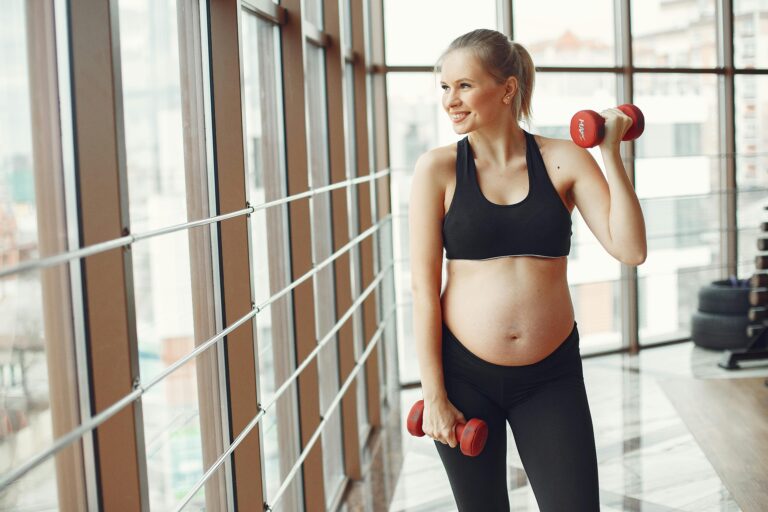
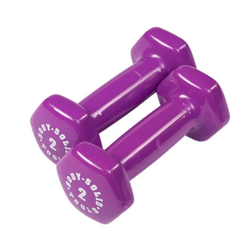
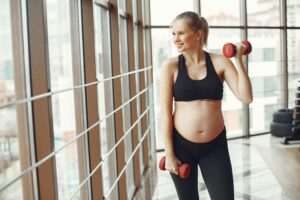
- light dumbbell work
- walking
- band exercises
- mobility work
- controlled core stability work
And honestly, there are seasons where maintaining movement matters more than “getting in shape.” Pregnancy can absolutely be one of those seasons.
What About Core Work During Pregnancy?
Core training during pregnancy can become more nuanced as pregnancy progresses. Certain exercises may need to be modified depending on pressure, comfort, and individual circumstances.
Many women focus more on:
- breathing
- deep core stability
- controlled movement
- pelvic floor awareness
That is one reason it can be helpful to work with a qualified professional who understands prenatal fitness — and why I am always honest about referring clients to a pelvic floor specialist when something falls outside my scope as a trainer.
The Bottom Line
You do not necessarily need to stop moving completely during pregnancy unless your doctor advises otherwise.
Safe strength training during pregnancy can help many women stay active, maintain strength, and support their changing bodies when approached carefully and responsibly.
Always prioritize safety, modifications, hydration, recovery, and communication with your healthcare provider.
Looking for Realistic Home Workouts?
Inside Strength for Life, I focus on realistic fitness for real women — including modified movement options for different stages of life.
- Simple home workouts
- Strength-focused training
- Beginner-friendly guidance
- Real-life flexibility
Frequently Asked Questions About Safe Strength Training During Pregnancy
Many women can safely continue strength training during pregnancy with proper modifications and approval from their healthcare provider. It is always a decision to make with your doctor or midwife, not a one-size-fits-all answer.
Many pregnant women can continue lifting weights safely, although exercise selection, weight, and intensity may need to change as pregnancy progresses. Light to moderate weights with good form are generally favored over heavy lifting.
Not necessarily. Many women benefit from staying active during pregnancy, but always follow your doctor’s guidance and stop immediately if any concerning symptoms appear.
Exercise restrictions vary depending on the pregnancy and trimester. Many providers advise avoiding lying flat on the back after the first trimester, high-impact jumping, contact sports, and exercises that cause pain or pressure. Talk with your healthcare provider about what applies specifically to you.
A certified trainer can offer general coaching support and exercise modifications once your doctor has cleared you for activity, but a trainer is not a substitute for medical clearance or guidance specific to your pregnancy. The best approach is medical clearance first, then coaching support for the how-to and form side of things.
Pregnancy Fitness Resources


Continue Your Pregnancy Fitness Journey
 Step 1
 Step 2
 Step 3
 Step 4
Ready to put this into action?
💪 Start Your Free 7-Day Trial
Free Home Workout Starter Guide
Download your free PDF and start building strength today.
- 3 beginner-friendly routines
- No equipment needed
- Just 20 minutes a day
Enter your email to download