How to Build Muscle After 50
📋 Heather is an ISSA Certified Personal Trainer, not a doctor or medical professional. This article is for educational and motivational purposes only. Always check with your healthcare provider before starting a new fitness program.
Let me say something directly: building muscle after 50 is not only possible — it may be one of the most important things you can do for your long-term health, independence, and quality of life.
I know because I’ve lived it.
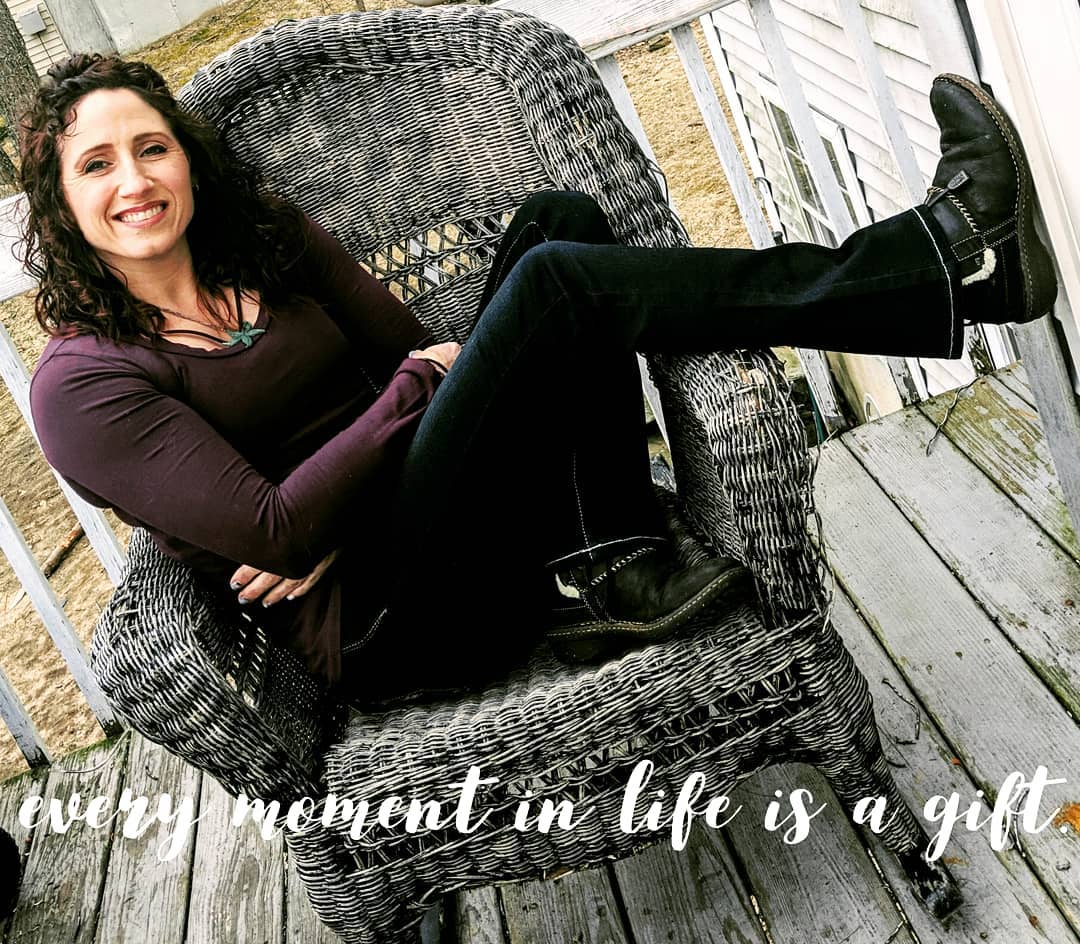
I’ve been health-conscious my whole adult life — walking, exercise videos, staying active in whatever way felt manageable at the time. But it wasn’t until I moved into my 40s that I really started to understand what strength training could do, specifically for a body that was changing in ways I hadn’t expected. Bone density. Recovery. Posture. Energy. The way everyday tasks felt. Strength training changed all of it in ways that cardio alone never had.
- Yes, women can absolutely build real muscle after 50
- The process requires some adjustments from what worked in your 40s
- Recovery, protein, and progressive consistency matter more than ever
- You do not need a gym, heavy weights, or punishing workouts to see results
By the time I hit my 50s, I had years of consistent training behind me — and I can tell you firsthand, my body does not respond exactly the same way it did at 42. Recovery takes longer. Certain movements require more warm-up than they used to. But the women who keep showing up consistently in their 50s, who train intelligently and give their bodies what they actually need, build a kind of strength that compounds over time.

What’s Actually Happening in Your Body After 50
To train well in your 50s, it helps to understand what’s actually going on physiologically — not to feel discouraged by it, but to work with it rather than against it.
- Muscle protein synthesis slows somewhat. Your body’s ability to build muscle remains fully intact, but the process responds a bit more slowly to the same stimulus than it did at 35 or even 45. This means the inputs — training, protein, recovery — need to be applied more consistently.
- Recovery takes longer. The soreness lingers a bit more and the body needs more time between sessions to fully rebuild. This is not a sign something is wrong — it’s a sign your body needs what recovery provides.
- Hormonal changes affect muscle maintenance. The hormonal shifts many women experience in their 50s can influence how the body holds and builds muscle. These changes don’t prevent muscle building — they reinforce why consistent strength training becomes non-negotiable.
- Bone density responds to load-bearing exercise. This was one of the things that originally drew me more seriously toward strength training — the research showing that resistance training is one of the most effective ways to support bone density as women age.
For more on why this stage of life matters so much, read Why Strength Training Gets More Important After 40.
The Good News: Your Body Still Responds
Here is the part that matters most: none of what happens after 50 prevents muscle building. Your body remains fully capable of gaining strength, building lean muscle, improving posture, and functioning better — at any age, with consistent effort.
Research consistently shows that women in their 50s, 60s, and even 70s build meaningful strength and muscle through progressive resistance training. A meta-analysis published in Aging Clinical and Experimental Research reviewed 26 studies of women aged 50–80 and found that resistance training programs consistently produced real gains in lean muscle mass and strength — regardless of age within that range.
- The timeline may be a bit longer than in your 30s — the results are just as real.
- Women in their 50s often bring better consistency and body awareness than younger trainees.
- Many women see meaningful changes within 6–10 weeks of consistent training.
How Building Muscle After 50 Is Different From Your 40s
If you trained seriously in your 40s, you may notice some real shifts once you hit 50. These are worth naming directly so they don’t catch you off guard.
1. Recovery Is the New Training Variable
The quality of sleep, nutrition between sessions, and genuine rest days matters more than ever. Skimping on recovery doesn’t just slow progress — it actively works against it.
2. Warm-Up Is No Longer Optional
Joints and connective tissue need more time to prepare for loaded movement than they did a decade ago. A five-minute warm-up that felt adequate at 42 may need to become ten to fifteen minutes at 52. This isn’t wasted time — it’s what keeps you training consistently without interruption.
3. Consistent Challenge Beats Maximum Load
You don’t need to lift the heaviest weights possible to build muscle after 50. You need progressive, consistent challenge — gradually increasing reps, sets, or weight at a pace your body can absorb and recover from.
4. Protein Needs Increase, Not Decrease
Research consistently shows that older adults need more protein per pound of body weight to achieve the same muscle-building response as younger adults. Getting adequate protein at every meal becomes one of the most important things you can do.
What to Expect and When
Realistic expectations matter — especially in your 50s, when quick-fix culture can make genuine, meaningful progress feel invisible by comparison.
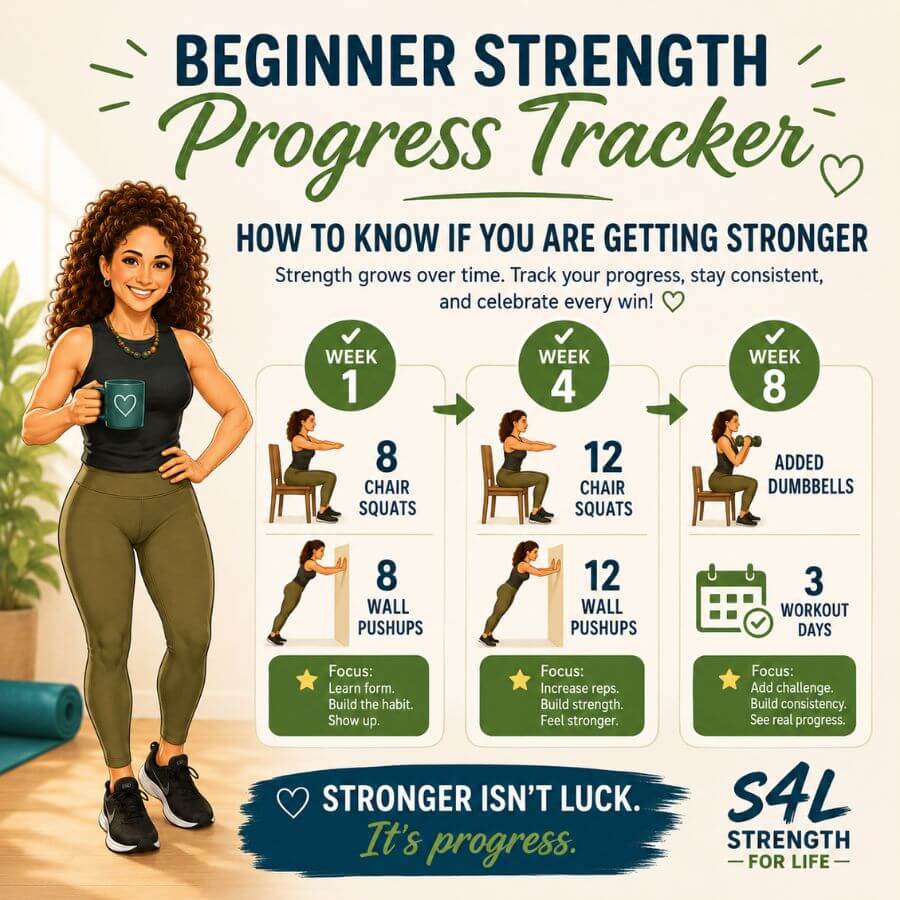
- Weeks 1–3: Improved energy, better sleep, exercises start to feel more manageable.
- Weeks 4–8: Noticeably more strength — weights that felt heavy feel lighter. Daily tasks start to feel easier.
- Weeks 8–16: Visible changes in muscle tone and definition begin to show. Posture improves.
- Months 4–6+: Compounding strength gains that don’t plateau the way quick-fix programs do.
The timeline is a little longer in your 50s than it was in your 30s. The results are just as real.
A Note From a Coach Who’s Living It
I want to be honest with you: training in my 50s looks different than it did in my early 40s, and I’ve had to make real adjustments along the way. More warm-up. More attention to recovery. More patience with the process.
But I’ve also never felt stronger in my daily life than I do now. The strength I’ve built through consistent, intelligent training in my 40s and into my 50s has made everything from carrying groceries to keeping up with a busy life feel more manageable — not less. That’s what this is really about. Not a number on a scale or a comparison to someone younger. A body that works for the life you’re actually living.
- That’s what’s available to you in your 50s.
- And it’s worth every session it takes to build it.
Read: Best Beginner Strength Exercises for Women Over 40
A Simple Starter Workout for Women Over 50
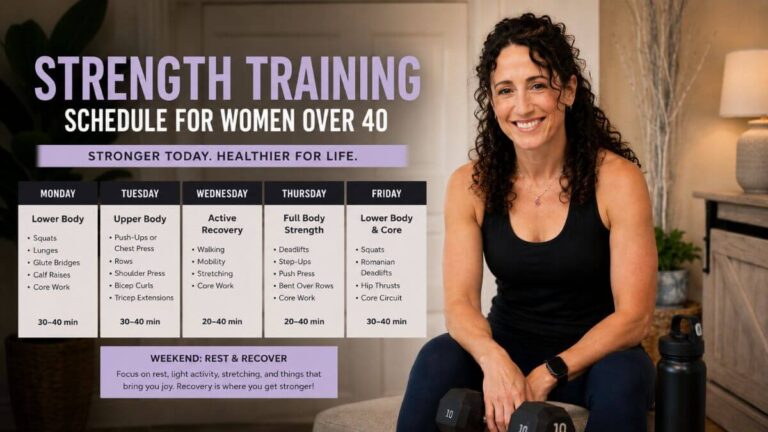
If you’re new to strength training or returning after time away, start here. Two rounds to begin. Build toward three as strength and recovery allow. Rest 60–90 seconds between sets.
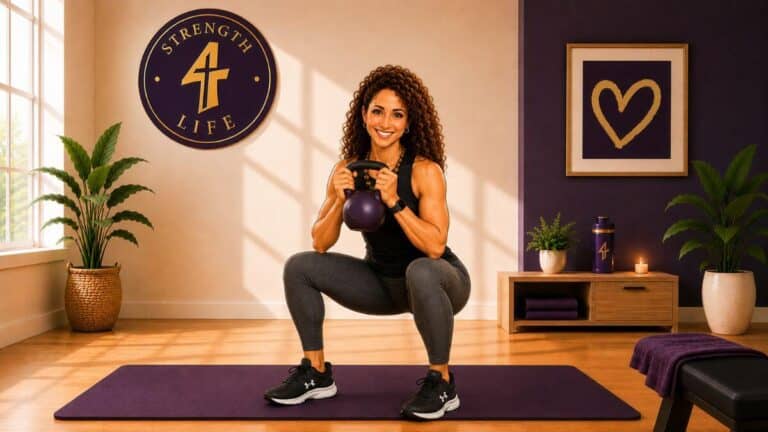
| Exercise Chair Squats | Sets × Reps 2–3 × 10–12 | Tip Lower slowly, press through heels |
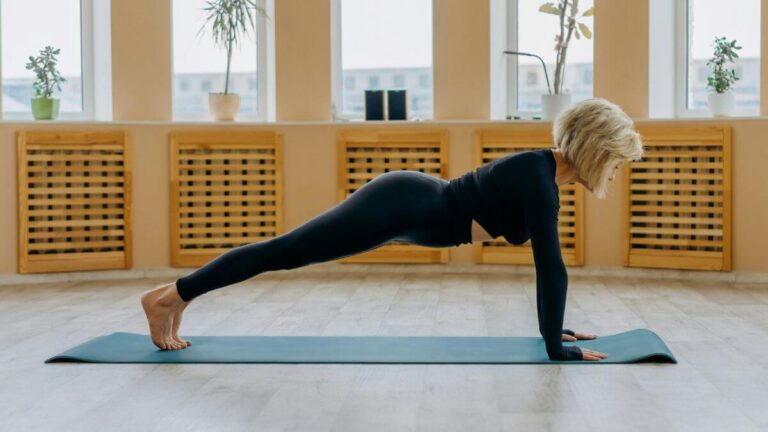
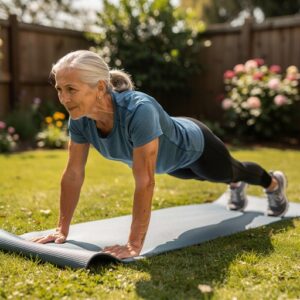
| Exercise Wall or Incline Push-Ups | Sets × Reps 2–3 × 8–12 | Tip Keep body in a straight line |
| Exercise Dumbbell Rows | Sets × Reps 2–3 × 10 per arm | Tip Lead with elbow, not hand |
| Exercise Glute Bridges | Sets × Reps 2–3 × 12–15 | Tip Squeeze at the top, lower slowly |
| Exercise Dead Bug | Sets × Reps 2 × 8 per side | Tip Lower back stays pressed to floor |
A Note on Health and Individual Differences
Everyone’s body responds differently to strength training, and factors like existing health conditions, hormonal changes, joint issues, or a long gap since your last structured exercise can all affect where to start and how to progress. Before beginning a new strength training program, especially if you have any health concerns or are managing a medical condition, check in with your healthcare provider. This article offers general coaching guidance — your doctor can help you understand what’s appropriate for your specific situation.
The Bottom Line
Building muscle after 50 requires consistency, patience, adequate protein, and genuine respect for recovery. It does not require extreme workouts, heavy gym equipment, or a perfect schedule.
Start where you are. Train consistently. Give your body what it needs to recover. The strength available to you in your 50s is real — and it’s worth building.
Ready to Start Building Strength?
Inside Strength for Life, I help women build real strength at home with realistic workouts designed for women over 40 and 50 — no gym, no extreme programming, no guesswork.
- Beginner-friendly strength training designed for this stage of life
- Progressive programming that builds real muscle over time
- Home-friendly workouts under 40 minutes
- Supportive coaching from a certified trainer who’s living it too
Frequently Asked Questions About Building Muscle After 50
Yes. Muscle protein synthesis remains fully active in your 50s and responds to consistent resistance training at any age. Research reviews of women aged 50–80 consistently show meaningful gains in lean muscle and strength through regular training.
Recovery takes longer, warm-up becomes more important, and protein needs actually increase. The core principles are the same — consistent progressive training, adequate protein, real recovery — but each of those inputs needs to be applied more deliberately than it did a decade ago.
Two to three times per week, with genuine recovery days between sessions, is ideal for most women over 50. That frequency provides enough training stimulus to build strength while respecting the body’s increased recovery needs.
No. Consistent, progressive challenge matters far more than maximum load. Light to moderate weights used with good form and steady progression produce real, lasting results — and are far safer for joints and connective tissue in your 50s than chasing heavy loads.
Most women notice improved energy and strength within two to three weeks. Visible changes in muscle tone and posture typically begin around the six to ten week mark. More significant changes continue building over months of consistent training.
Hormonal changes during and after menopause can influence recovery and how the body holds muscle, but they don’t prevent muscle building. Consistent strength training and adequate protein intake remain effective tools through this transition — and become more important, not less.
Explore More Fitness Over 40 Resources
 Step 1
 Step 2
 Step 3
 Step 4
 Step 5
Ready to put this into action?
💪 Start Your Free 7-Day Trial
Free Home Workout Starter Guide
Download your free PDF and start building strength today.
- 3 beginner-friendly routines
- No equipment needed
- Just 20 minutes a day
Enter your email to download