The Best Strength Training Plan for Women Over 40
If you are looking for a strength training plan for women over 40, you probably want something that feels clear, realistic, and doable. Not a workout plan made for a twenty-year-old athlete. Not a routine that expects you to live in the gym. And definitely not something so complicated that you quit before the second week.
Strength training after 40 should help you feel stronger in your everyday life. It should support your muscles, bones, joints, posture, energy, and confidence — and it should fit into a real schedule filled with work, family, errands, and everything else life throws at you.
The good news: you do not need six workouts a week to get stronger. You do not need fancy equipment. You do not need to start with heavy weights.
- You can build strength at home.
- You can start with beginner-friendly exercises.
- You can train two to three days per week.
- You can improve without crushing your body.
If you want a shorter starting point first, read the Simple Strength Plan for Women Over 40. This article goes deeper — building out a full three-workout plan with sets, reps, and a complete weekly schedule.
The CDC recommends adults do muscle-strengthening activities at least two days per week, working all major muscle groups — legs, hips, back, core, chest, shoulders, and arms.

Why Women Over 40 Need a Strength Training Plan
After 40, many women notice changes that feel frustrating — energy shifts, muscle tone changes, slower recovery, weight that feels harder to manage. That does not mean something is wrong. It means your body needs a different kind of support.
Strength training provides that support. It helps build and maintain muscle, which matters more as you age. Muscle is not just about appearance — it helps you move, lift, carry, climb, reach, and stay steady.
- Strong legs help with stairs, chairs, and balance.
- A strong back supports posture and daily lifting.
- Strong shoulders and arms help with carrying and reaching.
- A stronger core supports your lower back and everyday movement.
For more on why this matters, read Why Strength Training Gets More Important After 40.
How Many Days Per Week Should Women Strength Train?
For most women over 40, two to three strength workouts per week is a great starting point. That gives your muscles enough work to improve while still allowing time to recover.
- Beginner: 2 strength days per week
- Building consistency: 2–3 strength days per week
- More experienced: 3–4 strength days per week
More is not always better. If you are new, coming back after a long break, or dealing with a packed schedule, two workouts per week is a perfectly smart place to start. A plan you can follow for months beats an ambitious plan you abandon after two weeks.
For a detailed look at scheduling options, read A Realistic Strength Training Schedule for Women Over 40.
The Full Strength Training Plan
This plan uses three full-body workouts per week. Full-body sessions are ideal because they train multiple muscle groups each session — meaning you do not need to exercise every day to see real progress.
Your weekly rhythm:
| Monday Workout A — Full Body | Tuesday Walk, mobility, or rest | Wednesday Workout B — Upper Body, Core, Legs |
| Thursday Walk, mobility, or rest | Friday Workout C — Strength and Stability | Weekend Recovery, stretching, or optional walk |
If three workouts feel like too much right now, start with Workout A and Workout B only. Add the third when your body feels ready.
For a broader approach to balancing your week, read Balanced Weekly Workout Plan for Women Over 40.
Workout A: Beginner Full-Body Strength
This first workout covers the foundational movements — legs, glutes, chest, back, arms, and core. If you are completely new, start with one round and build from there.
| Exercise Chair Squats | Sets × Reps 3 × 8–12 | Tip Lower until you touch the chair |
| Exercise Wall Push-Ups | Sets × Reps 3 × 8–12 | Tip Body in a straight line |
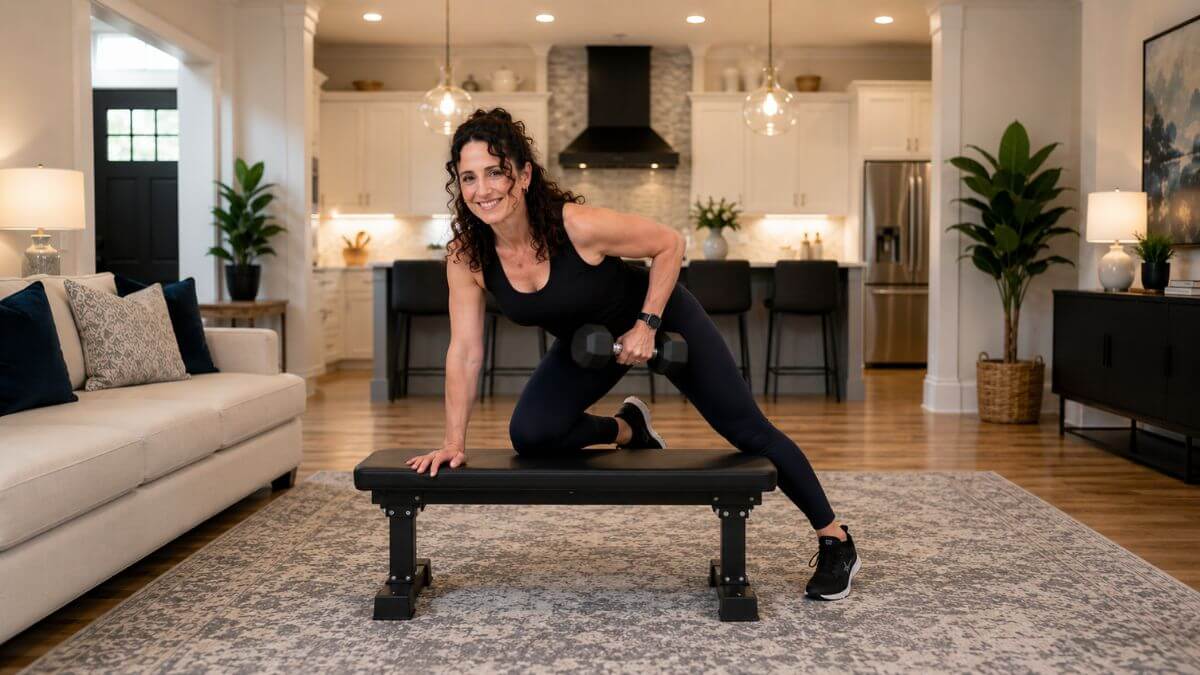
| Exercise Dumbbell Rows | Sets × Reps 3 × 8–12 per side | Tip Lead with elbow, not hand |
| Exercise Glute Bridges | Sets × Reps 3 × 10–15 | Tip Squeeze glutes at the top |
| Exercise Standing Marches | Sets × Reps 2 × 30–45 sec | Tip Hold counter for balance if needed |

Rest 45–60 seconds between sets. Move slowly and with control. Stop before your form falls apart.
If you are restarting after time away, read How to Start Working Out Again After a Long Break.
Workout B: Upper Body, Core, and Legs
The second workout builds balance across the whole body — upper body, lower body, and core — without needing complicated equipment.
| Exercise Reverse Lunges | Sets × Reps 3 × 6–10 per leg | Tip Hold wall for balance; use chair squats if needed |
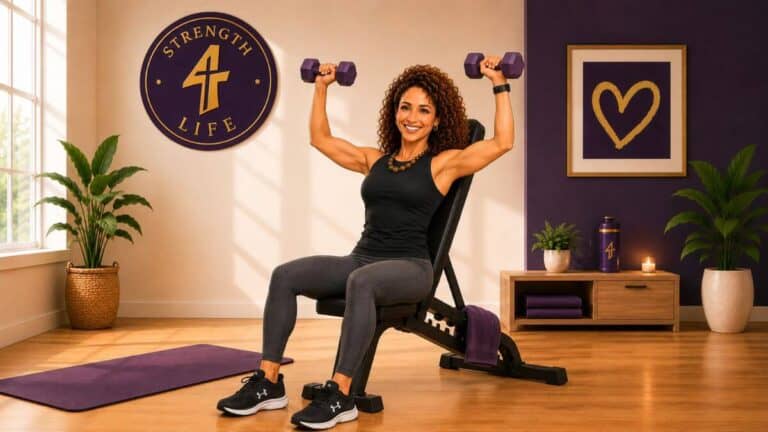
| Exercise Dumbbell Shoulder Press | Sets × Reps 3 × 8–12 | Tip Start lighter than you think |
| Exercise Dead Bug | Sets × Reps 3 × 6–10 per side | Tip Keep lower back pressed to floor |
| Exercise Bicep Curls | Sets × Reps 3 × 8–12 | Tip Keep elbows pinned to sides |
| Exercise Side Steps with Band | Sets × Reps 2 × 30–45 sec | Tip No band? Walk sideways slowly |
For more upper body options and how-to instructions, read Beginner Upper Body Exercises for Women at Home.
Workout C: Strength and Stability
The third workout reinforces strength, balance, and movement control. This is not about rushing — it is about moving well and building lasting confidence.
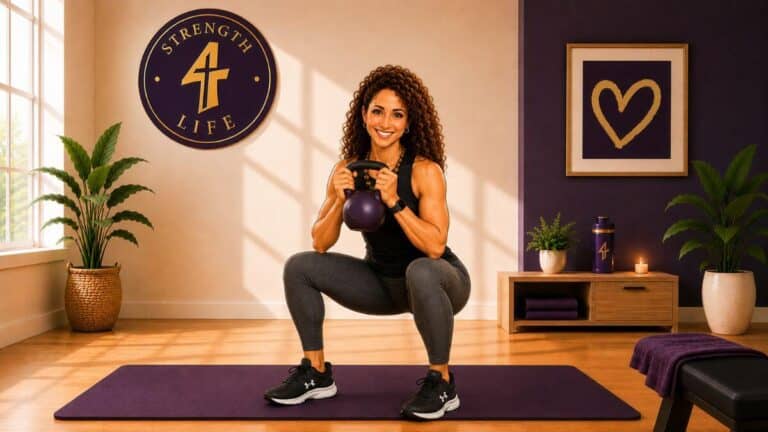
| Exercise Goblet Squats | Sets × Reps 3 × 8–12 | Tip Hold dumbbell at chest |
| Exercise Incline Push-Ups | Sets × Reps 3 × 8–12 | Tip Use countertop or sturdy bench |
| Exercise Romanian Deadlifts | Sets × Reps 3 × 8–12 | Tip Hinge at hips, keep back flat |
| Exercise Overhead Tricep Extensions | Sets × Reps 3 × 8–12 | Tip Keep elbows pointing forward |
| Exercise Bird Dogs | Sets × Reps 2 × 6–10 per side | Tip Move slow and controlled |
For more exercise ideas to mix in, visit Best Beginner Strength Exercises for Women Over 40.
How to Progress This Plan Over Time
Once the workouts start feeling easier, make them slightly more challenging. You do not need to change everything at once — one small adjustment at a time is enough.
- Add 1–2 more reps per exercise.
- Add one extra set to an exercise.
- Use slightly heavier dumbbells.
- Slow down the movement for more control and tension.
- Rest a little less between sets.
Choose one change at a time. If you increase weight, don’t also add sets and cut rest in the same week. Give your body time to adjust to each new challenge.
Ready to add variety with new equipment? Kettlebell Workouts at Home is a natural next step once you have built a solid foundation.
What If Three Days Feels Like Too Much?
Start with two days. That is not failure — that is smart planning.
A two-day plan builds real strength when you stay consistent. Rotate through the workouts each week:
- Week 1: Workout A and Workout B
- Week 2: Workout C and Workout A
- Week 3: Workout B and Workout C
- Week 4: Repeat the cycle
If consistency is your biggest challenge, read How to Stay Consistent With Exercise When You’re Tired, Busy, and Overwhelmed.
How Much Weight Should You Use?
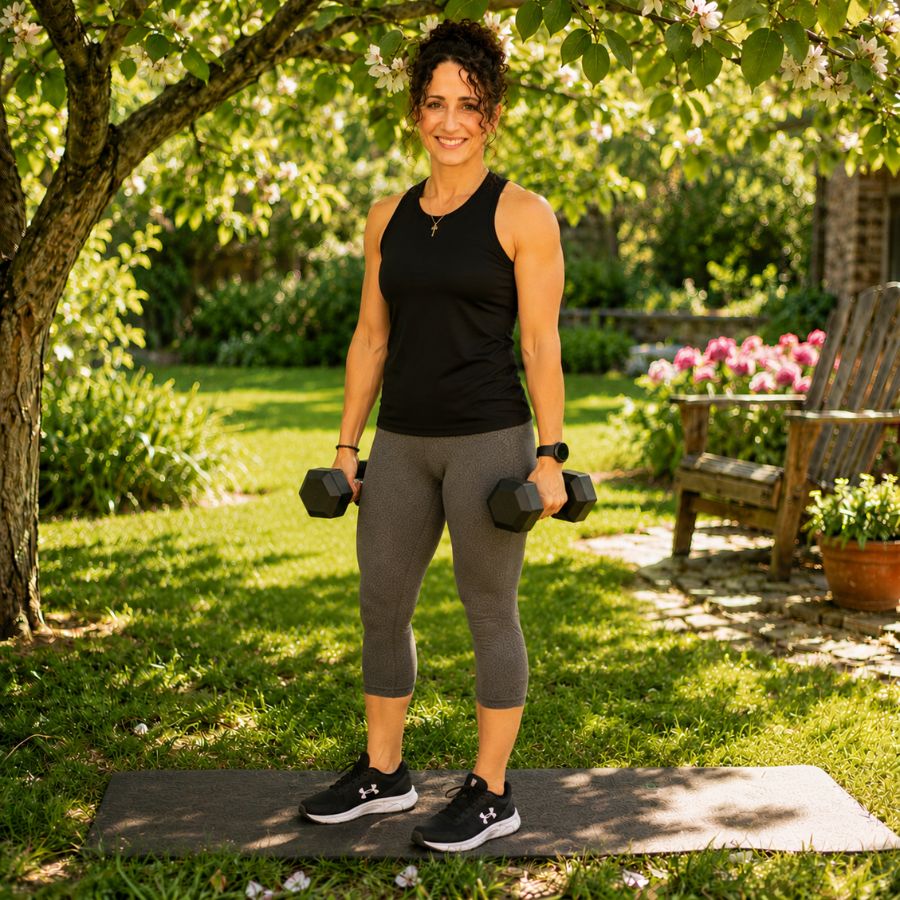
Start lighter than you think you need to. Good form matters far more than heavy weights — especially in the beginning.
The right weight should feel manageable for the first few reps and genuinely challenging near the end of the set. You should still be able to control the movement without holding your breath, swinging, or losing posture.
- If the movement feels too easy after a few weeks, increase slightly.
- If your form breaks down, go lighter.
- If you feel joint pain, stop and adjust.
- When in doubt, choose the lighter option first.
Many women start with bodyweight, resistance bands, or 3–10 pound dumbbells and make meaningful progress. Starting your morning with movement also sets the tone — 7 Simple Morning Exercises to Boost Energy and Mobility is a great complement to your strength days.
Do You Need Cardio Too?
Yes — but cardio does not have to mean running or exhausting yourself. Walking, low-impact movement, and gentle activity all support heart health and endurance without interfering with your strength gains.
- Strength training builds and maintains muscle.
- Walking supports endurance and recovery.
- Low-impact cardio improves energy without beating up joints.
- A balanced plan includes both strength and movement.
For more on how these two approaches work together, read Strength Training vs Cardio for Women: What Actually Helps?
Recovery Matters More Than You Think
Your muscles get stronger when you train, recover, and come back again. Recovery is not laziness — it is part of the plan. After 40, this matters even more.
- Take at least one rest day between strength workouts.
- Do gentle walking or stretching on recovery days.
- Drink water throughout the day.
- Prioritize 7–8 hours of sleep — that’s when muscles repair.
- Pay attention to sharp pain, dizziness, or unusual fatigue.
If your body feels run down, choose gentle movement instead of forcing a hard workout. Consistency over months matters more than any single session.
Common Mistakes to Avoid
A strength training plan works best when it is simple enough to repeat. These mistakes make the process harder than it needs to be.
- Doing too much too soon: Start with a plan your body can recover from.
- Changing workouts constantly: Repeat movements long enough to improve at them.
- Ignoring form: Controlled reps matter more than speed or weight.
- Only focusing on the scale: Strength, energy, posture, and confidence are real results too.
- Quitting after one missed week: Just return with the next workout — no drama, no starting over.
Final Thoughts
The best strength training plan for women over 40 is not complicated, extreme, or impossible to maintain.
It is simple, repeatable, and designed to help you get stronger in real life — starting wherever you are right now.
Start with two or three workouts per week. Use beginner-friendly exercises. Build slowly. Give yourself time to improve.
Want Simple Strength Workouts Done for You?
Strength 4 Life helps women build strength with realistic home workouts that are clear, supportive, and beginner-friendly — no gym, no guesswork, no extreme fitness culture.
- Done-for-you strength workouts for women over 40
- Beginner-friendly exercise options
- Low-impact modifications available
- Supportive guidance that fits real life
Frequently Asked Questions
The best plan is simple, realistic, and repeatable. Two to three full-body strength workouts per week using beginner-friendly exercises — squats, rows, push-ups, glute bridges, and shoulder presses — is an excellent foundation for most women over 40.
Two days per week is a great starting point. Many women build toward three days as their strength, energy, and recovery improve over time.
Yes. Every workout in this plan can be done at home using bodyweight exercises, light dumbbells, and resistance bands. No gym membership required.
If strength is your main goal, do strength training first. Walking and light cardio work well on separate days or after your strength session when energy allows.
Start small. Use shorter workouts, lighter weights, and the beginner modifications listed for each exercise. Even one or two sessions per week builds real momentum over time.
Strength Training for Women Over 40 Resources



Continue Your Strength Journey
 Step 1
 Step 2
 Step 3
 Step 4
 Step 5
Ready to put this into action?
💪 Start Your Free 7-Day Trial
Free Home Workout Starter Guide
Download your free PDF and start building strength today.
- 3 beginner-friendly routines
- No equipment needed
- Just 20 minutes a day
Enter your email to download