Bodyweight Exercises for Women: A Complete Home Workout Guide
📋 Heather is an ISSA Certified Personal Trainer, not a doctor or medical professional. This article is for educational and motivational purposes only. Always check with your healthcare provider before starting a new fitness program.
You don’t need a gym membership, a set of dumbbells, or any equipment at all to build real strength. Bodyweight exercises use your own body as resistance — and for most women, that’s more than enough to get genuinely stronger, improve posture, and build the kind of functional fitness that makes everyday life feel easier.
This guide covers the best bodyweight exercises for women, how to put them together into a complete workout, and how to keep making progress over time — all from home, with zero equipment required.
- Builds real strength using only your own bodyweight
- Works for complete beginners and returning exercisers
- No gym, no equipment, no complicated programming
- Every exercise can be modified to match your current fitness level
Below you’ll find the five fundamental movement patterns every workout should cover, the best exercises for each, and a complete routine you can start today.

Why Bodyweight Training Works
A common assumption is that you need external weights to build meaningful strength. That’s simply not true — especially for women who are newer to strength training or returning after time away.
- Your own bodyweight provides real, scalable resistance that challenges your muscles effectively.
- The movement quality — control, range of motion, body awareness — you build transfers directly to any equipment you add later.
- The barrier to starting is nearly zero: no gym drive, no equipment setup, no waiting. You can start within sixty seconds of deciding to work out.
- Bodyweight routines get done more consistently than equipment-dependent programs for exactly that reason.
For women specifically interested in how bodyweight training applies to building strength after 40, read Body Weight Exercises for Women Over 40.
The Five Movement Patterns Every Workout Should Cover
A well-rounded bodyweight workout doesn’t need to be complicated. It just needs to cover the five fundamental movement patterns your body uses in everyday life.
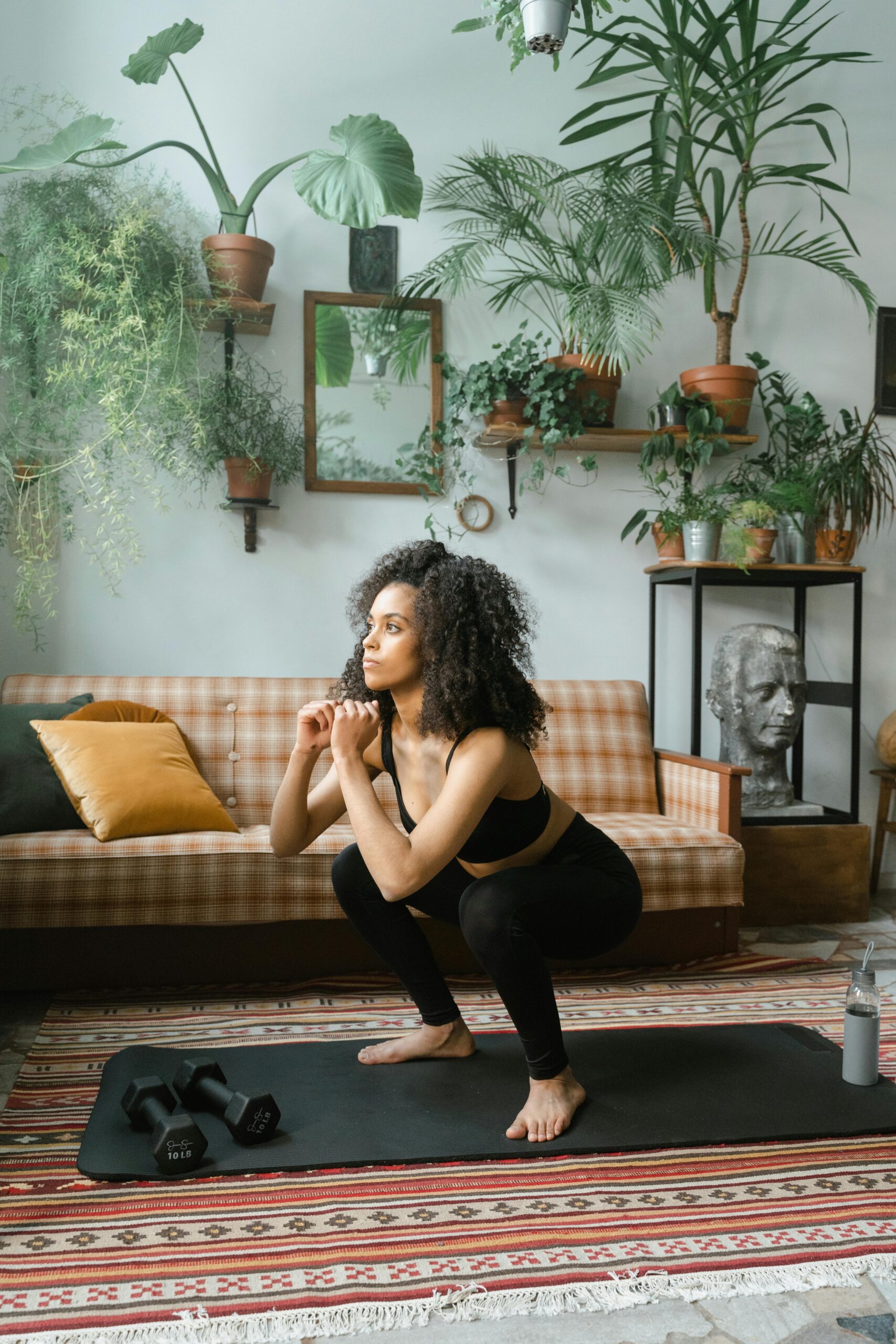
- Squat — bending your knees to lower and raise your body. Works legs, glutes, and core.
- Push — pressing away from your body or the floor. Works chest, shoulders, and arms.
- Pull — drawing something toward your body. Works back and biceps.
- Hip hinge — pushing your hips back while keeping your back straight. Works glutes and hamstrings.
- Core stability — keeping your midsection braced while limbs move. Works the entire core.
The Best Bodyweight Exercises for Women
Here are the most effective bodyweight exercises for each movement pattern, with beginner modifications for every one.
1. Bodyweight Squat (Squat Pattern)
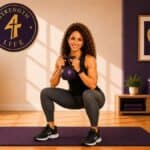
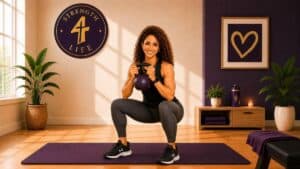
The squat directly mirrors sitting down and standing up — one of the most functional movements in everyday life. Stand with feet shoulder-width apart, push your hips back, and lower as if sitting into a chair, keeping your chest lifted. Press back up through your heels.
- Sets and reps: 3 × 10–15
- Modification: Place a chair behind you and lightly touch the seat at the bottom.
2. Wall or Floor Push-Up (Push Pattern)
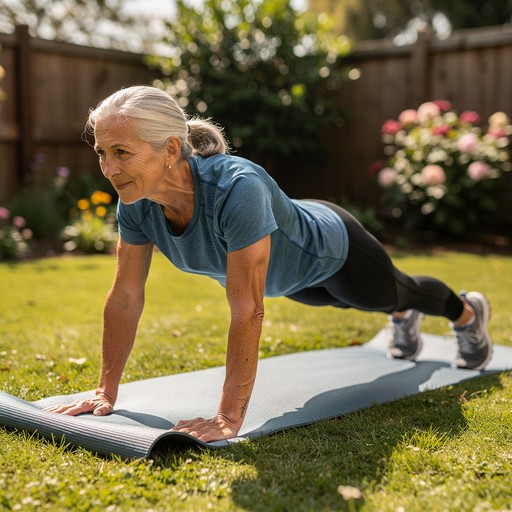
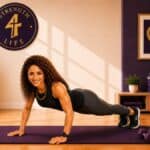
Builds chest, shoulder, and tricep strength at any level. Wall version: hands on wall, feet stepped back, body in a straight line, bend elbows to bring chest toward wall and press back. Progress to an incline push-up on a counter, then to a floor push-up.
- Sets and reps: 3 × 8–12
- Modification: Higher surface = easier. Lower surface = harder.
3. Doorframe or Table Row (Pull Pattern)
The hardest pattern to train without equipment — but doable. Doorframe row: stand in a doorway, grip both sides at chest height, lean back slightly, and pull yourself toward the door. Table row: lie under a sturdy table, grip the edge, and pull your chest up toward it.
- Sets and reps: 2–3 × 8–10
- Tip: The more horizontal your body, the harder it gets.
4. Glute Bridge (Hip Hinge Pattern)
Targets glutes and hamstrings directly with zero knee stress. Lie on your back, knees bent, feet flat. Press through heels and lift hips toward the ceiling, squeezing glutes at the top. Lower slowly and repeat.
- Sets and reps: 3 × 12–15
- Progression: Add a resistance band above the knees or try single-leg bridges.
5. Dead Bug (Core Stability)
Trains deep core stability without straining the neck or lower back. Lie on your back, arms reaching to ceiling, knees bent at 90 degrees. Slowly lower one arm and the opposite leg toward the floor, keeping lower back pressed down. Return and switch sides.
- Sets and reps: 2–3 × 6–10 per side
- Key cue: If your lower back lifts, reduce range of motion.
How to Keep Making Progress Over Time
One of the biggest advantages of bodyweight training is how naturally it scales. You don’t need to buy heavier weights to keep progressing — you adjust the variables already available to you.
- Slow the movement down — a 3-second lowering phase on a squat or push-up dramatically increases difficulty.
- Add pauses — pausing 2–3 seconds at the hardest point of the movement.
- Reduce your base of support — single-leg variations, elevated foot positions.
- Increase reps before adding sets — push from 10 to 15 reps before adding another round.
- Reduce rest time — less rest between sets makes the same exercises harder.
When to Add Equipment
Bodyweight training has a ceiling — eventually the progressions available without resistance become harder to manage than simply picking up a pair of light dumbbells. For most women, that point comes around 3–6 months of consistent training, when exercises like floor push-ups and bodyweight squats start feeling genuinely easy rather than just manageable.
- Adding light dumbbells or a resistance band opens up new progressions without changing your routine.
- The exercises stay largely the same — you just add load to the ones you’ve already mastered.
- There’s no rush — bodyweight training alone produces real results for months before you need anything extra.
Read: Best Beginner Dumbbell Exercises for Women
A Complete Bodyweight Workout to Try Today
Here’s how to put all the exercises together into one full-body session. Takes approximately 25–30 minutes. Rest 45–60 seconds between sets.
| Exercise Bodyweight Squats | Sets × Reps 3 × 10–15 | Tip Use a chair for support if needed |
| Exercise Wall or Floor Push-Ups | Sets × Reps 3 × 8–12 | Tip Keep body in a straight line |
| Exercise Glute Bridges | Sets × Reps 3 × 12–15 | Tip Squeeze glutes at the top |
| Exercise Doorframe or Table Rows | Sets × Reps 2–3 × 8–10 | Tip Keep core braced throughout |
| Exercise Dead Bug | Sets × Reps 2–3 × 6–10 per side | Tip Lower back stays on the floor |
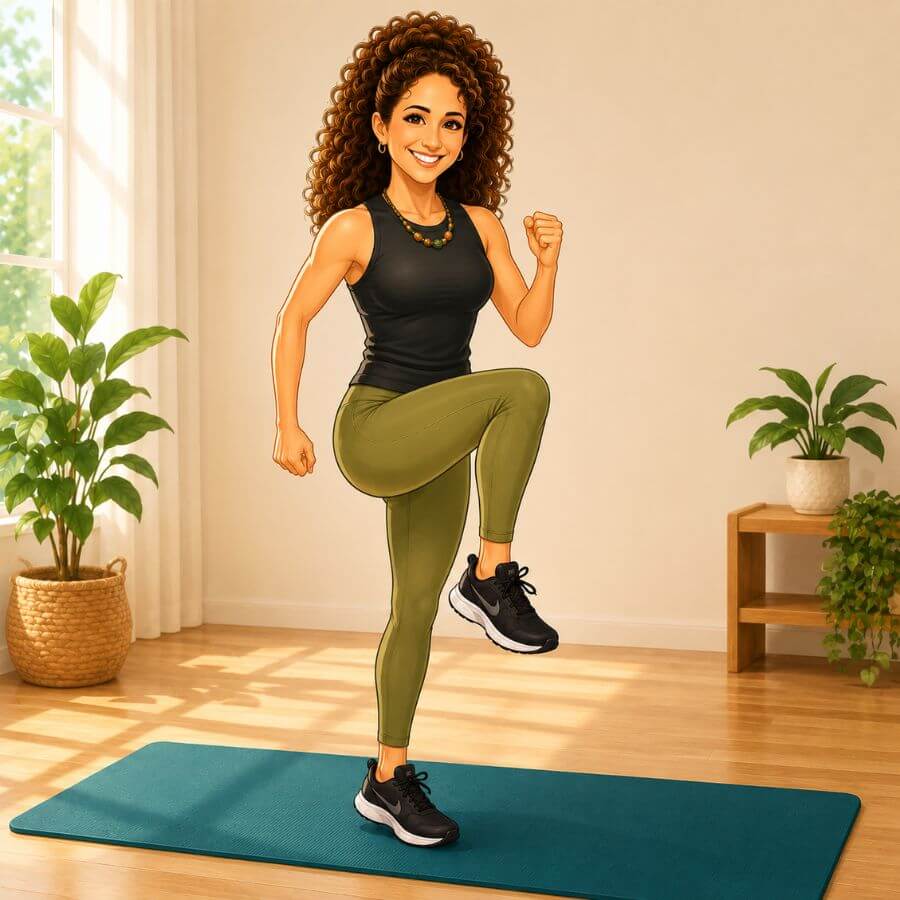
| Exercise Standing Marches | Sets × Reps 2–3 × 30–45 sec | Tip Pump arms for more challenge |
If you’re brand new, start with one full round through all six exercises rather than the full sets listed above. Build up over the following weeks as your strength and confidence grow.
How Often Should You Train?
Two to three times per week, with at least one rest day between sessions, is the right starting frequency for most women. That gives your muscles enough stimulus to get stronger while leaving adequate time for recovery — which is when the actual adaptation happens.
Start with two sessions a week. Stay consistent for a month. Then add a third day when it starts to feel manageable.
Want a Simple Workout Plan You Can Actually Stick With?
Inside Strength for Life, I help women build real strength at home with beginner-friendly workouts that fit real life — no gym, no equipment required to get started, no guesswork about what to do next.
- Done-for-you beginner workouts including bodyweight options
- Progressive programming that builds on itself over time
- Home-friendly routines under 40 minutes
- Supportive coaching from a certified trainer
Frequently Asked Questions About Bodyweight Exercises for Women
Yes. Muscle responds to progressive resistance, and your bodyweight provides that resistance — especially for beginners and intermediate exercisers. As long as the exercises feel genuinely challenging and you’re applying progressive overload over time, real muscle development happens with bodyweight training.
Most women notice improved energy and strength within two to three weeks of consistent training. Visible changes in muscle tone typically become noticeable around the six to eight week mark with regular effort.
For most beginners and returning exercisers, bodyweight training is more than enough for months of meaningful progress. Eventually, adding light dumbbells or bands helps continue the progression — but that’s a bridge you cross when you get there, not something to worry about on day one.
It’s better to give your muscles a recovery day between sessions, especially when you’re starting out. Two to three times per week with rest days in between allows your body to actually rebuild and get stronger.
Try slowing down the movement, adding a pause at the hardest point, reducing your rest time between sets, or increasing reps before adding more sets. These adjustments add real challenge without needing any equipment at all.
Home Workouts for Women Resources
Build Your Home Workout Routine
 Step 1
 Step 2
 Step 3
 Step 4
 Step 5
Ready to put this into action?
💪 Start Your Free 7-Day Trial
Free Home Workout Starter Guide
Download your free PDF and start building strength today.
- 3 beginner-friendly routines
- No equipment needed
- Just 20 minutes a day
Enter your email to download