Kettlebell Workouts at Home: Why They Work and How to Start
📋 Heather is an ISSA Certified Personal Trainer, not a doctor or medical professional. This article is for educational and motivational purposes only. Always check with your healthcare provider before starting a new fitness program.
Kettlebell workouts at home are one of the easiest ways to build strength without needing a full gym.
If you’ve never tried a kettlebell before, it may look a little awkward at first. It is basically a weight with a handle, but don’t let the simple look fool you. A kettlebell can give you a serious workout in a small amount of space.
That is one reason I like them so much for home workouts.
- They do not take up much room.
- You can use them for strength training.
- You can use them for glute and lower body work.
- You can get your heart rate up too.
- You do not need a whole rack of equipment.
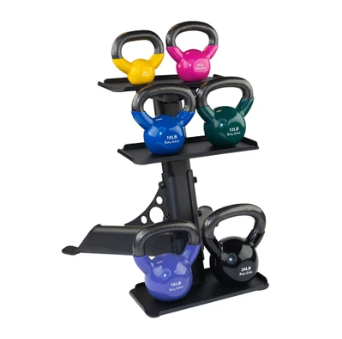
You do not need to be fancy. You do not need to know every kettlebell exercise on earth. You just need to learn a few solid movements and build from there.

Why Kettlebell Workouts at Home Are So Useful
The biggest reason kettlebells work so well is because they are versatile.
You can use one kettlebell for:
- squats
- deadlifts
- glute bridges
- rows
- carries
- swings
- presses
- core work
For women who want to work out at home, that matters. Most people do not want a living room full of gym equipment. They want something simple that works.
What Makes a Kettlebell Different from a Dumbbell?
A dumbbell has the weight balanced evenly on both sides. A kettlebell has the weight hanging below the handle.
That small difference changes the way your body has to work.
- Your core has to stabilize more.
- Your grip has to work harder.
- Your hips and glutes often get more involved.
- Your balance and control matter more.
That is one reason kettlebells are so helpful for real-life strength. You are not just sitting on a machine moving one body part. You are learning how to move, control, brace, and stabilize.
For a broader look at strength training, read: The Simple Strength Plan for Women Over 40 That Actually Works.
Are Kettlebells Good for Women Over 40?
Yes, kettlebells can be a great option for many women over 40 when used safely and with good form.
As we get older, strength training becomes even more important. We want to maintain muscle, support balance, protect our joints, and stay capable in everyday life.
Kettlebells can help with:
- lower body strength
- glute strength
- core stability
- grip strength
- balance
- cardio conditioning
- coordination
Harvard Health notes that kettlebell swings can work the glutes, hips, hamstrings, low back, and core while also helping with posture.
Why Kettlebells Are Great for Glutes and Lower Body
If you are working on stronger glutes, hips, and legs, kettlebells are a really useful tool.
A lot of kettlebell exercises naturally involve the hip hinge. That means your hips move back, your glutes and hamstrings load up, and then you drive through the movement with control.
Some great lower body kettlebell exercises include:
- kettlebell deadlifts
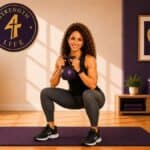
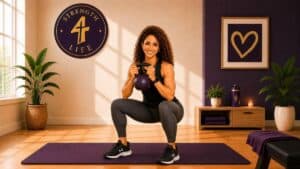
- goblet squats
- kettlebell swings
- sumo deadlifts
- glute bridges with a kettlebell
- reverse lunges
Just start with the basics first. You do not need to jump into advanced moves before your body is ready.
What Size Kettlebell Should a Beginner Use?
This depends on your current strength level and the exercise you are doing.
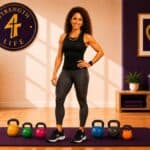
For many beginner women, a 10 to 15 lb kettlebell can be a good starting place for basic lower body movements. Some women may need lighter. Some may be ready for heavier.
- Use lighter weight for learning form.
- Use heavier weight for lower body exercises when ready.
- Do not rush into swings until your hip hinge feels solid.
- Choose control over ego every time.
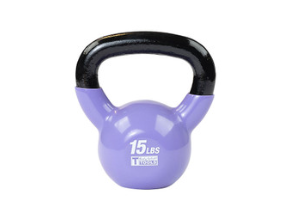
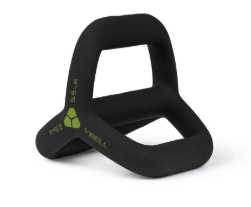
If you are brand new to strength training, read this first: How to Start Strength Training at Home When You Feel Out of Shape.
Beginner Kettlebell Exercises to Learn First
Before you worry about fancy exercises, master the simple ones.
These are good beginner movements for kettlebell workouts at home:
| Deadlift Great for learning the hip hinge. | Goblet Squat Helpful for legs, glutes, and core. | Suitcase Carry Builds grip, posture, and core strength. |
| Glute Bridge Simple way to load the glutes. | Row Builds back and arm strength. | Swing Powerful, but learn form first. |
ACE has a helpful beginner article on getting started with kettlebells and learning basic movements safely.
Read ACE’s beginner kettlebell guidance here.
Do Kettlebells Count as Cardio?
They can.
Kettlebells are usually thought of as strength equipment, but certain kettlebell exercises can also get your heart rate up quickly.
This is especially true with:
- swings
- circuits
- carries
- squat-to-press movements
- short timed workout rounds
That does not mean you should rush. Form comes first. But once you know the movements, kettlebells can make home workouts feel more complete.
For more on this topic, read: Strength Training vs Cardio for Women: What Actually Helps You Lose Weight?.
Common Kettlebell Mistakes to Avoid
Kettlebells are useful, but they do require respect.
Here are a few common mistakes:
- Going too heavy too soon
- Using your lower back instead of your hips and glutes
- Turning swings into arm raises
- Skipping warm-ups
- Rushing through reps
- Choosing speed over control
If something feels sharp, painful, unstable, or wrong, stop and adjust. Working hard is good. Ignoring your body is not.
If you deal with joint discomfort, you may also want to read: Strength Training with Knee Pain.
A Simple Beginner Kettlebell Workout at Home
Here is a simple beginner-friendly structure you could use once you know the basic movements.
Warm-Up
- March in place for 1 minute
- Bodyweight squats
- Hip hinges without weight
- Arm circles
Main Workout
- Goblet squats — 8 to 10 reps
- Kettlebell deadlifts — 8 to 10 reps
- One-arm rows — 8 reps each side
- Glute bridges — 10 to 12 reps
- Suitcase carry — 20 to 30 seconds each side
How Many Rounds?
Start with 1 to 2 rounds. If that feels good, build up slowly over time.
How Often Should You Do Kettlebell Workouts at Home?
For many beginners, 2 to 3 days per week is a good starting point.
You can mix kettlebells into a balanced weekly routine like this:
| Monday Kettlebell strength workout | Tuesday Walk or light movement | Wednesday Bodyweight or dumbbell workout |
| Thursday Rest or mobility | Friday Kettlebell lower body workout | Weekend Walk, stretch, or family activity |
For more structure, read: What a Balanced Weekly Workout Plan Should Look Like for Women Over 40.
The Bottom Line
You do not need a full gym.
You do not need a huge equipment collection.
Kettlebell workouts at home can help you build strength, work your glutes, improve conditioning, and keep fitness simple.
Want Simple Home Workouts Without Guessing?
Inside Strength for Life, I help women build strength at home with realistic workouts that fit real life.
- Simple strength workouts
- Home-friendly routines
- Beginner-friendly guidance
- No extreme gym culture
Frequently Asked Questions About Kettlebell Workouts at Home
Yes, kettlebell workouts at home can be good for beginners when you start with simple movements, light enough weight, and good form.
Many beginner women start with a 10 to 15 lb kettlebell for basic lower body movements, but the right weight depends on your current strength, form, and the exercise.
Yes. Kettlebell deadlifts, swings, goblet squats, glute bridges, and hip-hinge movements can all help train the glutes.
No. You can start with one kettlebell. Over time, having two different weights can be helpful because some exercises require lighter weight while others can use heavier weight.
Home Workouts for Women Resources
Build Your Home Workout Routine
 Step 1
 Step 2
 Step 3
 Step 4
 Step 5
Ready to put this into action?
💪 Start Your Free 7-Day Trial
Free Home Workout Starter Guide
Download your free PDF and start building strength today.
- 3 beginner-friendly routines
- No equipment needed
- Just 20 minutes a day
Enter your email to download