Muscle Loss After 40: What the Research Really Says for Women
⚕️ Heather is an ISSA Certified Personal Trainer, not a physician or medical professional. This content is for educational purposes only and is not intended to diagnose, treat, or replace medical advice. Please consult your doctor before making changes to your exercise or health routine — especially if you have an existing health condition.
What the Research Actually Says About Muscle Loss and Strength Training for Women Over 40
I want to start by being honest with you: I’m a certified personal trainer, not a scientist. I don’t have a master’s degree or a PhD, and I’m never going to pretend I do. But I care deeply about the women I work with, and I want to address a very real question that many women may be asking — “Is it too late for me?” So I did something simple. I went and pulled the actual research surrounding muscle loss after 40 for women, read through it, and put the real numbers in one place, with links to every source, so you can see it all for yourself.
Here’s the short version before we dig in:
- Yes, your body loses muscle as you age — and it starts earlier than most women realize.
- But that same research shows strength training slows it, stops it, and even reverses it — at any age.
- You don’t need to train like an athlete. Even a little, done consistently, makes a real difference.
Let’s walk through what’s actually happening in your body, and then look at what you can genuinely do about it.

What Happens to Your Muscle, Decade by Decade
One of the things that surprised me most when I read the research is how early this all starts. It’s not something that suddenly hits you at 60. The clock starts a lot sooner — but the good news is, so can your response to it.
- Starting in your 30s: Your body begins losing muscle mass at a rate of about 3 to 8 percent per decade if you’re not actively working to keep it. This natural process is called sarcopenia, and it happens to everyone.
- In your 50s and beyond: After menopause, that loss tends to speed up. Research on postmenopausal women shows muscle mass declining by roughly half a percent to one percent every single year.
- Into your 60s and 70s: Somewhere between 5 and 13 percent of adults in this age range have measurable sarcopenia, and that number climbs steeply for those in their 80s.
I don’t share these numbers to scare you. I share them because knowing what’s actually happening takes the mystery out of it. This isn’t you “letting yourself go.” This is normal human biology — and it responds to the right kind of effort. The Office on Women’s Health and the Cleveland Clinic both describe strength training as the front-line way to slow and reverse it.
Why It Feels Harder After Menopause (You’re Not Imagining It)
If you’ve felt like your body just doesn’t respond the way it used to — like you’re working just as hard but getting less back — I want you to know you’re not making that up. I’m in my 50s myself, and I’ve felt it firsthand. My recovery takes longer than it did in my 40s, and I need more warm-up time before I feel ready to really work. The research backs up exactly what I’ve experienced.
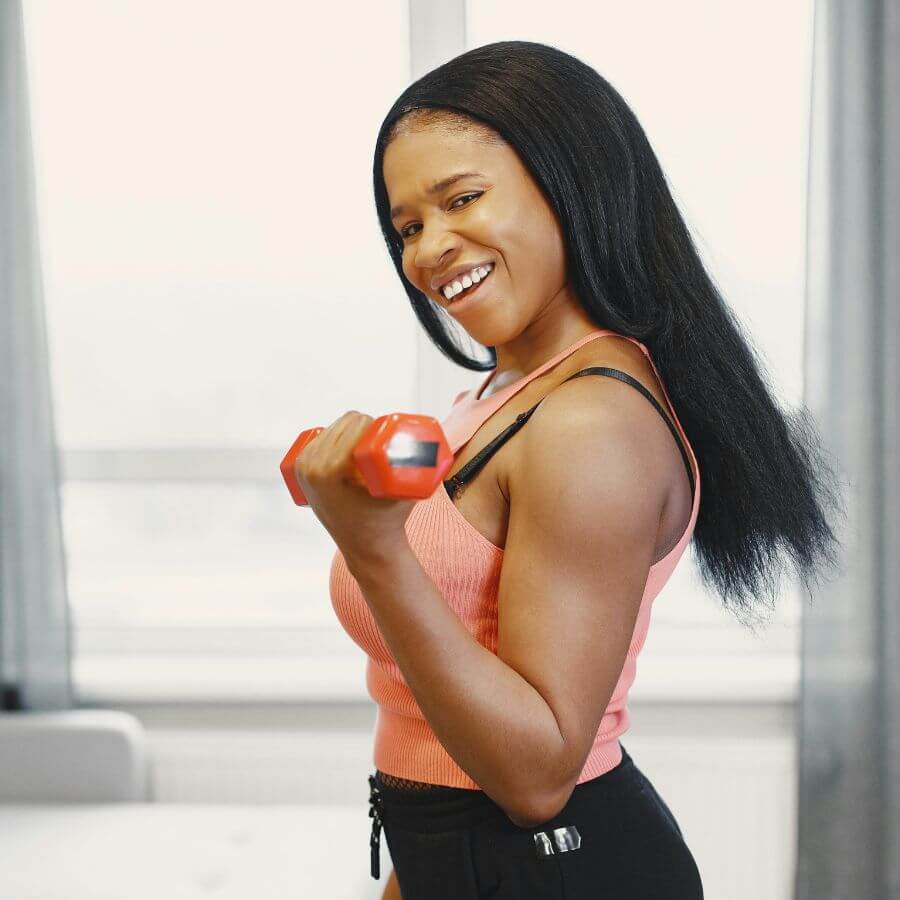
- The drop in estrogen that comes with menopause directly affects how your muscles hold onto mass and how they respond to exercise, according to research published through the National Library of Medicine.
- A large share of women report muscle and joint symptoms during the years around menopause — so if you’re feeling it, you’re in very good company.
- Here’s the part that matters most: studies show strength training still works during and after this transition. Your muscles just need a little more consistency and patience to respond.
The Real Difference Between Doing Nothing and Doing Something
This is the part I really wanted to lay out side by side, because when you see it this way, the choice gets a lot clearer. On one side is what tends to happen when muscle loss goes unchecked. On the other side is what the research shows happens when women start strength training — even later in life.
| If muscle loss goes unchecked Women with low muscle mass face meaningfully higher risk of falling and of fractures compared to women who keep their muscle. | If you strength train A review of 75 studies found consistent bone and muscle benefits in postmenopausal women — regardless of their starting age. |
| Strength fades fastest Research shows strength declines noticeably faster than muscle size does — which is why everyday tasks start feeling harder before you “look” any different. | Results come quickly In a controlled 6-month study, women with low bone density increased their spine bone density while the non-exercising group stayed flat. |
Read that right-hand column again if you need to. Every one of those positive results came from ordinary women — not athletes, not people who started young. They started where they were and got stronger.
Why This Matters More Than “Looking Toned”
I’ll be honest — I used to think of strength as mostly about how you look and feel day to day. The research shifted how I see it. This is really about staying independent and safe as you get older, and the numbers here are sobering enough that I think every woman deserves to know them.
- Falls and the fractures they cause are a genuine threat as muscle declines — and a hip fracture in particular is far more serious than most people realize.
- Studies of older women found that within one year of a hip fracture, roughly 17 to 25 percent had passed away — and hip fracture patients face 3 to 4 times the risk of death compared to women their age who didn’t have one.
- Around 2 million older adults have hip fractures every year, and that number is expected to climb sharply as the population ages.
Strength training isn’t vanity. The muscle you build in your 40s and 50s is the muscle that keeps you on your feet, steady, and independent in your 70s and 80s. That’s what we’re really protecting here.
How Much Do You Actually Need to Do?
Here’s where I get to give you the most encouraging news on this whole page. When I dug into the studies on how often women need to train, I expected the answer to be “a lot.” It wasn’t. It turns out you can get real, measurable results without living in a gym.
1. Two to three days a week is the sweet spot
The position statement on resistance training for older adults points to 2 to 3 strength sessions per week as the ideal amount for building muscle and strength. That’s it. A few focused sessions, with rest days in between, is genuinely enough.
2. Even once a week does more than you’d think
This one honestly surprised me. Several studies found that training just once a week produced strength gains nearly as good as two or three times a week for older adults. So if all you can manage right now is one session, please don’t skip it thinking it’s not worth it — it absolutely is.
3. Start light and build up
You don’t start heavy. The research supports beginning with lighter resistance — around 30 to 40 percent of your maximum effort — and slowly working up over time as you get stronger. This is exactly how I coach the women I work with: start where you are, add a little at a time.
- In one 8-week study, women improved their lower-body strength by roughly 22 to 28 percent — whether they trained two or three days a week.
- That’s real, meaningful change in under two months, from an amount of training that fits into a normal life.
The One Thing Most Women Over 40 Don’t Get Enough Of
If strength training is the engine, protein is the fuel — and this is one area where the research genuinely changed how I coach. As we age, our bodies actually become less efficient at turning the protein we eat into muscle. Scientists call this “anabolic resistance,” and it means women over 40 often need more protein than the old standard guidelines suggest, not less.

- The standard recommendation has long been about 0.8 grams of protein per kilogram of body weight. But newer research on older women shows 1.0 to 1.2 grams per kilogram is far better for preserving muscle.
- One study found older women needed at least 1.17 grams per kilogram per day to hold onto healthy muscle mass.
- In practical terms, a 150-pound woman lands somewhere around 68 to 82 grams of protein per day — very doable across normal meals.
- Spreading it out matters too: aiming for a solid serving of protein at each meal helps your body use it better than loading it all at dinner.
You don’t need powders or a complicated plan. Eggs, Greek yogurt, chicken, fish, beans, and nuts spread across your day will get most women there. The point is simply to stop treating protein as an afterthought.
The Hidden Benefit: Strength Training Builds Bone, Too
Here’s something a lot of women don’t realize: when you strength train, you’re not just building muscle — you’re building bone. This matters enormously after menopause, when the drop in estrogen speeds up bone loss and raises the risk of osteoporosis. The research on this is genuinely exciting.
- When your muscles pull on your bones during resistance training, it signals your body to strengthen those bones. Researchers call this “mechanical loading,” and it’s why lifting protects your skeleton in a way that walking alone doesn’t.
- A 6-month controlled study of postmenopausal women with low bone density found that those who did strength training measurably increased their spine bone density — while the women who didn’t exercise saw no meaningful change.
- A large review pooling 75 studies and over 5,000 women confirmed exercise improves bone density in the spine, hip, and femoral neck — the exact areas most prone to serious fractures.
This is why I get a little frustrated when women are told to “just walk” after 40. Walking is wonderful, and I’d never talk anyone out of it — but it doesn’t load your bones the way strength training does. For real protection against fractures, you need resistance.
Common Fears, and What the Research Really Says
A few worries come up again and again with the women I talk to. I understand every one of them — I’ve heard them for years. But each one falls apart when you look at what the studies actually show.
- “Lifting will make me bulky.” The research points the other way. Without the specific hormones, very high training volume, and eating surplus that bodybuilders use, women build lean, functional muscle — not bulk. If anything, the drop in estrogen after menopause makes bulking up harder, not easier.
- “Cardio is enough at my age.” Cardio is wonderful for your heart, but it doesn’t rebuild the muscle you’re losing, and it doesn’t load your bones. Since strength fades faster than muscle size, cardio alone leaves the exact things you need most — strength and bone density — on the table.
- “It’s too late for me.” This is the one I most want to put to rest. Studies have shown muscle and bone gains in women well into their 70s and 80s. It is genuinely never too late to start.
- “I’ll hurt myself.” Started sensibly — light, with good form, building gradually — strength training is one of the safest and most protective things you can do. It’s what prevents the falls and fractures that hurt women most as they age.
The Numbers at a Glance
If you remember nothing else from this page, here’s the quick reference. I made this the kind of simple summary I wish someone had handed me years ago.
| After age 30 Muscle loss of about 3–8% per decade begins | After age 50 Loss speeds up to roughly 0.5–1% every year | Ages 60–70 5–13% have measurable sarcopenia |
| Protein target About 1.0–1.2 g per kg of body weight daily | With training Real muscle & bone gains, even after menopause | How often 2–3x per week is ideal; even 1x helps |
What I Want You to Take Away From All This
The research tells a story with two halves. The first half is real: your body loses muscle and bone as you age, and it starts sooner and matters more than most women are told. But the second half is the part I care about most — every single study on strength training points the same direction. Your body responds. At 40, at 50, at 60, and beyond. It’s not too late, and it’s not too hard.
The muscle and bone you build now are the strength, steadiness, and independence you’ll be grateful for decades from now. That’s worth starting today.
A Note on Health and Individual Differences
I’m an ISSA Certified Personal Trainer, not a doctor — so please take this as caring coaching guidance, not medical advice. Every woman’s body is different, especially where hormones, past injuries, or existing health conditions are involved. If you have health concerns, are going through significant hormonal changes, or are coming back to exercise after a long break or a medical event, please check with your healthcare provider before starting a new strength program. Your doctor can help confirm what’s right for your specific situation.
Ready to Put This Research to Work?
Inside Strength for Life, I take everything on this page and turn it into simple, doable workouts you can follow at home — no gym, no guesswork, and nothing that requires you to be an athlete. Just steady, realistic strength training built for real women with real lives.
- Beginner-friendly strength training designed for women over 40
- Home workouts under 40 minutes, 2–3 days a week
- Progressive plans that start light and build with you
- Encouraging coaching from a certified trainer who gets it
Frequently Asked Questions
Research shows adults lose roughly 3 to 8 percent of muscle mass per decade starting in their 30s, and that pace tends to pick up after 50 — especially for women after menopause, who may lose around half a percent to one percent per year. The encouraging part is that strength training slows and even reverses this at any age.
It’s genuinely not too late. Studies have documented real muscle and bone gains in women in their 70s and 80s. Your body responds to strength training at every age — it just needs consistency. Starting now is always better than not starting.
Research on older women suggests about 1.0 to 1.2 grams of protein per kilogram of body weight per day — more than the old standard guideline — because our bodies become less efficient at using protein as we age. For many women that’s roughly 68 to 82 grams a day, spread across meals rather than all at once.
Research on older adults points to 2 to 3 strength sessions per week as the ideal amount. But here’s the encouraging part: several studies found that even training once a week produced strength gains nearly as good as two or three times. If one day is all you can manage right now, it’s still very much worth doing.
Yes — and this is one of its biggest benefits after menopause. When your muscles pull on your bones during resistance training, it signals your body to strengthen them. Controlled studies of postmenopausal women have shown measurable increases in spine and hip bone density from strength training, which walking alone doesn’t provide.
For the vast majority of women, no. Building bulky muscle takes a specific mix of hormones, very high training volume, and eating a calorie surplus that ordinary strength routines don’t involve. In fact, the drop in estrogen after menopause makes bulking up harder. What you’ll typically build is lean, functional strength.
Sources
Every stat on this page comes from published research or major health institutions. Here’s where to read them yourself:
- Sarcopenia and age-related muscle loss — National Library of Medicine
- Sarcopenia overview — Cleveland Clinic
- Women’s health and healthy aging — U.S. Office on Women’s Health
- Resistance Training for Older Adults: Position Statement — Journal of Strength & Conditioning Research
- Once- vs. twice-weekly strength training in older adults — National Library of Medicine
- Protein intake and muscle preservation in older women — National Library of Medicine
- Dietary protein threshold in healthy older women — Nutrients
- Strength training and bone density in postmenopausal women (DEXA study) — National Library of Medicine
- Exercise and bone mineral density: review of 75 studies — National Library of Medicine
- Mortality following hip fracture in older women — American Journal of Managed Care
Beginner Strength Training Resources






Continue Your Strength Journey
 Step 1
 Step 2
 Step 3
 Step 4
 Step 5
Ready to put this into action?
💪 Start Your Free 7-Day Trial
Free Home Workout Starter Guide
Download your free PDF and start building strength today.
- 3 beginner-friendly routines
- No equipment needed
- Just 20 minutes a day
Enter your email to download