Beginner Upper Body Exercises for Women at Home (No Gym Needed)
Upper body workouts can feel intimidating when you are first getting started. Many women worry about not being strong enough, not knowing what exercises to do, or accidentally getting “too bulky.”
The truth is, beginner upper body training can be simple, empowering, and incredibly useful for everyday life. Strong shoulders, arms, chest, and upper back muscles help with posture, lifting groceries, carrying kids, opening heavy doors, and feeling more confident in your body.
And you do not need a gym full of equipment to start building that strength.
- Bodyweight movements are a great starting point.
- Light dumbbells work well for most beginners.
- Short 20–25 minute workouts are genuinely effective.
- Every exercise below can be done at home.
The CDC recommends adults include muscle-strengthening activities at least two days per week. The routine below makes that easy to do without leaving home.

How Often Should You Train Upper Body?
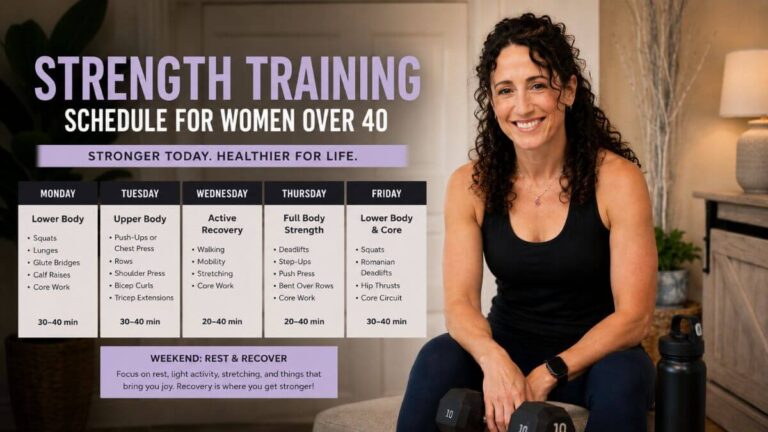
Two dedicated upper body sessions per week is the ideal starting point for beginners. Here is what that looks like in a full week:
| Monday Upper body workout | Tuesday Walk or low-impact cardio | Wednesday Rest or stretching |
| Thursday Upper body workout | Friday Full body or cardio | Weekend Recovery and movement |
Rest at least one day between upper body sessions so your muscles have time to recover and rebuild — that’s where the actual strength gains happen.
Why Upper Body Strength Matters for Women
Many women focus mostly on cardio or lower body workouts, but upper body strength is equally important — and often overlooked. Strong upper body muscles support posture, reduce stiffness, and make everyday tasks feel significantly easier.
After 40, maintaining muscle becomes even more critical. Strength training helps support bone health, joint stability, and daily movement while building the kind of physical confidence that carries into every area of life.
- Improves posture and reduces upper back tension
- Makes everyday tasks — carrying, lifting, pushing — feel easier
- Supports healthy aging and bone density
- Builds functional strength for real life
- Boosts confidence and body awareness
Upper body workouts pair especially well with walking and low-impact cardio for a balanced fitness routine.
1. Wall Push-Ups
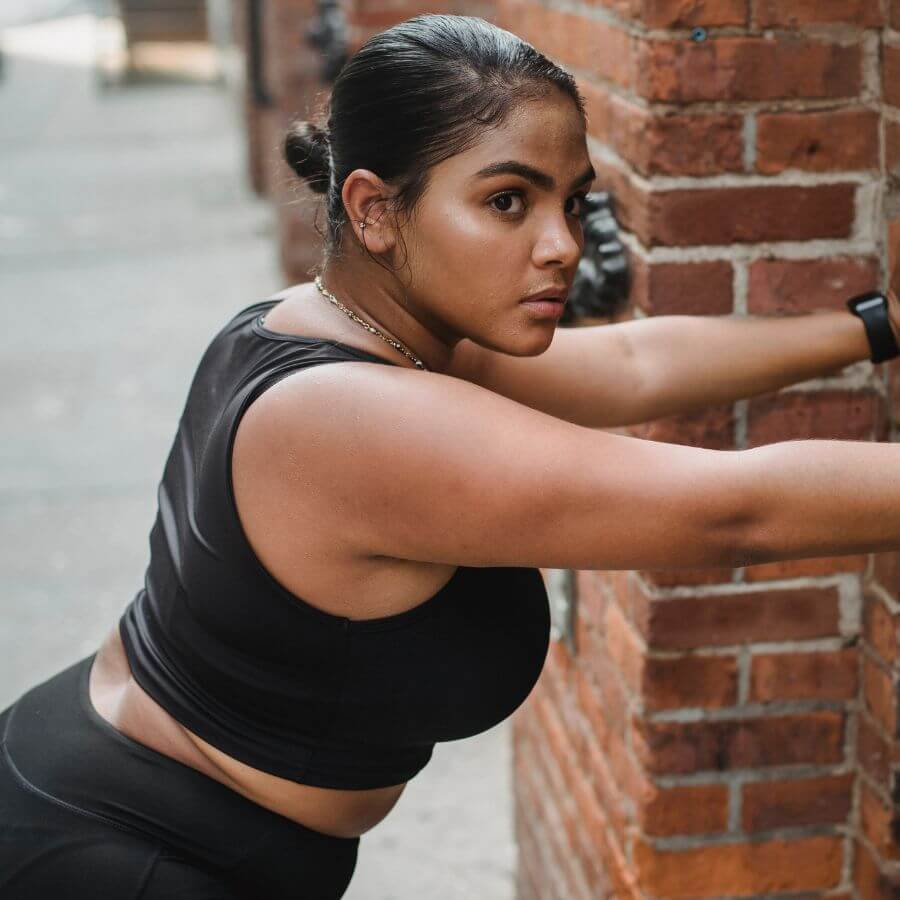
Wall push-ups are one of the best beginner upper body exercises because they build chest, shoulder, and arm strength without putting excessive pressure on the wrists or shoulders — making them ideal for women just starting out.
Muscles worked: Chest, shoulders, triceps, core
How to do it: Stand facing a wall with hands slightly wider than shoulder-width at chest height. Step your feet back slightly. Keeping your body in a straight line, bend your elbows and lower your chest toward the wall. Press back to start.
Sets and reps: 3 × 10–12
Progression: Move to incline push-ups on a countertop or bench as you get stronger, then eventually to full floor push-ups.
- Keep your body in a straight line throughout.
- Move slowly and with control — no bouncing.
- The farther your feet from the wall, the harder it becomes.
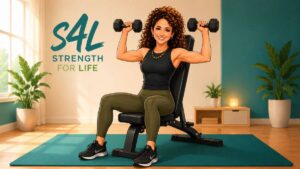
2. Dumbbell Shoulder Press
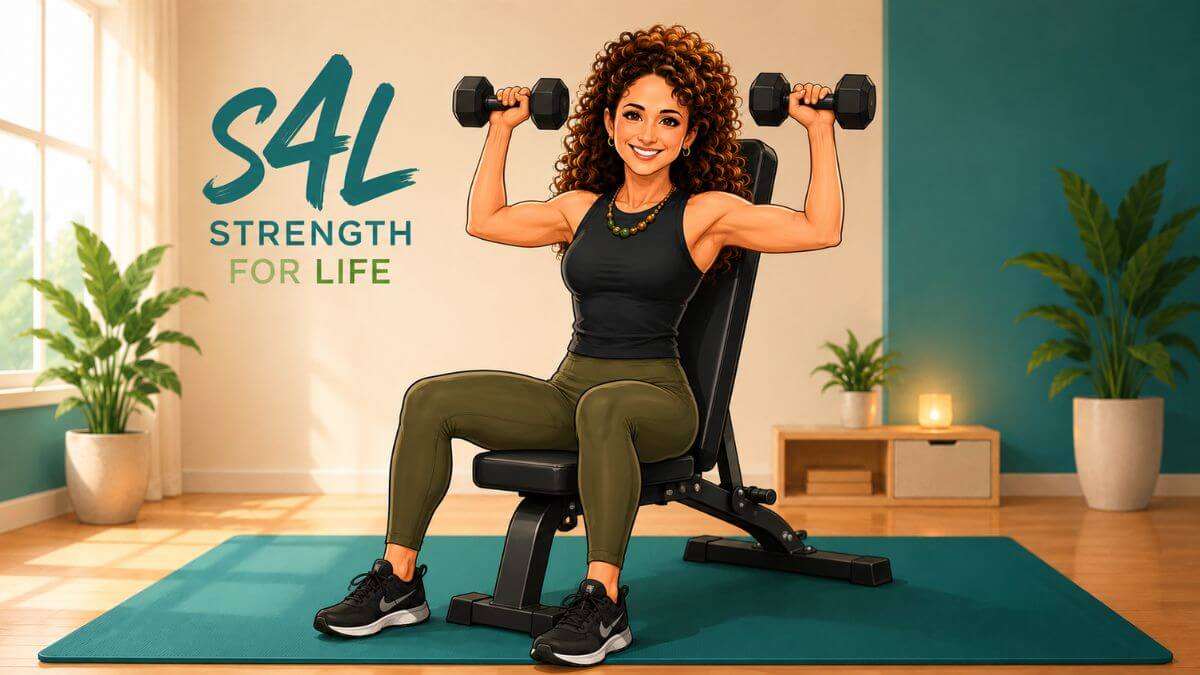
The shoulder press strengthens the shoulders and arms while improving overhead stability — a movement pattern many women lose as they age from lack of use. Light dumbbells are perfect for beginners.
Muscles worked: Shoulders, triceps, upper traps, core
How to do it: Sit or stand tall with a dumbbell in each hand at shoulder height, palms facing forward. Press the weights overhead until your arms are fully extended, then lower them back down with control.
Sets and reps: 3 × 10–12
Beginner tip: If you are brand new to strength training, even light soup cans or water bottles work as a starting point. Focus on the movement pattern before adding weight.
- Keep your core gently braced throughout.
- Avoid arching your lower back — especially when pressing overhead.
- Position elbows slightly in front of you at the bottom.
- Use lighter weights than you think you need at first.
3. Bent-Over Dumbbell Rows
Rows are one of the most important upper body exercises for women — and one of the most underdone. They directly strengthen the muscles that support better posture and counteract the forward rounding that comes from sitting, driving, and screen time.
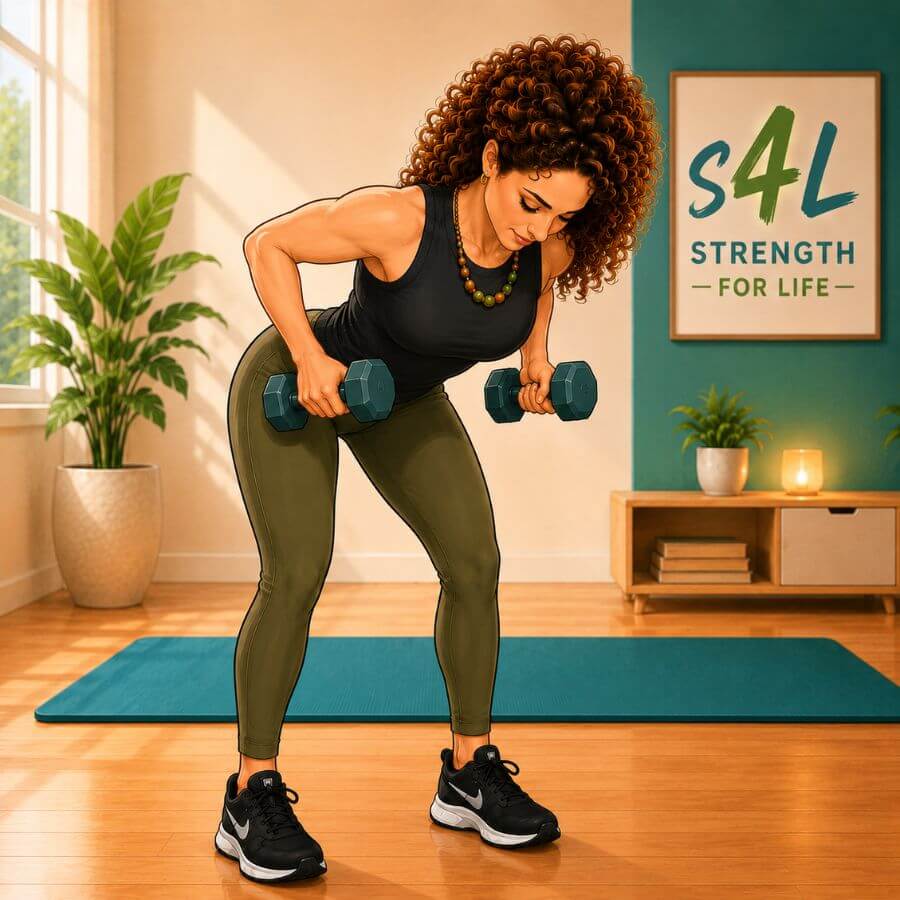
Muscles worked: Upper back, lats, rear shoulders, biceps
How to do it: Hold a dumbbell in each hand and hinge at the hips to lean slightly forward, keeping your back flat. Let the weights hang in front of you. Pull both dumbbells toward your hips, squeezing your shoulder blades together at the top. Lower slowly and repeat.
Sets and reps: 3 × 10–12
Key cue: Lead with your elbows, not your hands. Think about driving your elbows back rather than just lifting the weight.
- Keep your chest lifted and back flat throughout.
- Use control — avoid swinging or using momentum.
- Squeeze the shoulder blades at the top of each rep.
Rows are one of the best exercises for posture and upper back strength. Read: Best Beginner Strength Exercises for Women Over 40
4. Bicep Curls
Bicep curls are simple, beginner-friendly, and one of the most practical upper body exercises you can do. Strong biceps help with every pulling and lifting movement in daily life — from carrying groceries to lifting kids.
Muscles worked: Biceps, forearms
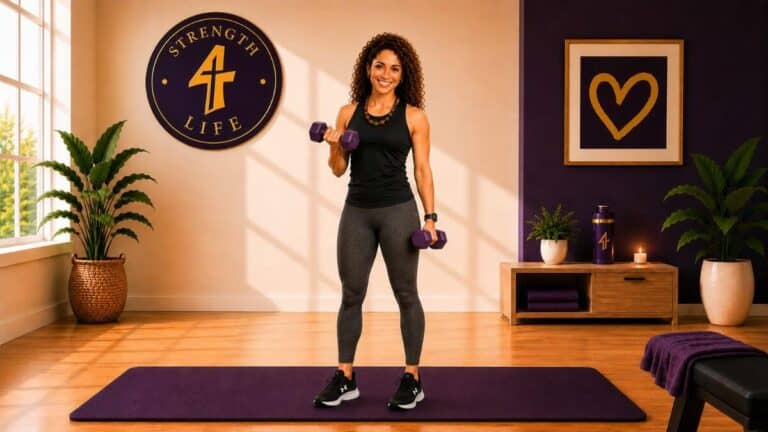
How to do it: Hold a dumbbell in each hand with palms facing forward and arms hanging at your sides. Slowly curl both weights toward your shoulders, pause briefly at the top, then lower back down with control.
Sets and reps: 3 × 10–12
Common mistake: Swinging the weights using momentum. Keep your elbows pinned close to your sides throughout the movement — the only thing that should move is your forearms.
- Keep elbows close to your sides throughout.
- Lower the weight slowly — the downward phase builds strength too.
- Even light weights become challenging with proper control and form.
5. Overhead Tricep Extensions
Overhead tricep extensions target the back of the arms — an area many women want to strengthen — and also support all the pushing movements in your workout and daily life.
Muscles worked: Triceps, shoulders
How to do it: Hold one dumbbell with both hands and raise it overhead with arms fully extended. Slowly bend your elbows to lower the weight behind your head, keeping your upper arms close to your ears. Press back up to the starting position.
Sets and reps: 3 × 10–12
Key cue: Keep your elbows pointing mostly forward rather than flaring out to the sides. Only the forearms should move — upper arms stay stationary.
- Keep elbows pointing mostly forward, not flaring wide.
- Use slow, controlled movement in both directions.
- Start with a lighter weight than you think you need.
Complete Beginner Upper Body Workout
Here is how to put all five exercises together into a complete routine. Do this 2 times per week with at least one rest day in between.
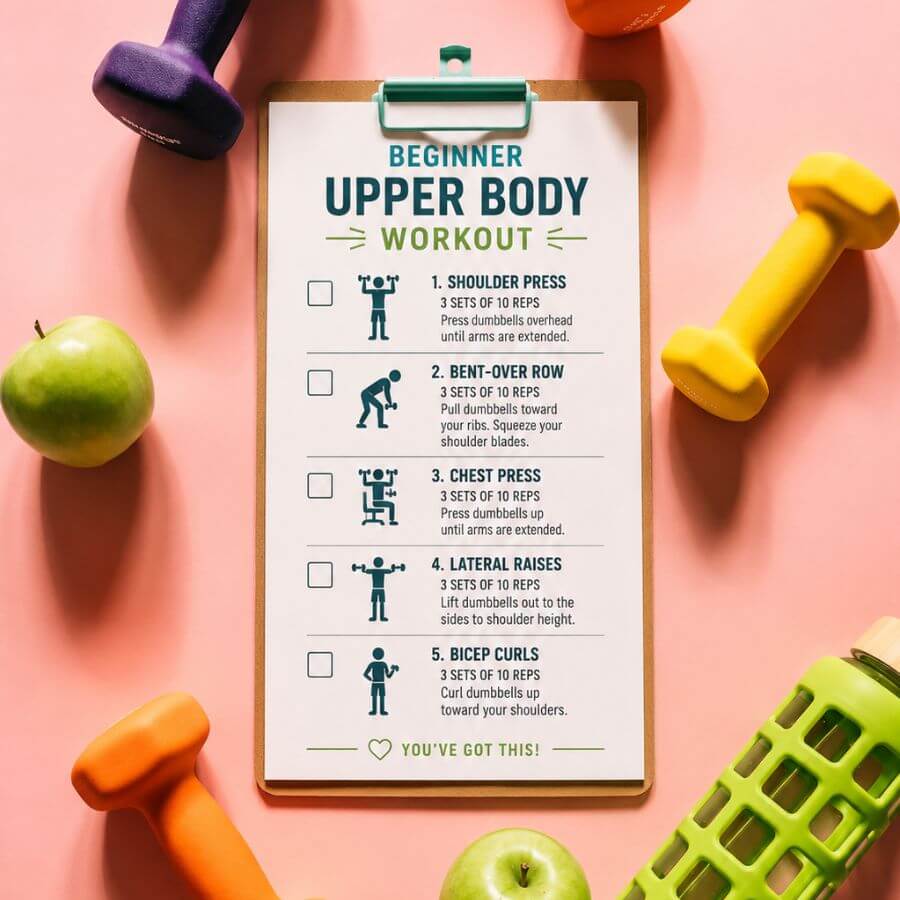
| Exercise Wall Push-Ups | Sets × Reps 3 × 10–12 | Rest 45–60 sec |
| Exercise Dumbbell Shoulder Press | Sets × Reps 3 × 10–12 | Rest 45–60 sec |
| Exercise Bent-Over Dumbbell Rows | Sets × Reps 3 × 10–12 | Rest 45–60 sec |
| Exercise Bicep Curls | Sets × Reps 3 × 10–12 | Rest 45 sec |
| Exercise Overhead Tricep Extensions | Sets × Reps 3 × 10–12 | Rest 45 sec |
Total workout time: approximately 20–30 minutes. As you get stronger, increase the weight, add reps, or add an additional round.
Do I Need Heavy Weights?
No. Most beginners start with 3 to 10 pound dumbbells depending on the exercise. Bodyweight movements like wall push-ups require nothing at all.
Your muscles do not know the number on the dumbbell. They respond to tension and effort. Controlled movement with light weights builds real strength — especially when you are just starting out.
- Choose a weight that feels challenging by the last 2–3 reps.
- You should still be able to maintain good form throughout.
- Progress the weight slowly over time — never rush it.
Building strength safely and sustainably matters far more than lifting heavy quickly.
Do Not Forget Recovery
Recovery is not optional — it is part of the process. Your muscles rebuild and grow stronger during rest, not during the workout itself.
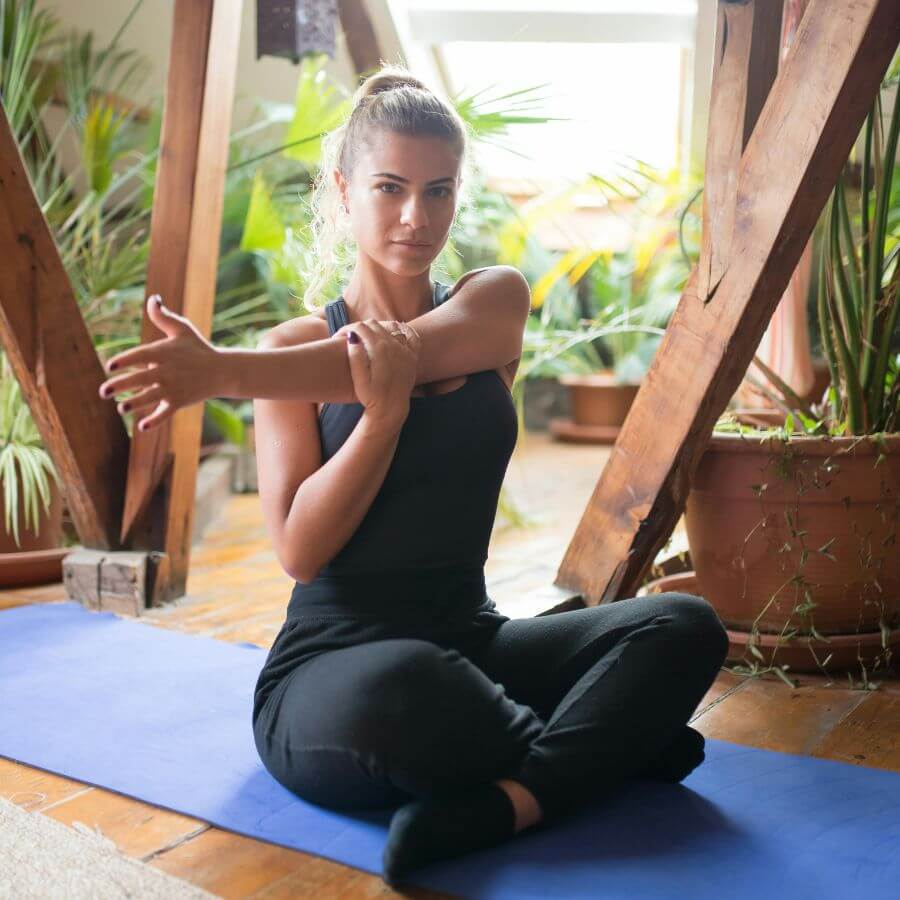
Between upper body sessions, focus on:
- Staying hydrated throughout the day.
- Getting adequate sleep — this is when most muscle repair happens.
- Gentle chest and shoulder stretches on rest days.
- Light movement like walking to keep blood flowing.
- Listening to your body — mild soreness is normal, sharp pain is not.
Your goal is not perfection. Your goal is building a strong, sustainable routine you can maintain for years.
If you struggle with staying consistent: How to Stay Consistent With Exercise When You’re Tired, Busy, and Overwhelmed.
Final Thoughts
Upper body training does not have to be intimidating or complicated.
Five simple exercises, done twice a week at home with light dumbbells, can build real strength, improve your posture, and make everyday life feel noticeably easier.
Start light. Focus on form. Keep showing up. Your strength will grow one workout at a time.
Ready to Build Strength at Home?
Strength 4 Life was created to help real women feel stronger with simple, beginner-friendly workouts they can actually stick with — no gym required, no extreme fitness culture.
- Done-for-you home workout plans
- Beginner-friendly strength training
- Low-impact options for sensitive joints
- Supportive guidance from a certified trainer
Frequently Asked Questions
Yes. Every exercise in this article can be done at home with minimal equipment. Wall push-ups require nothing at all, and the dumbbell exercises only need a single pair of light dumbbells.
No. Beginner strength training with light to moderate weights builds tone, functional strength, and muscle support — not bulk. Women do not produce enough testosterone to build large muscles easily, and the kind of training required to get “bulky” looks nothing like this routine.
The routine on this page takes approximately 20–30 minutes, which is plenty for a beginner. Consistency matters far more than duration — a 20-minute workout done regularly will always outperform a 60-minute workout done occasionally.
Most beginner women start with 3–8 pounds for shoulder exercises and 5–12 pounds for rows and curls, depending on their starting fitness level. The right weight is one that feels challenging by the last 2–3 reps but still allows you to maintain good form throughout.
Most women notice improved energy and better posture within 2–3 weeks. Visible tone and strength changes typically become noticeable around weeks 6–8 with consistent training twice per week.
Home Workouts for Women Resources



Build Your Home Workout Routine
 Step 1
 Step 2
 Step 3
 Step 4
 Step 5
Ready to put this into action?
💪 Start Your Free 7-Day Trial
Free Home Workout Starter Guide
Download your free PDF and start building strength today.
- 3 beginner-friendly routines
- No equipment needed
- Just 20 minutes a day
Enter your email to download