How to Stay Consistent With Exercise When You’re Busy
📋 Heather is an ISSA Certified Personal Trainer, not a doctor or medical professional. This article is for educational and motivational purposes only. Always check with your healthcare provider before starting a new fitness program.
Some weeks, exercise feels easy to fit in. Other weeks, life feels like it is throwing laundry, work, kids, appointments, stress, and dinner at you all at once. When that happens, working out can feel like one more thing on a list that is already too long.
If you have ever said, “I know what to do, I just can’t stay consistent,” you are not alone. Most women do not struggle because they are lazy. They struggle because their plan is too complicated for the life they are actually living.
- You do not need perfect motivation.
- You do not need an hour every day.
- You do not need to restart from scratch every Monday.
- You just need a plan simple enough to survive a real week.
The CDC recommends adults get regular physical activity each week, including moderate aerobic activity and strength training. That can sound like a lot — but you are allowed to build up slowly. Short sessions count, and small steps still matter.

Stop Waiting to Feel Motivated
Motivation is nice when it shows up — but it is not reliable enough to build your entire fitness life around. Some days you will feel excited to train. Other days you will feel tired, stressed, moody, or just plain over it. Both are normal.
A better approach is to lower the starting line. Instead of asking “Do I feel motivated enough to work out?” ask “What is the smallest version I can do today?”
- Five minutes of walking counts.
- One set of squats counts.
- A short stretch before bed counts.
- A gentle workout on a tired day counts.
Once you take that first step, your brain registers a win. Over time, small wins build the identity of someone who keeps showing up — and that identity is more powerful than any burst of motivation.
Use the 10-Minute Rule
Long workouts can feel impossible when your day is already packed. A 10-minute workout, though? That feels manageable. It is short enough to fit into a busy day but long enough to keep the habit alive — which is the whole point.
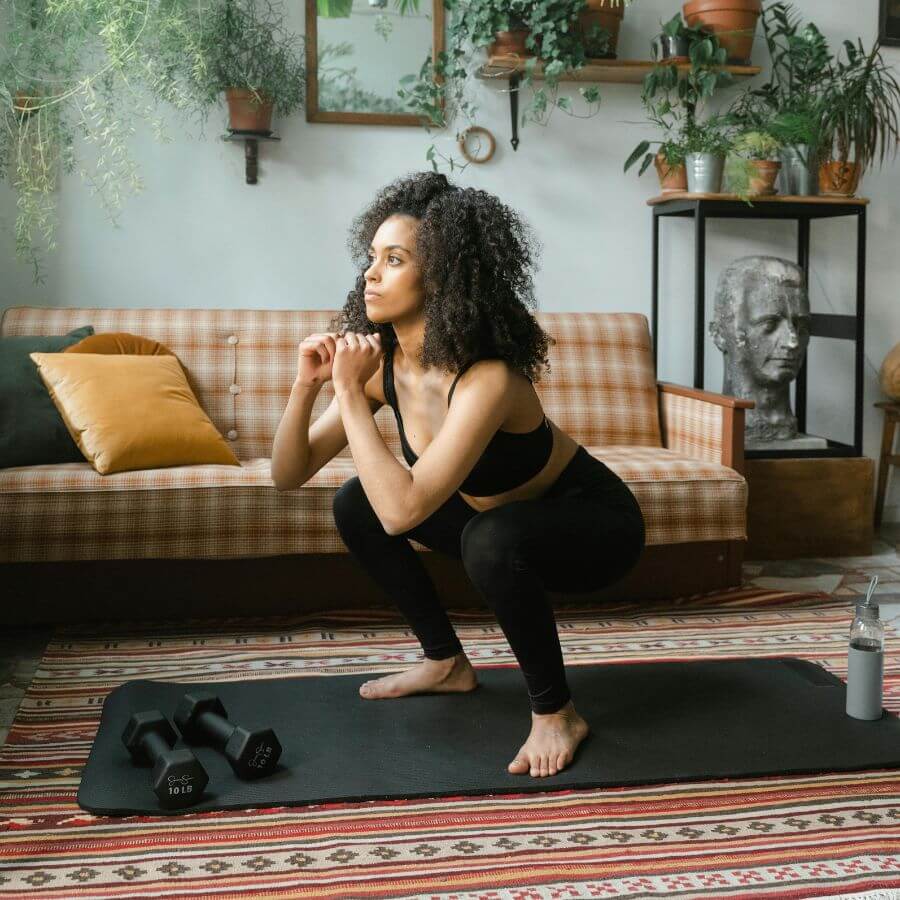
Set a timer for 10 minutes and move through simple exercises. Bodyweight squats, wall push-ups, glute bridges, marching in place, or step touches all work well. Keep it simple and move at a pace that feels right for your energy level that day.
- Pick 3–5 exercises.
- Do each move for 30–45 seconds.
- Rest as needed between exercises.
- Repeat until the timer ends.
Make Your Plan So Simple It Almost Feels Too Easy
A common mistake is building a workout plan for your best week instead of your normal week. Your best week might have extra energy, free time, great sleep, and a clear schedule. Real life usually does not look like that.
Start with a plan you can follow even when things are not perfect. That may mean three short workouts instead of six. It may mean strength training twice and walking once. Simple does not mean weak — it means repeatable.
A basic weekly goal that actually works:
- Two strength workouts — 20–30 minutes each
- One low-impact cardio session — a walk, bike ride, or dance cardio
- One short stretch or recovery day — 10–15 minutes
That is enough to build momentum. You can always add more once your energy, body, and schedule allow it — but start here.
For more structure, read Balanced Weekly Workout Plan for Women Over 40.
Connect Exercise to Something You Already Do
New habits stick better when they attach to routines you already have. This is called habit stacking — instead of trying to remember a workout randomly throughout a busy day, you connect it to something that already happens.
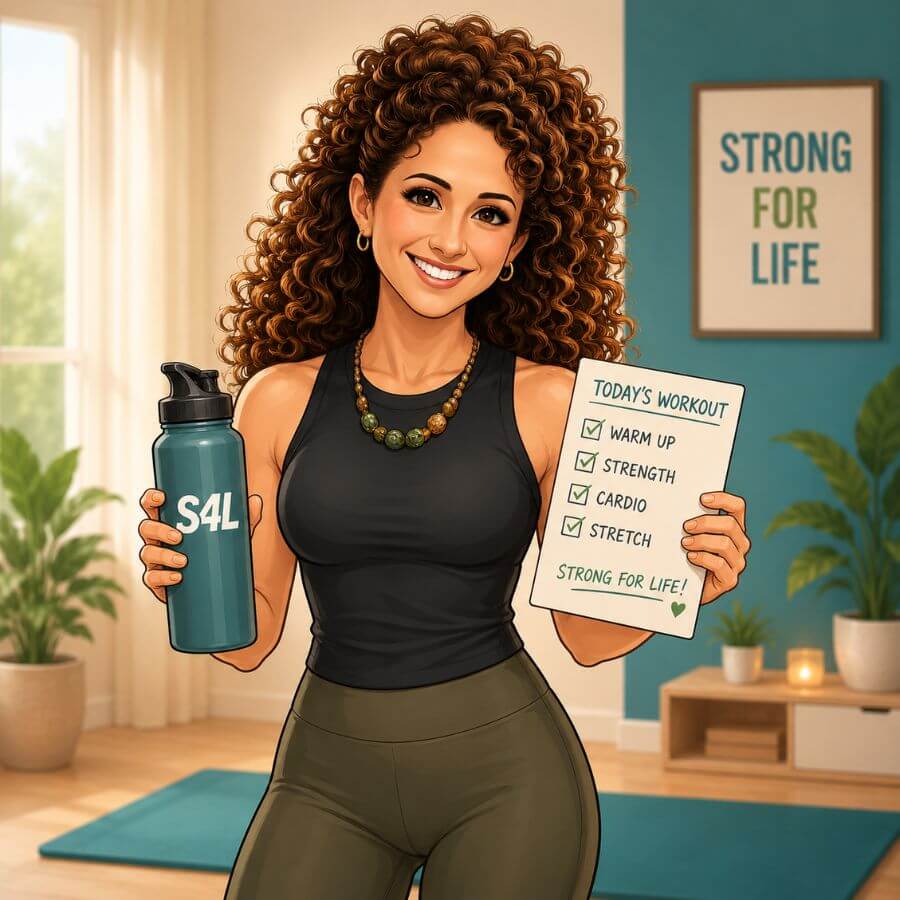
You could stretch after brushing your teeth, walk after lunch, do squats before your shower, or complete a 10-minute workout before you sit down in the evening.
- “After my morning coffee, I will walk for 10 minutes.”
- “After I drop the kids off, I will change into workout clothes.”
- “Before my shower, I will do one short strength circuit.”
- “After dinner, I will stretch for 5 minutes.”
Small anchors like these make follow-through easier because you are not depending on memory or mood to trigger the habit.
Keep a Bare Minimum Workout Ready
Every woman needs a bare minimum workout — the one you do on the hard days. Not the perfect days. Not the high-energy days. The days when life is a lot and you almost skipped it entirely.
A bare minimum workout removes decision fatigue. You do not have to think about what to do. You just start the timer and move through the list. Here is one you can use any time:
| Exercise Bodyweight Squats | Reps/Time 10 reps | Tip Use chair if needed |
| Exercise Wall Push-Ups | Reps/Time 10 reps | Tip Keep body straight |
| Exercise Glute Bridges | Reps/Time 10 reps | Tip Squeeze at the top |
| Exercise Marching in Place | Reps/Time 30 seconds | Tip Pump arms for intensity |
Repeat 1–3 times depending on your energy. That is it. Done is better than perfect every single time.
For more home workout ideas, read Body Weight Exercises for Women Over 40.
Do Not Turn One Missed Day Into a Missed Month
Missing a workout is normal. Missing a week can happen. The problem starts when one missed day turns into guilt, and guilt turns into quitting entirely.
Instead of thinking “I messed up,” try thinking “I am returning today.” That small shift matters more than it sounds. You are not starting over. You are continuing from where you left off.
The faster you return, the less power the missed day has over you. You do not need to punish yourself with a harder workout to make up for it. Just get back to the next simple step.
For more on the mindset behind showing up consistently, read Why Working Hard Matters in Fitness.
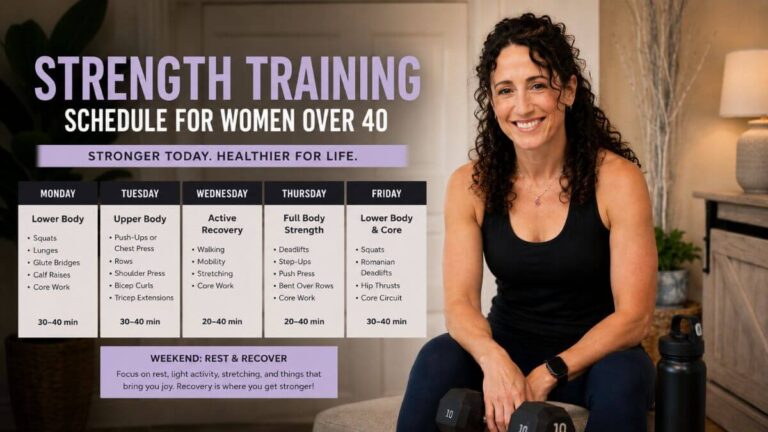
A Simple Weekly Consistency Plan
Here is a realistic plan for a busy week. It gives you structure without making exercise feel like a second job.
| Monday 10–20 min strength workout | Tuesday Walk or low-impact cardio | Wednesday Rest or stretch |
| Thursday 15–20 min strength workout | Friday Short walk or mobility | Saturday Optional longer workout |
| Sunday Rest and plan the week | Stay connected to the habit | Small still counts |
For low-impact cardio ideas that fit this kind of schedule, read Low-Impact Cardio Exercises for Women Over 40.
Make It Easier to Start
Starting is often the hardest part. Once you begin, the workout almost always feels less overwhelming than it did in your head. That is why your environment matters — remove the friction between you and the first rep.
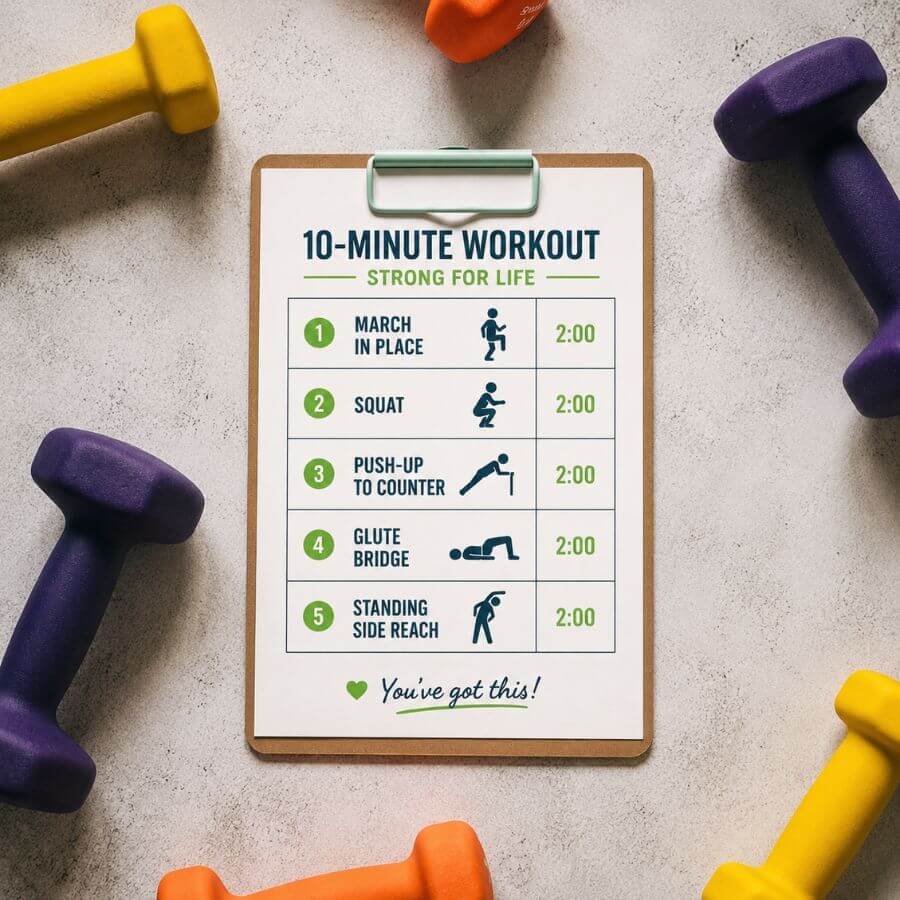
- Lay out your shoes and workout clothes the night before.
- Keep your water bottle nearby and filled.
- Choose your workout before the day gets busy — not during it.
- Keep a workout mat visible so it is a visual reminder.
- Save your workout plan somewhere easy to find.
When setup is simple, starting takes less energy — and starting is always the hardest part.
Choose Encouragement Over Pressure
Pressure might get you through one workout. Encouragement helps you build a lifestyle. You do not need to shame yourself into being consistent — that approach almost always backfires eventually.
Speak to yourself like someone you are trying to help. Notice what you did right. Celebrate the small follow-through moments. Let your workouts become proof that you can take care of yourself, even in the busiest seasons.
- “I showed up today — that matters.”
- “Ten minutes is still real progress.”
- “I am building trust with myself one workout at a time.”
- “I can return without starting over.”
The way you talk to yourself directly affects whether you keep going. Make it kind.
Tired Does Not Always Mean Do Nothing
Some tired days need real rest. Other tired days need gentle movement. Learning the difference is part of building a healthy, sustainable relationship with exercise.

- Choose rest when your body genuinely needs recovery — illness, injury, or deep fatigue.
- Choose gentle movement when stress is making you feel stuck — a walk often helps more than rest.
- Choose a shorter workout when time is the issue — 10 minutes still counts.
Your body is not a machine. Pay attention, adjust as needed, and keep moving forward with kindness toward yourself.
Final Thoughts
Staying consistent with exercise when you are tired, busy, and overwhelmed does not require perfect motivation or a perfect schedule.
It requires a plan that is simple enough to survive real life — and the willingness to keep coming back.
Start small. Return quickly after missed days. Let every small promise you keep build your confidence one workout at a time.
Need Simple Workouts That Fit Real Life?
Strength 4 Life helps women build strength at home with workouts that are realistic, beginner-friendly, and designed for real life — not fantasy schedules.
- Short, effective strength workouts
- Low-impact options for busy or tired days
- Simple weekly structure that actually works
- Encouragement without the overwhelm
Frequently Asked Questions
Start with shorter workouts, plan them ahead of time, and connect exercise to something you already do each day. Ten minutes done consistently beats an hour done occasionally. Simplify the plan until it fits the life you actually have — not your ideal week.
Yes — absolutely. Short workouts build consistency, improve confidence, and keep your habit alive on hard days. A 10-minute workout you complete every week is far more valuable than a 60-minute workout you only do once a month.
Return with the next simple workout — no guilt, no punishment, no trying to make up for everything at once. A missed week does not erase your progress. Just start again with the smallest version of your plan and build from there.
Stop relying on motivation and start relying on habits instead. Motivation comes and goes — habits are more reliable. On tired days, commit to just 5–10 minutes. Once you start, you will usually feel better and want to continue. If not, the 10 minutes still counts.
Two to three days of intentional movement per week is enough to build real consistency and see results — especially for beginners. Quality and regularity matter more than frequency. Two workouts a week done for six months beats six workouts a week done for two weeks.
Staying Consistent With Exercise Resources





Continue Your Strength Journey
 Step 1
 Step 2
 Step 3
 Step 4
 Step 5
Ready to put this into action?
💪 Start Your Free 7-Day Trial
Free Home Workout Starter Guide
Download your free PDF and start building strength today.
- 3 beginner-friendly routines
- No equipment needed
- Just 20 minutes a day
Enter your email to download