Balanced Weekly Workout Plan for Women Over 40
📋 Heather is an ISSA Certified Personal Trainer, not a doctor or medical professional. This article is for educational and motivational purposes only. Always check with your healthcare provider before starting a new fitness program.
A balanced weekly workout plan for women over 40 should help you feel stronger, healthier, and more energized — not exhausted, overwhelmed, or burned out.
That is one of the biggest problems with most fitness programs today. Everything feels extreme. Too much cardio, too many workouts, too much intensity, not enough recovery, and way too much pressure to be perfect every single week.
At this stage of life, your workout plan should support your body — not constantly punish it. That does not mean workouts should be easy or ineffective. It means your weekly plan needs four things working together:
- Strength training — to maintain muscle and support everyday function
- Movement and cardio — for heart health, energy, and consistency
- Mobility work — for joints, flexibility, and injury prevention
- Recovery — so your body can actually adapt and improve

Why Women Over 40 Need a Balanced Weekly Workout Plan
As we get older, our bodies change. Recovery takes longer. Energy fluctuates more. Hormones shift. And life is usually busier than it was at 25. That is exactly why balance matters more — not less — after 40.
A plan that only focuses on intense cardio leaves out the muscle-building work your body needs. A plan that only does strength training misses the heart health and endurance benefits of regular movement. A plan with no recovery days leads to fatigue, soreness, and eventually quitting.
- Strength training maintains muscle mass that naturally declines with age.
- Walking and cardio support heart health and daily energy.
- Mobility work keeps joints healthy and movement pain-free.
- Rest days allow muscles to repair and grow stronger.
For more on why strength training specifically matters after 40, read Why Strength Training Gets More Important After 40.
Strength Training Should Be the Foundation
Of all the components in a balanced weekly workout plan, strength training is the most important one to get right after 40. It is the piece most women are missing — and the one that makes the biggest difference to long-term health, function, and confidence.
Strength training helps support muscle mass, bone density, balance, posture, metabolism, joint stability, and everyday strength. And no — most women are not going to become bulky from lifting weights. What actually happens is they feel stronger, firmer, and more capable in their daily lives.
- Aim for 2–3 strength sessions per week as your foundation.
- Full-body workouts are most efficient for beginners.
- Focus on compound movements that train multiple muscle groups.
- Use dumbbells, resistance bands, or bodyweight to start.
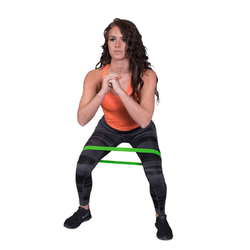
If you are brand new to strength training, start here: How to Start Strength Training at Home When You Feel Out of Shape.
Walking Still Matters More Than You Think
Sometimes women dismiss walking because it does not feel intense enough. That thinking undersells one of the most sustainable and beneficial forms of exercise available — especially after 40.
Walking supports heart health, stress management, energy, joint mobility, and daily movement consistency. It is low-impact, requires no equipment, and can be done anywhere. Most importantly it is something women actually do consistently — which matters more than any intense workout you only manage twice a month.
- Aim for 15–30 minutes of walking on non-strength days.
- Use walking as active recovery between strength sessions.
- Morning walks can help set your energy and mood for the day.
- Don’t underestimate the cumulative effect of consistent daily movement.
The CDC recommends adults get regular aerobic activity alongside muscle-strengthening activity each week — walking satisfies that aerobic component simply and sustainably.
Recovery Is a Non-Negotiable Part of the Plan
A lot of women treat recovery as optional — something to do only when they feel completely run down. But recovery is not a reward for working hard. It is a required part of the process. Your muscles repair, rebuild, and grow stronger during recovery — not during the workout itself.

After 40 this matters even more. Sleep quality, stress levels, hydration, and nutrition all affect how well your body recovers and responds to exercise.
Recovery does not mean sitting on the couch. Active recovery can include:
- gentle walking on rest days
- stretching or foam rolling
- 10–15 minutes of mobility work
- prioritizing 7–8 hours of sleep
- staying hydrated throughout the day
What a Balanced Weekly Workout Plan Actually Looks Like
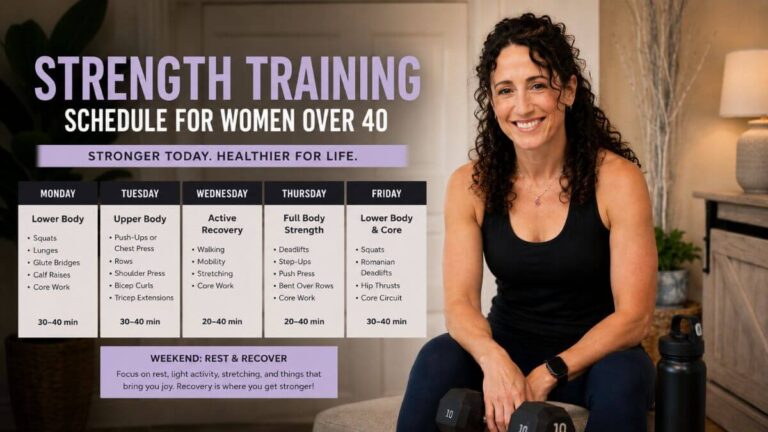
Here is a complete sample week that balances strength training, walking, mobility work, and recovery. Adjust the days to fit your schedule — the structure matters more than the specific days.
| Monday Full-Body Strength Workout | Tuesday Walk 20–30 min + light stretch | Wednesday Upper Body Strength Workout |
| Thursday Mobility work or gentle walk | Friday Lower Body + Core Workout | Saturday Walk, bike, or family activity |
| Sunday Full rest or light stretching | 3 strength sessions | Walking and recovery built in |
Sample Workouts for Each Strength Day
Here is what each strength session can look like. All three workouts can be done at home with minimal equipment.
Monday — Full-Body Strength
| Exercise Goblet Squats | Sets × Reps 3 × 10–12 | Tip Hold dumbbell at chest |
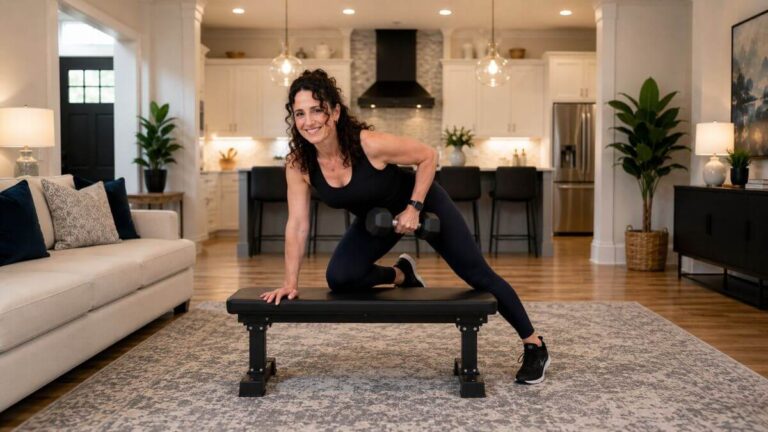
| Exercise Dumbbell Rows | Sets × Reps 3 × 10 per arm | Tip Lead with elbow |
| Exercise Glute Bridges | Sets × Reps 3 × 12–15 | Tip Squeeze at the top |
| Exercise Dead Bugs | Sets × Reps 2 × 8 per side | Tip Keep lower back pressed down |
Wednesday — Upper Body + Core
| Exercise Wall or Incline Push-Ups | Sets × Reps 3 × 10–12 | Tip Body in straight line |
| Exercise Dumbbell Shoulder Press | Sets × Reps 3 × 10–12 | Tip Start lighter than you think |
| Exercise Bicep Curls | Sets × Reps 3 × 10–12 | Tip Elbows pinned to sides |
| Exercise Bird Dogs | Sets × Reps 2 × 8 per side | Tip Move slow and controlled |
Friday — Lower Body + Core
| Exercise Reverse Lunges | Sets × Reps 3 × 8 per leg | Tip Hold wall for balance |
| Exercise Romanian Deadlifts | Sets × Reps 3 × 10–12 | Tip Hinge at hips, back flat |
| Exercise Glute Bridges | Sets × Reps 3 × 15 | Tip Add band for more challenge |
| Exercise Plank Hold | Sets × Reps 2 × 20–30 sec | Tip Knees down is perfectly fine |
For a complete guide to structuring your training week, read A Realistic Strength Training Schedule for Women Over 40.
You Do Not Need Perfect Workouts
This matters because many women quit fitness entirely when life gets messy. Kids get sick. Work gets stressful. Energy dips. Schedules fall apart. That does not mean you failed — it means you are human.
- A 15-minute workout still counts.
- A walk on a day you planned to strength train still counts.
- Modified exercises still count.
- Starting again after two missed weeks still counts.
Fitness works best when it becomes part of your lifestyle instead of something extreme you constantly start and stop. If consistency is your biggest challenge, read How to Stay Consistent With Exercise When You’re Tired, Busy, and Overwhelmed.
What If You Have Knee Pain or Joint Pain?
A lot of women stop moving entirely because something hurts. That is understandable — but often the answer is modification, not stopping completely. Many women can still benefit from strength training, walking, and mobility work even with joint sensitivity.
- Lower-impact strength exercises like glute bridges and dead bugs put minimal stress on the knees.
- Chair squats allow lower body training without deep knee flexion.
- Walking on flat surfaces is generally well-tolerated even with knee discomfort.
- Stronger glutes and quads actually help support and protect the knee joint over time.
Read: Strength Training with Knee Pain for specific modifications and guidance.
Nutrition Supports Your Workout Plan Too

You cannot out-train poor recovery and poor nutrition forever. Your body needs fuel to perform, recover, and build strength — especially after 40 when protein needs increase and recovery takes longer.
You do not need a perfect diet. You need better consistency most of the time:
- Prioritize protein at each meal to support muscle repair.
- Stay hydrated throughout the day — not just during workouts.
- Eat enough to fuel your training, not just survive it.
- Focus on whole foods most of the time without obsessing over perfection.

Read more: Good Nutrition: Why It Matters for Energy, Strength, and Results.
The Bottom Line
You do not need an extreme routine. You do not need daily punishment workouts. You need a plan that covers the fundamentals — strength, movement, recovery, and nutrition — consistently over time.
A balanced weekly workout plan for women over 40 should help you build strength, improve energy, recover well, and stay consistent long enough to see real results.
Want a Realistic Workout Plan You Can Actually Follow?
Inside Strength for Life, I help women build simple home workout routines that fit real life — no gym, no extreme fitness culture, no guesswork about what to do next.
- Done-for-you strength-focused workouts
- Beginner-friendly guidance that progresses with you
- Home-friendly training under 40 minutes
- Supportive coaching from a certified trainer
Frequently Asked Questions About a Balanced Weekly Workout Plan for Women Over 40
Three strength workouts per week plus regular walking is an excellent target for most women over 40. That gives you enough training volume to build strength while leaving room for recovery and real life.
Walking is excellent for heart health, stress management, and daily movement — but adding strength training two to three days per week provides additional benefits that walking alone cannot, including muscle maintenance, bone density support, and improved metabolism.
Yes — strength training is one of the most beneficial things women over 40 can do for muscle mass, bone density, balance, posture, and long-term health. You do not need heavy weights to start seeing results.
Missing workouts happens to everyone. Skip the guilt, don’t try to double up to catch up, and simply return to your next scheduled session. Consistency over months matters far more than perfection every week.
20–40 minutes is plenty for a balanced strength workout. Short consistent sessions will always outperform long sporadic ones. If you only have 20 minutes, use them — it counts.
Fitness Over 40 Resources




Build Your Home Workout Routine
 Step 1
 Step 2
 Step 3
 Step 4
 Step 5
Ready to put this into action?
💪 Start Your Free 7-Day Trial
Free Home Workout Starter Guide
Download your free PDF and start building strength today.
- 3 beginner-friendly routines
- No equipment needed
- Just 20 minutes a day
Enter your email to download