Why Strength Training Matters More After 40: The Complete Guide for Women
📋 Heather is an ISSA Certified Personal Trainer, not a doctor or medical professional. This article is for educational and motivational purposes only. Always check with your healthcare provider before starting a new fitness program.
If you are over 40 and wondering whether strength training is really worth your time, my answer is simple: yes. Not because you need to chase some impossible fitness standard, and not because you need to look like someone on social media.
Strength training gets more important after 40 because your body starts asking for a different kind of support. You may notice changes in energy, muscle tone, posture, recovery, balance, weight management, and confidence. That does not mean your best years are behind you. It means your workouts need to work with your body instead of against it.
Cardio still matters. Walking still matters. Mobility still matters. But strength training is the piece many women are missing.
- It helps you keep and build muscle.
- It supports your bones and joints.
- It helps everyday tasks feel easier.
- It can improve confidence in and out of workouts.
The CDC recommends adults do muscle-strengthening activities at least two days per week, working all major muscle groups — legs, hips, back, abdomen, chest, shoulders, and arms.

Your Body Starts Changing After 40
A lot of women feel frustrated after 40 because the same things that used to work do not seem to work the same way anymore. Maybe your energy dips faster. Maybe weight feels harder to manage. Maybe your body feels softer, tighter, or less strong than it used to.
That can feel discouraging, but it is also a signal. Your body is not betraying you. It is asking for better support.
- You may lose muscle more easily if you are not using it.
- Your posture may suffer from sitting, stress, or daily habits.
- Your joints may feel better with stronger muscles around them.
- Your recovery may need more attention than it did years ago.
Strength training gives your body a reason to stay strong. That matters more with every decade.
Muscle Is Not Just About Looks
Many women think strength training is mostly about toning arms, shaping legs, or changing how clothes fit. Those things can happen, and they are not wrong goals. But muscle is about much more than appearance.
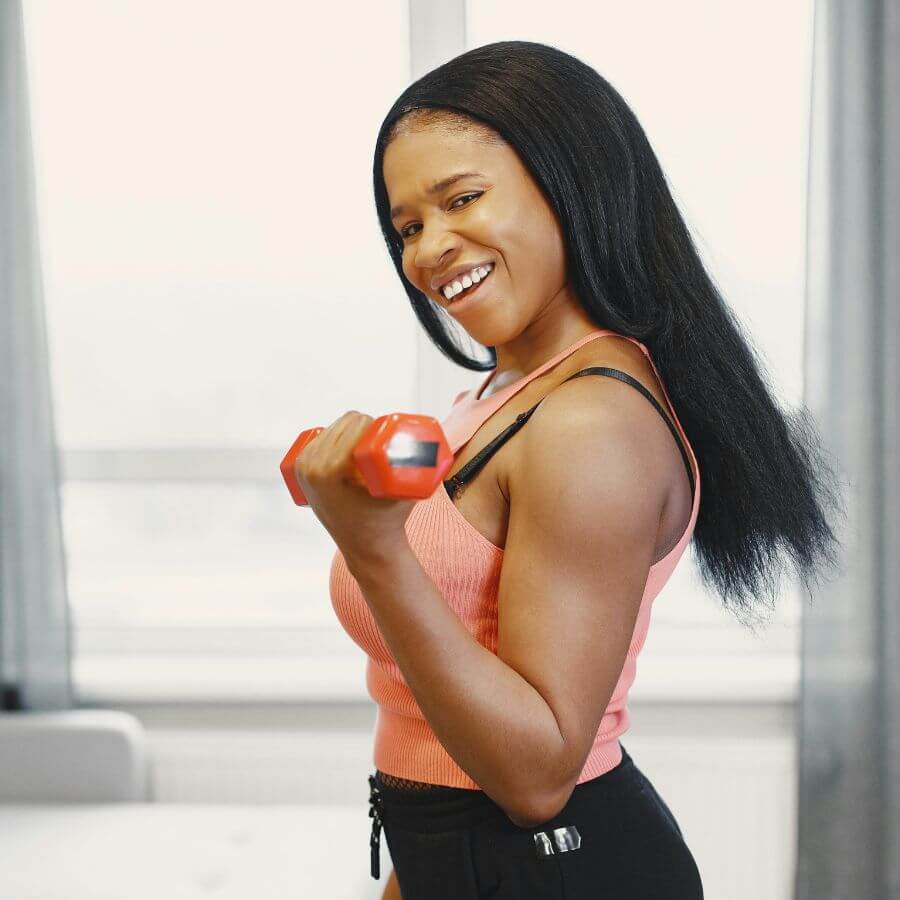
Muscle helps you lift, carry, push, pull, climb stairs, get off the floor, support your posture, and move with more confidence. It is part of your independence.
- Carrying groceries uses strength.
- Getting out of a low chair uses strength.
- Protecting your back while lifting laundry uses strength.
- Feeling steady on stairs uses strength.
If you are restarting after time away, read: How to Start Working Out Again After a Long Break
Strength Training Helps Protect Your Muscle
As we age, muscle becomes something we need to be more intentional about keeping. If you are not challenging your muscles, your body has less reason to maintain them.
You do not need extreme workouts
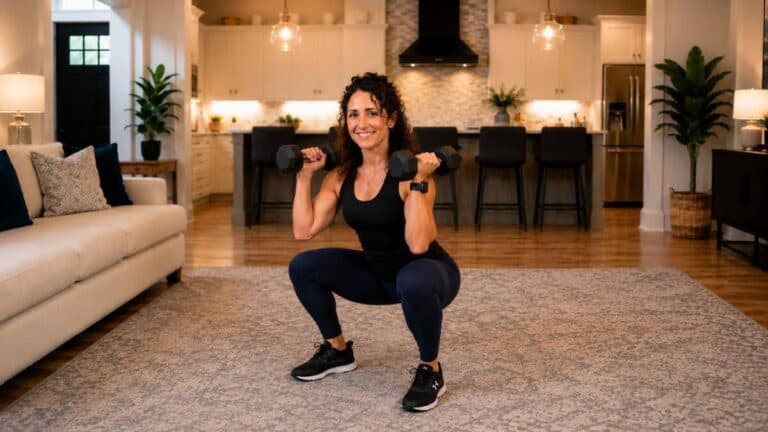
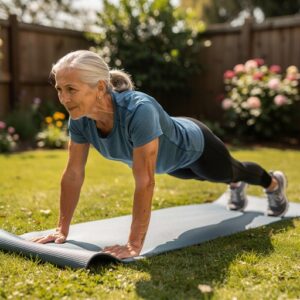
The good news is that you do not need a gym, heavy barbells, or complicated routines to begin. Bodyweight exercises, dumbbells, resistance bands, and simple home workouts can all help — and a five-exercise routine is genuinely enough to start seeing results.
| Exercise Chair Squats | Sets × Reps 2–3 × 8–12 |
| Exercise Wall Push-Ups | Sets × Reps 2–3 × 8–12 |
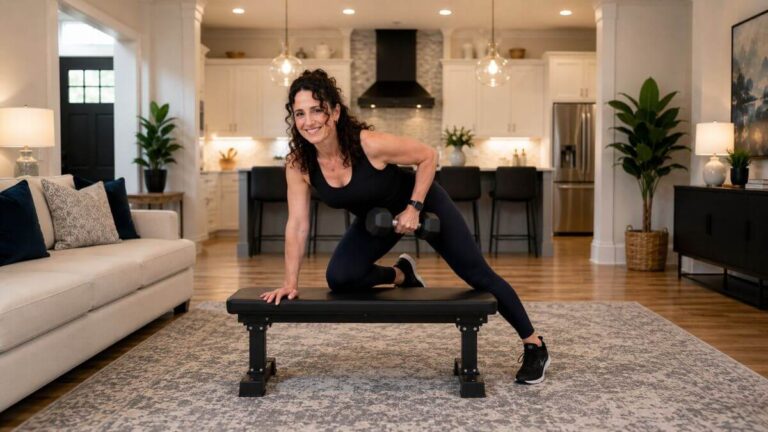
| Exercise Dumbbell Rows | Sets × Reps 2–3 × 8–12 per side |
| Exercise Glute Bridges | Sets × Reps 2–3 × 10–15 |
| Exercise Shoulder Press | Sets × Reps 2–3 × 8–12 |
Pairing your workouts with the right foods makes a real difference too — read: Good Nutrition and Why It Matters for Energy and Results.
A simple routine done consistently can make a real difference. For complete how-to instructions, read Best Beginner Strength Exercises for Women Over 40.
Strength Training Supports Your Bones and Joints
After 40, bone health and joint support become more important. Strength training can help by placing healthy stress on your muscles and bones while improving the support around your joints.
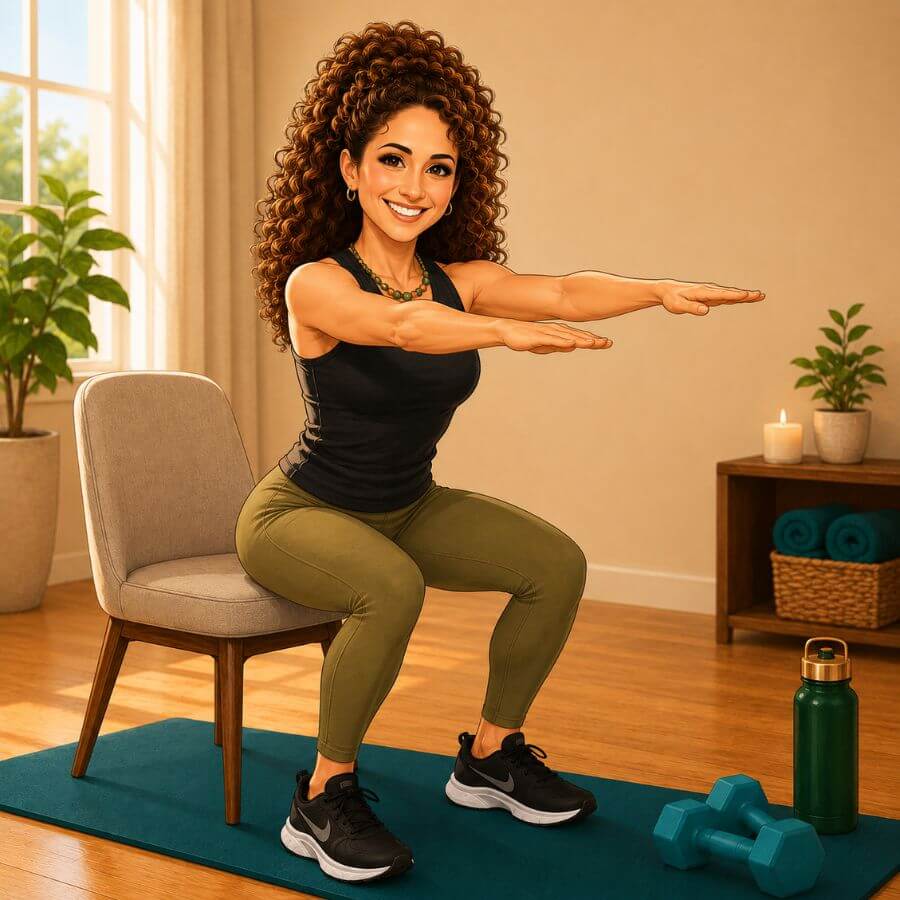
Stronger muscles can also help your knees, hips, shoulders, and back feel more supported during everyday movement. This is especially helpful if you are trying to stay active without feeling beat up.
- Stronger legs can support your knees and hips.
- A stronger back can improve posture.
- A stronger core can support daily movement.
- Stronger shoulders can make lifting and carrying easier.
For joint-friendly lower body ideas, read: Low Impact Leg Exercises for Women Over 40
Strength Training Can Help With Weight Management
Many women over 40 feel like weight management gets harder. Hormones, stress, sleep, muscle loss, and a busy life can all play a role.
Strength training is not a magic trick, but it is a powerful tool. Muscle is active tissue. When you build and maintain muscle, you are supporting a body that functions better.
- Strength workouts help preserve muscle while losing fat.
- More muscle can support a healthier metabolism.
- Training can improve how your body feels and performs.
- It pairs well with walking and simple nutrition habits.
If your main question is whether cardio or strength training matters more for fat loss, this article will help: Strength Training vs Cardio for Women: What Actually Helps You Lose Weight?
It Improves Posture and Daily Confidence
Strength training can change how you carry yourself. Not just physically, but mentally too.
When your upper back, shoulders, core, and glutes get stronger, your posture often improves. You may feel more upright, stable, and aware of your body. That can make a big difference if you spend a lot of time sitting, driving, working at a computer, or caring for others.
- Rows can strengthen your upper back.
- Core work can support your posture.
- Glute exercises can help support hips and lower back.
- Shoulder exercises can improve upper body strength.
Learning to push past your comfort zone is part of the process — here’s why working hard matters in fitness.
Confidence is not only about what you see in the mirror. Sometimes it is noticing that you can lift, move, stand, and carry yourself better than before.
You Do Not Have to Lift Heavy to Begin
One reason women avoid strength training is the fear that they need to lift heavy weights right away. You do not.
Beginners can make progress with light dumbbells, resistance bands, bodyweight movements, and controlled form. The key is choosing exercises that challenge you without making you feel unsafe or overwhelmed.
- Start with a weight you can control.
- Focus on smooth movement.
- Stop a set before your form falls apart.
- Increase slowly over time.
Strength training should feel challenging, but it should not feel scary.
A Simple Way to Start Strength Training After 40
If you are new or coming back after a long break, begin with two strength workouts per week. Keep the movements simple and repeat them long enough to improve.
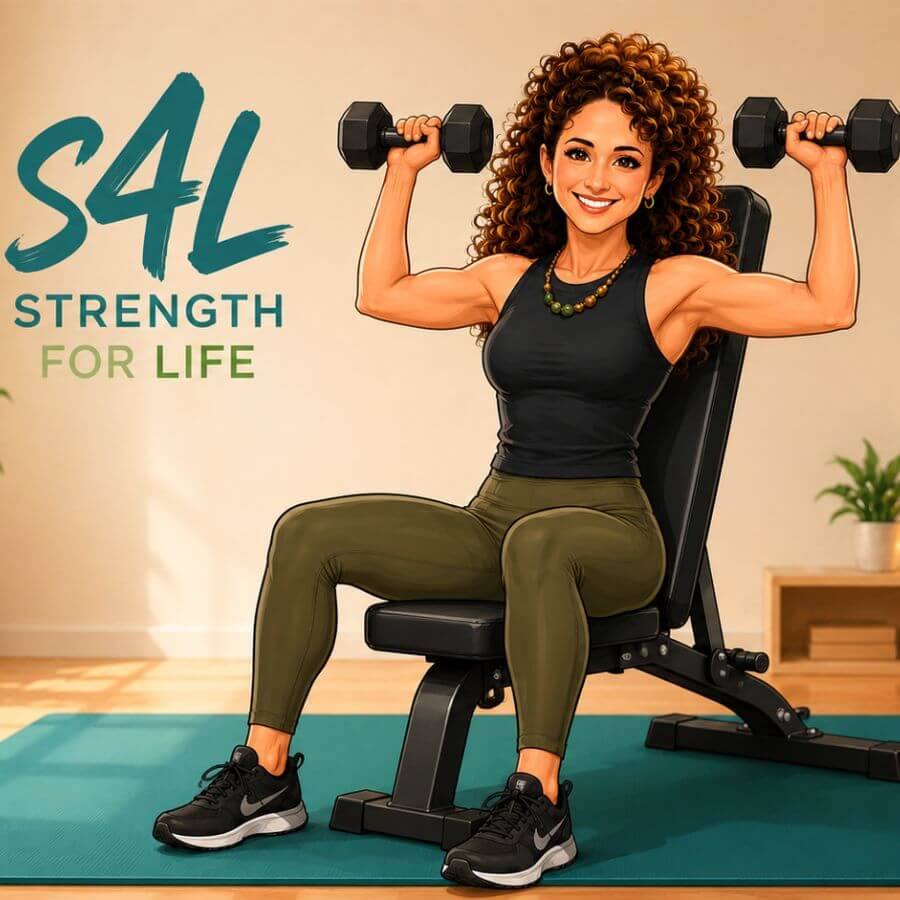
- Squat or chair squat
- Wall push-up or incline push-up
- Dumbbell row
- Glute bridge
- Shoulder press
- Dead bug or simple core exercise
Do 1 to 3 rounds depending on your fitness level. Rest when needed. Keep your form clean and your effort controlled.
For upper body ideas, read: Beginner Upper Body Exercises for Women at Home
How Often Should Women Over 40 Strength Train?
A great starting point is two days per week. That matches the CDC recommendation for adults and gives your body time to recover between workouts.
As you get stronger, you may choose to move toward three or four days per week. But more is not always better if your recovery, sleep, schedule, or stress level cannot support it.
| Beginner 2 strength days per week | Building Momentum 2–3 strength days per week | More Experienced 3–4 strength days per week |
| Goal Learn form and build habit | Goal Add volume slowly | Goal Build strength with recovery |
If you want a simple weekly layout, read Balanced Weekly Workout Plan for Women Over 40.
Strength Training Works Best When It Fits Your Life
The best strength plan is not the most complicated one. It is the one you can repeat.
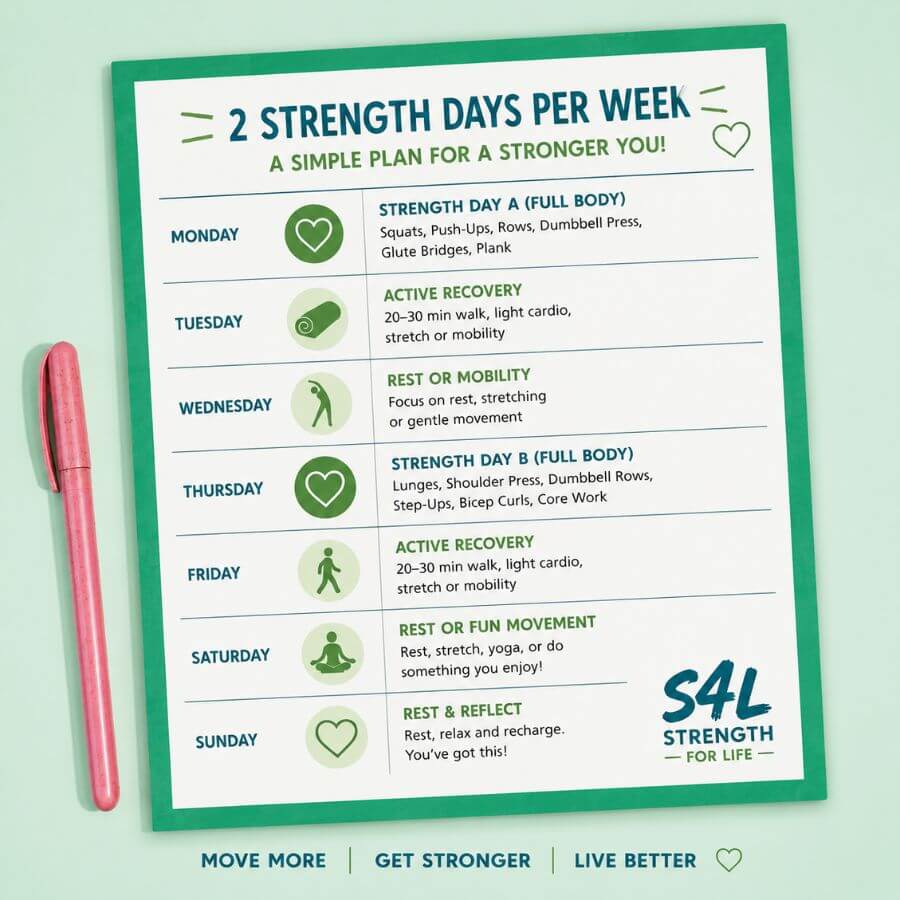
You do not need to train every day. You do not need to be sore after every workout. You do not need perfect motivation. You need a realistic routine that fits the life you actually have.
- Short workouts count.
- Home workouts count.
- Light weights count.
- Starting over counts.
That is how strength becomes a lifestyle instead of another thing you quit when life gets busy.
Common Mistakes to Avoid
Strength training is simple, but a few common mistakes can make it harder than it needs to be.
- Doing too much too soon: Start slowly and build over time.
- Skipping recovery: Your muscles need time to adapt.
- Using poor form: Control matters more than speed.
- Only doing cardio: Walking is great, but strength matters too.
- Quitting after one missed week: Just return to the next workout.
If consistency is your biggest struggle, read How to Stay Consistent With Exercise When You’re Tired, Busy, and Overwhelmed.
Final Thoughts
Strength training gets more important after 40 because your body needs muscle, stability, support, and confidence more than ever.
You are not too old to start. You are at the perfect time to begin taking your strength seriously.
Start simple. Stay consistent. Build slowly. Your future self will thank you.
Want Simple Strength Workouts You Can Do at Home?
Strength 4 Life helps women build strength with realistic home workouts that are clear, supportive, and beginner-friendly.
- Simple workouts for women over 40
- Beginner-friendly strength training
- Low-impact options
- Supportive guidance that fits real life
Already in your 50s? Read How to Build Muscle After 50 for specific guidance on training at this stage.
Frequently Asked Questions
Strength training helps women over 40 maintain muscle, support bones and joints, improve posture, and make everyday movement easier. It directly addresses the muscle loss that naturally accelerates with age.
Two days per week is a great starting point. As your strength and recovery improve, you can build toward three or more days if it fits your life.
No. Beginners can build strength with bodyweight exercises, light dumbbells, resistance bands, and controlled movement. Most progress comes from consistency, not heavy weight.
Both matter. Cardio supports heart health and endurance, while strength training supports muscle, posture, bones, joints, and daily function. A balanced routine includes both working together.
Most women notice improved energy and easier daily movement within 2–3 weeks of consistent training. Visible strength and body composition changes typically show up around weeks 6–8.
Fitness Over 40 Resources




Explore More Fitness Over 40 Resources
 Step 1
 Step 2
 Step 3
 Step 4
 Step 5
Ready to put this into action?
💪 Start Your Free 7-Day Trial
Free Home Workout Starter Guide
Download your free PDF and start building strength today.
- 3 beginner-friendly routines
- No equipment needed
- Just 20 minutes a day
Enter your email to download