How to Start Strength Training at Home When You Feel Out of Shape
📋 Heather is an ISSA Certified Personal Trainer, not a doctor or medical professional. This article is for educational and motivational purposes only. Always check with your healthcare provider before starting a new fitness program.
If you’ve been wanting to start working out again but feel completely out of shape, overwhelmed, or embarrassed to even begin — I want you to know something right away:
You are not alone. A lot of women feel exactly this way.
- Life gets busy.
- Our bodies change over time.
- Energy levels shift.
- And motivation naturally comes and goes.
Before you know it, years have passed since you’ve had a consistent workout routine. That does not mean it’s too late. It just means you’re starting from where you are now — and honestly, that’s perfectly okay.

The Biggest Lie in Fitness
One of the most common things women believe is this: “I need to feel motivated first.”
That is rarely true. Most of the time, motivation comes after you start moving — not before. Waiting until you feel ready is one of the main reasons women stay stuck.
- You do not need to feel perfectly ready.
- You do not need fancy workout clothes or new gear.
- You do not need a gym membership.
- You do not need to have it all figured out before you begin.
You just need a place to start. That’s it.
Start Smaller Than You Think You Need To
This is one of the most important things I can tell you. Most women who try to get back into fitness make the same mistake — they try to do too much too fast.

They jump into long workouts, hard cardio, seven-day routines, strict diets, and exhausting programs. And then they burn out — fast. After two weeks, life gets in the way and the whole thing falls apart.
Instead: start simple. Really simple.
What You Actually Need to Start
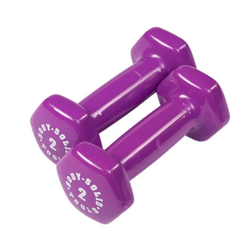
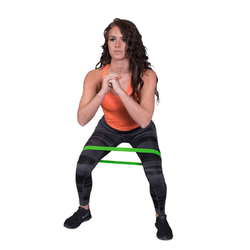
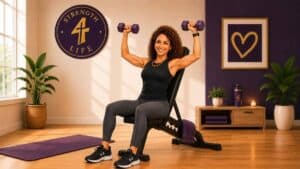
The good news is you probably need far less equipment than you think. For most beginners, this is genuinely enough to get started and see real results:
- Comfortable shoes
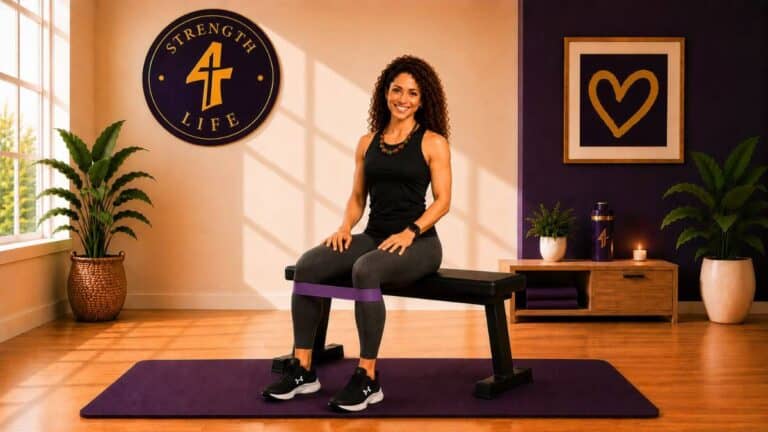
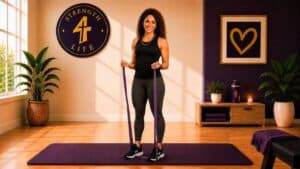
- Resistance bands
- Light dumbbells
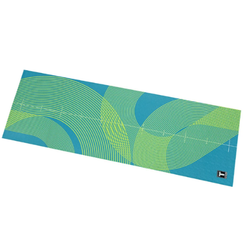
- A workout mat
- A realistic plan you can actually repeat
You Do Not Need a Gym
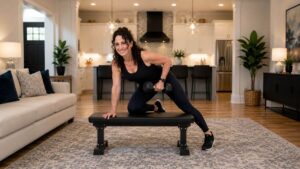
A lot of women feel intimidated by gyms — the equipment, the people, the feeling that everyone knows what they are doing except you. You can absolutely build real strength at home and skip all of that entirely.
In fact, many women are more consistent at home because it saves time, feels less intimidating, fits more easily into a busy schedule, and removes the self-consciousness of working out in front of others. For most beginners, home workouts work extremely well.
Read: The Simple Strength Plan for Women Over 40 — a complete home-based starting point.
What Exercises Should Beginners Start With?
You do not need complicated movements. Simple exercises that support everyday strength and movement are always best for beginners. Focus on these foundational patterns:
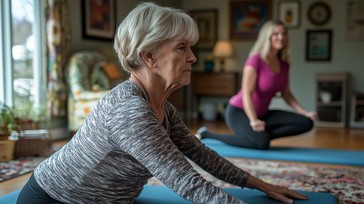
- Squats or chair squats — leg and glute strength
- Glute bridges — hips and lower body
- Dumbbell rows — upper back and posture
- Wall push-ups — chest, shoulders, and arms
- Overhead presses — shoulder strength
- Dead bugs or bird dogs — core stability
- Walking — endurance and daily movement
That is genuinely enough to start building real strength. Read Best Beginner Strength Exercises for Women Over 40 for full how-to instructions on each one.
Your First Beginner Home Workout
Here is a simple starter workout you can do today. Do 2 sets of each exercise to begin. Rest 60 seconds between sets. The whole thing should take about 20 minutes.
| Exercise Chair Squats | Sets × Reps 2 × 8–10 | Tip Lower until you touch the seat |
| Exercise Wall Push-Ups | Sets × Reps 2 × 8–10 | Tip Keep body in a straight line |
| Exercise Glute Bridges | Sets × Reps 2 × 10–12 | Tip Squeeze glutes at the top |
| Exercise Dumbbell Rows | Sets × Reps 2 × 8 per arm | Tip Lead with elbow, not hand |
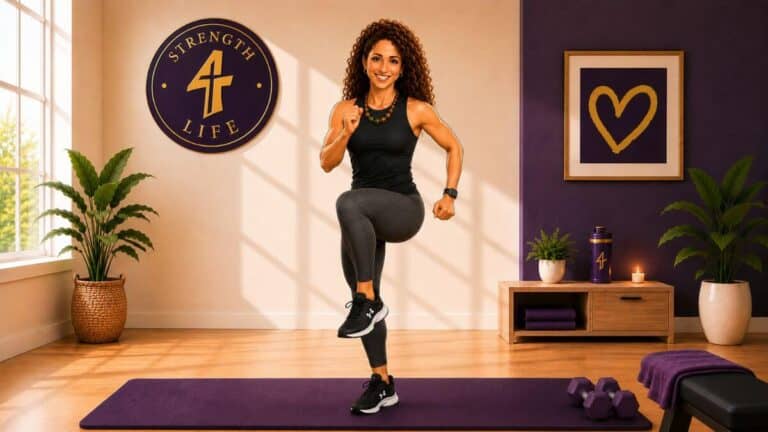
| Exercise Standing Marches | Sets × Reps 2 × 30 sec | Tip Hold counter if needed for balance |
Finish feeling successful enough to come back again. That is the only goal for your first workout.
Walking Counts More Than You Think
Please do not underestimate walking. It is one of the most sustainable, joint-friendly, and genuinely effective forms of exercise available — especially for women returning to fitness after a long break.
Walking helps build endurance, supports heart health, improves mood, reduces stress, and makes consistency easier because it requires nothing but a pair of shoes and a few minutes.
According to Cleveland Clinic, regular walking supports heart health, joint health, mood, and overall wellness. If all you can do right now is walk for 10–20 minutes — that is still a genuine win. Start there.
What If You Have Knee Pain or Joint Pain?
This is extremely common — and one of the main reasons women stop exercising. But pain does not always mean you should stop moving completely. Most of the time it means you need modifications, lower-impact movements, slower progression, and strength work around the affected joints.
- Glute bridges and dead bugs put minimal stress on the knees.
- Chair squats reduce the range of motion to a manageable level.
- Wall push-ups eliminate wrist and shoulder stress for beginners.
- Building strength around the knee actually helps protect it over time.
Read: Strength Training with Knee Pain for specific modifications.
How Often Should Beginners Work Out?
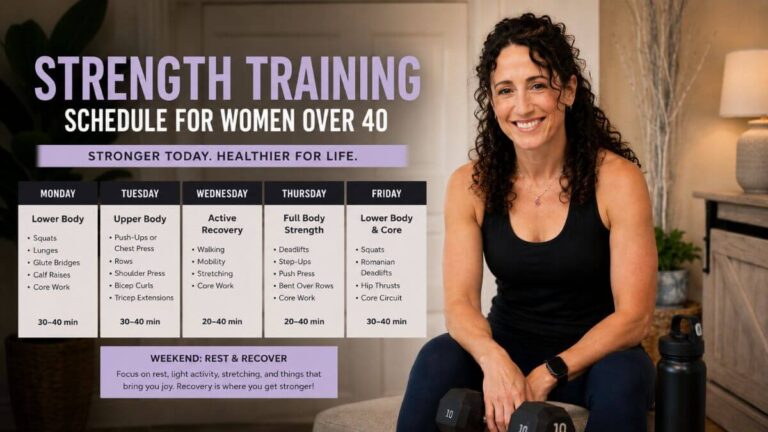
You do not need to work out every day. A realistic beginner schedule that is actually sustainable looks like this:
| Monday 20–30 min strength workout | Tuesday Walk or light movement | Wednesday Strength workout |
| Thursday Rest or stretching | Friday Strength workout | Saturday Walk or family activity |
| Sunday Rest | That’s plenty. | And it’s sustainable. |
For a more detailed weekly structure, read A Realistic Strength Training Schedule for Women Over 40.
The Scale Is Not the Only Sign of Progress
This matters more than most women realize. A lot of people quit because the scale does not move fast enough — and they miss all the real progress happening underneath the surface.
Real progress in the early weeks often looks like:
- more consistent energy throughout the day
- less joint pain and stiffness
- better sleep quality
- improved mood and mental clarity
- more confidence in your body
- better balance and steadiness
- everyday tasks feeling noticeably easier
- clothes starting to fit differently
Those things matter. They are real results — even if the scale hasn’t caught up yet.
Stop Comparing Yourself to Fitness Influencers
Most women you see online doing fitness content are doing it full time, showing highlight reels, using filters and editing, or living lifestyles that have nothing to do with real life. That is not your competition and it is not your standard.
You do not need to look perfect to improve your health. You do not need six-pack abs to be successful. You just need to show up consistently — for yourself, in your own life, at your own pace.
What If You’ve Started and Quit Before?
Honestly? That is most people. Please do not let guilt stop you from trying again. Starting over does not erase the fact that you are trying to take care of yourself. You are allowed to begin again — as many times as it takes.
Every woman who is now consistent with exercise was once inconsistent. The difference is they kept coming back. That is all this requires — keep coming back.
If consistency is your biggest challenge, read How to Stay Consistent With Exercise When You’re Tired, Busy, and Overwhelmed.
A Better Goal for Beginners
Instead of focusing on “I need to lose 40 pounds,” try shifting to “I want to become someone who moves consistently.”
That mindset shift matters enormously. Healthy habits almost always come before major results — not the other way around. Focus on building the habit first. The results follow the habit.
Why Strength Training Is Especially Important After 40
As we get older, we naturally lose muscle if we do not actively work to maintain it. After 40 that process accelerates — and the effects show up in energy, metabolism, balance, posture, and everyday strength.
Strength training helps support:
- muscle mass that naturally declines with age
- bone density and long-term joint health
- balance and coordination
- posture and reduced back pain
- metabolism and body composition
- mobility and long-term independence
According to Harvard Health, strength training is one of the most important forms of exercise for healthy aging. And no — lifting weights does not make most women bulky. That is one of the most persistent myths in women’s fitness.
You Do Not Need Perfect Conditions to Start
You do not need a perfect schedule, unlimited energy, a perfect diet, perfect motivation, or perfect consistency. None of those things are required.
You just need to start where you are. Even small workouts count. Even imperfect weeks count. Even starting over for the fourth time counts.
Progress is still progress — no matter how small it looks from the outside.
Ready to Keep It Simple?
Inside the Strength for Life membership, I help women build strength at home, stay consistent, and stop feeling overwhelmed by fitness — with realistic workouts designed for real life.
- Simple beginner-friendly home workouts
- Strength-focused training that progresses with you
- No extreme programs or unrealistic expectations
- Supportive guidance from a certified trainer who gets it
Frequently Asked Questions
Absolutely. Most beginners get excellent results starting at home with bodyweight exercises, light dumbbells, and resistance bands. You do not need a gym to build real strength.
Start slowly and focus on consistency rather than intensity. Use the beginner modifications for each exercise, keep workouts short, and give yourself permission to build gradually. Everyone starts somewhere — your starting point does not determine your outcome.
20–30 minutes is plenty for a beginner strength workout. A short workout you actually complete is always better than a long workout you skip because it feels too daunting.
Walking is an excellent starting point and should not be underestimated. For most women, combining regular walking with 2 strength sessions per week covers the full range of what the body needs and is sustainable long term.
No. Many women build significant strength starting with bodyweight exercises, resistance bands, or 3–10 pound dumbbells. Controlled movement with lighter weights builds real strength — especially in the early weeks when your nervous system is learning the movements.
That is completely normal and does not mean anything is wrong with you. Most women have started and stopped multiple times. The key is simply to start again — with a more realistic plan, shorter workouts, and less pressure on yourself to be perfect from day one.
Beginner Strength Training Resources
Continue Your Strength Journey
 Step 1
 Step 2
 Step 3
 Step 4
 Step 5
Ready to put this into action?
💪 Start Your Free 7-Day Trial
Free Home Workout Starter Guide
Download your free PDF and start building strength today.
- 3 beginner-friendly routines
- No equipment needed
- Just 20 minutes a day
Enter your email to download