Strength Training with Knee Pain
📋 Heather is an ISSA Certified Personal Trainer, not a doctor or medical professional. This article is for educational and motivational purposes only. Always check with your healthcare provider before starting a new fitness program.
Strength training with knee pain can feel intimidating at first.
A lot of women assume knee pain means they should completely avoid strength training altogether.
But in many cases, the answer is not stopping movement completely. The answer is learning how to train more carefully and choosing exercises that work WITH your body instead of against it.
- Lower-impact movements
- Better exercise selection
- Proper modifications
- Improved glute and hip strength
- Controlled movement patterns
That does NOT mean ignoring pain or trying to “push through” serious discomfort.
And of course, persistent or worsening knee pain should always be evaluated by a qualified healthcare provider.

Can You Strength Train with Knee Pain?
In many cases, yes. Many women can continue strength training with knee pain by modifying exercises, reducing impact, and focusing on movements that feel controlled and tolerable.
However, not all knee pain is the same. Some situations absolutely require medical evaluation before continuing exercise. Stop and check with a healthcare provider if you notice:
- Sharp or severe pain
- Swelling
- Instability — the knee feeling like it might give out
- Locking or catching during movement
- Pain that continues worsening despite modifications
If you are just getting started overall, read How to Start Strength Training at Home When You Feel Out of Shape.
1. Focus on Glute and Hip Strength
One of the biggest mistakes people make with knee pain is focusing ONLY on the knees themselves. In reality, the hips and glutes play a huge role in supporting lower-body movement and stability — weak glutes often force the knees to absorb stress they weren’t designed to handle alone.
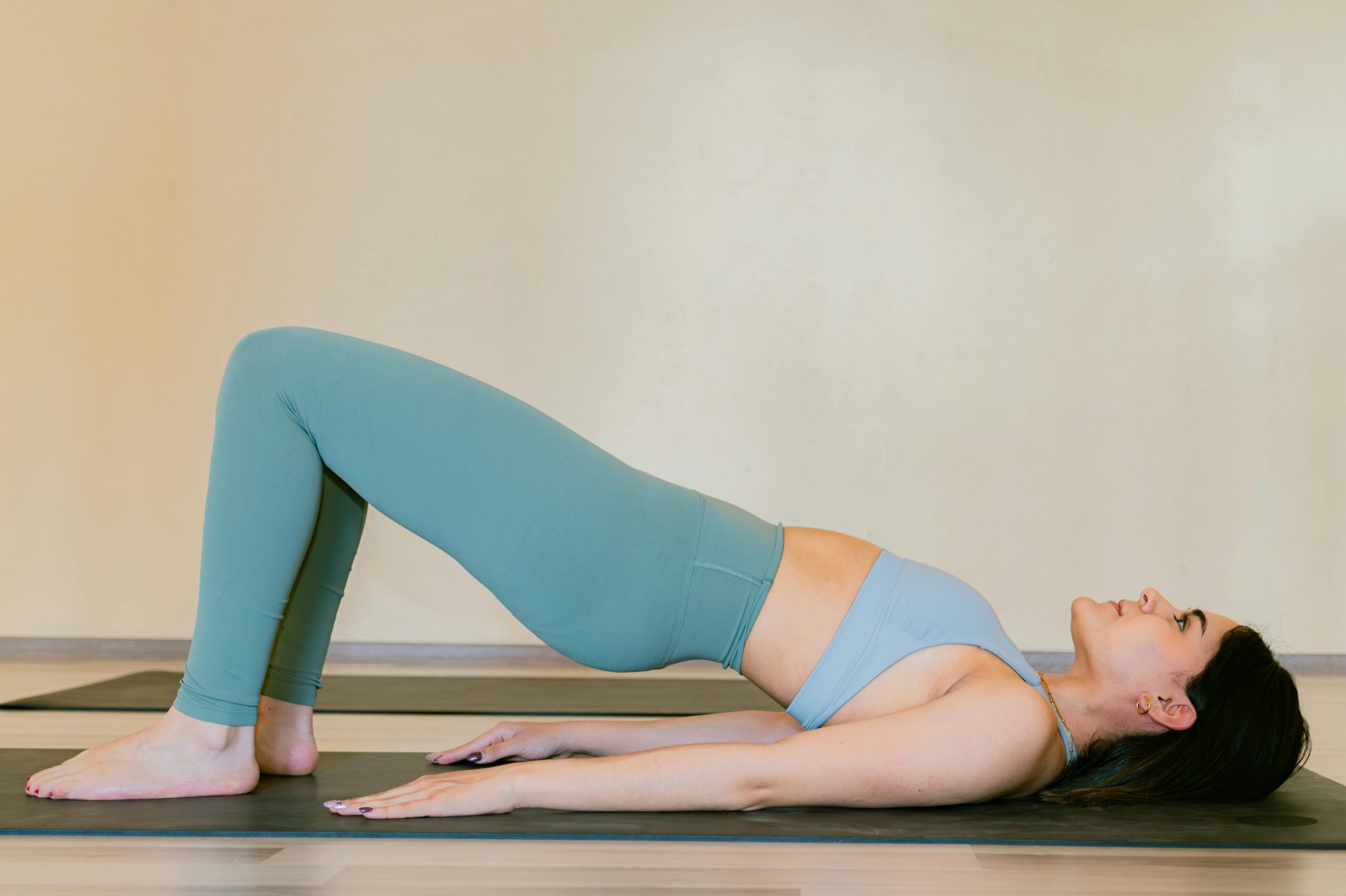
Glute Bridges: 3 × 12–15. Lie on your back, knees bent, feet flat. Press through your heels and lift your hips, squeezing the glutes at the top. Zero stress on the knees.
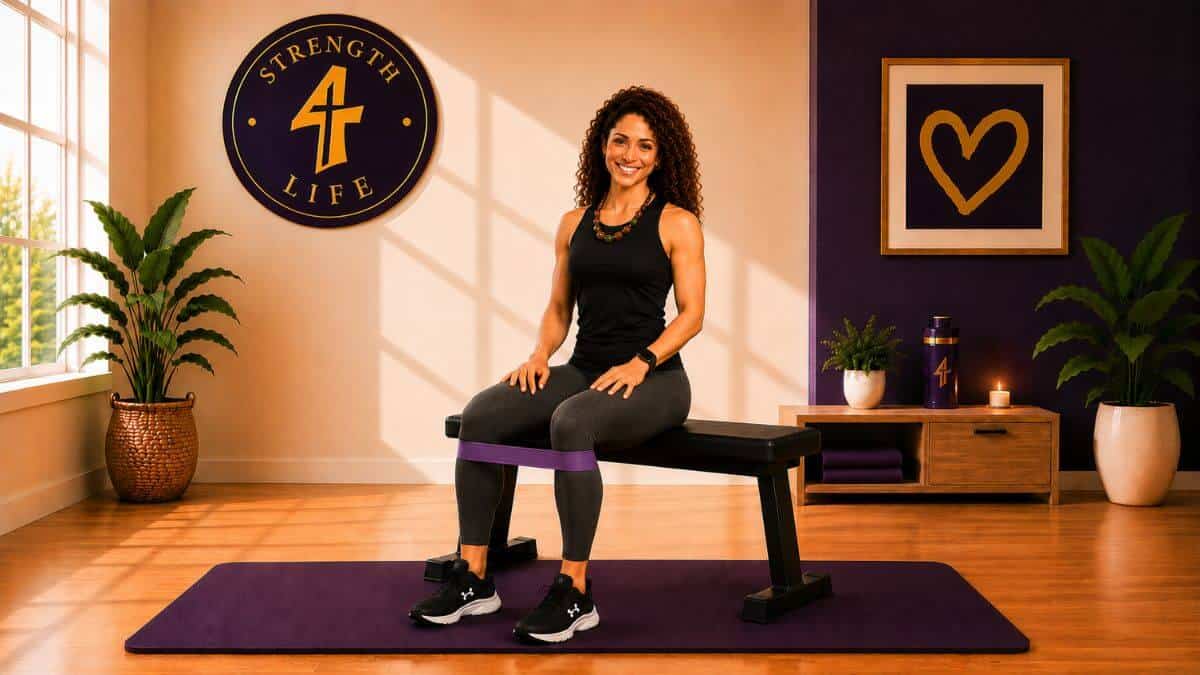
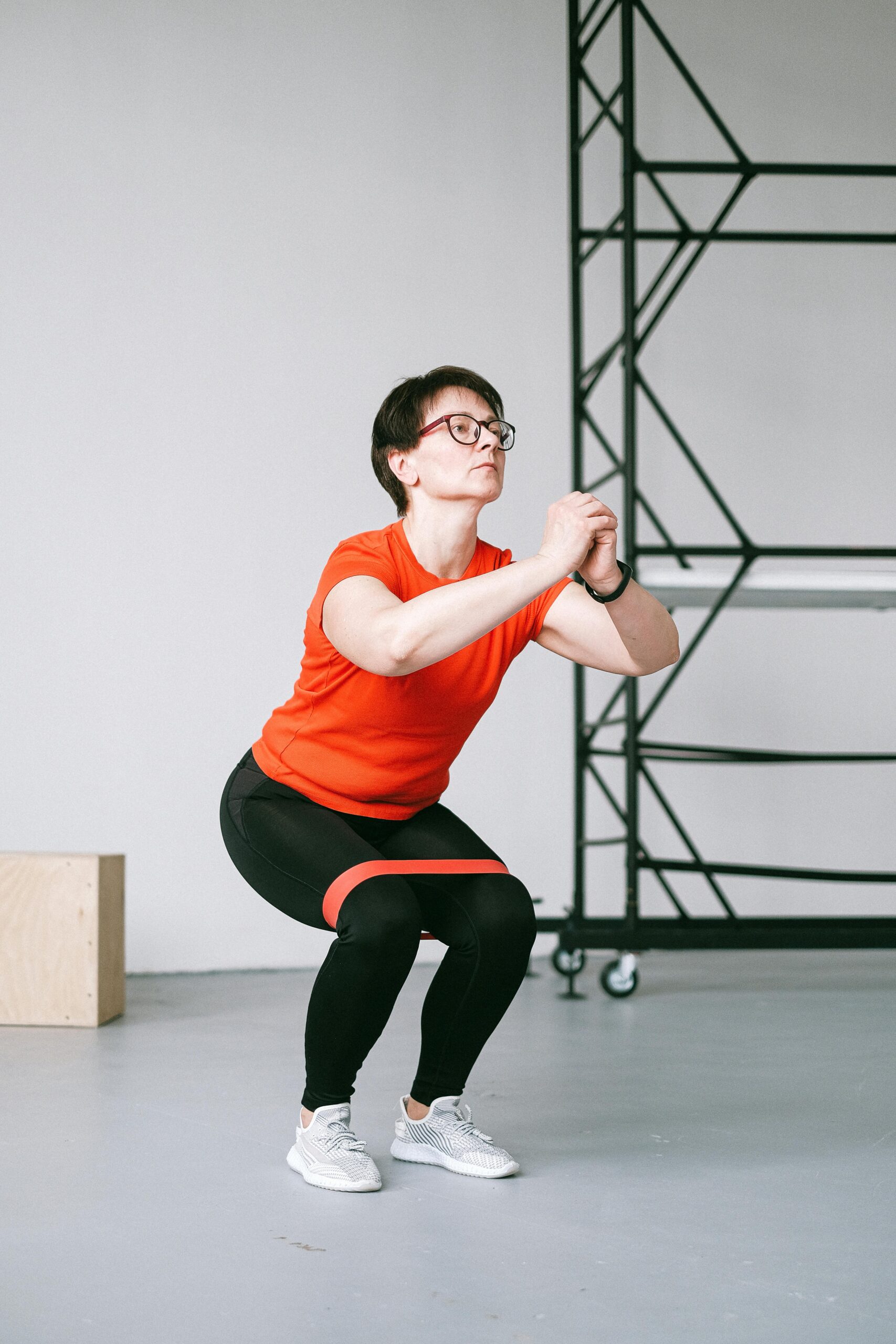
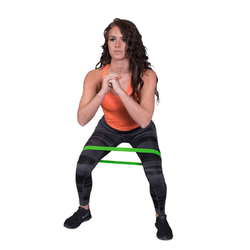
Band Walks: 2 × 10 steps each direction. Place a light resistance band just above the knees, hold a slight squat, and step sideways. Builds the hip stability muscles that protect the knee joint.
Step-Ups: 2–3 × 8 per leg, using the lowest comfortable step height. Trains the glutes and quads through a controlled range of motion.
2. Start with Low-Impact Exercises
High-impact workouts are not required to build strength. In fact, many women do much better starting with lower-impact movements that feel more controlled and manageable.
Good Low-Impact Options
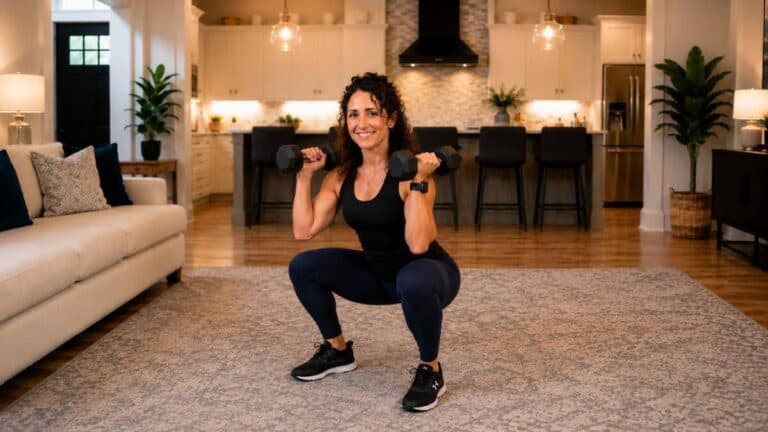
Box Squats: 3 × 8–10. Use a sturdy chair or box behind you. Lower with control until you lightly touch the seat, then stand back up. Limits range of motion to a comfortable, knee-friendly depth.
Wall Sits: 2–3 × 15–20 sec, building up gradually. Stand with your back against a wall, slide down until your knees are at a comfortable angle (does not need to be 90 degrees), and hold.
Supported Split Squats: 2 × 8 per leg. Hold a chair or counter for balance, step one foot back, and lower partway — only as far as feels comfortable.
Hip Hinges: 2–3 × 10. Stand with feet hip-width apart, push your hips back while keeping a soft bend in the knees, then return to standing. Trains the hamstrings and glutes with minimal knee bend.
3. Modify Range of Motion
Many women think exercises either “count” or “don’t count.” But modifications are incredibly normal — and often exactly what allows you to keep training consistently instead of stopping altogether.
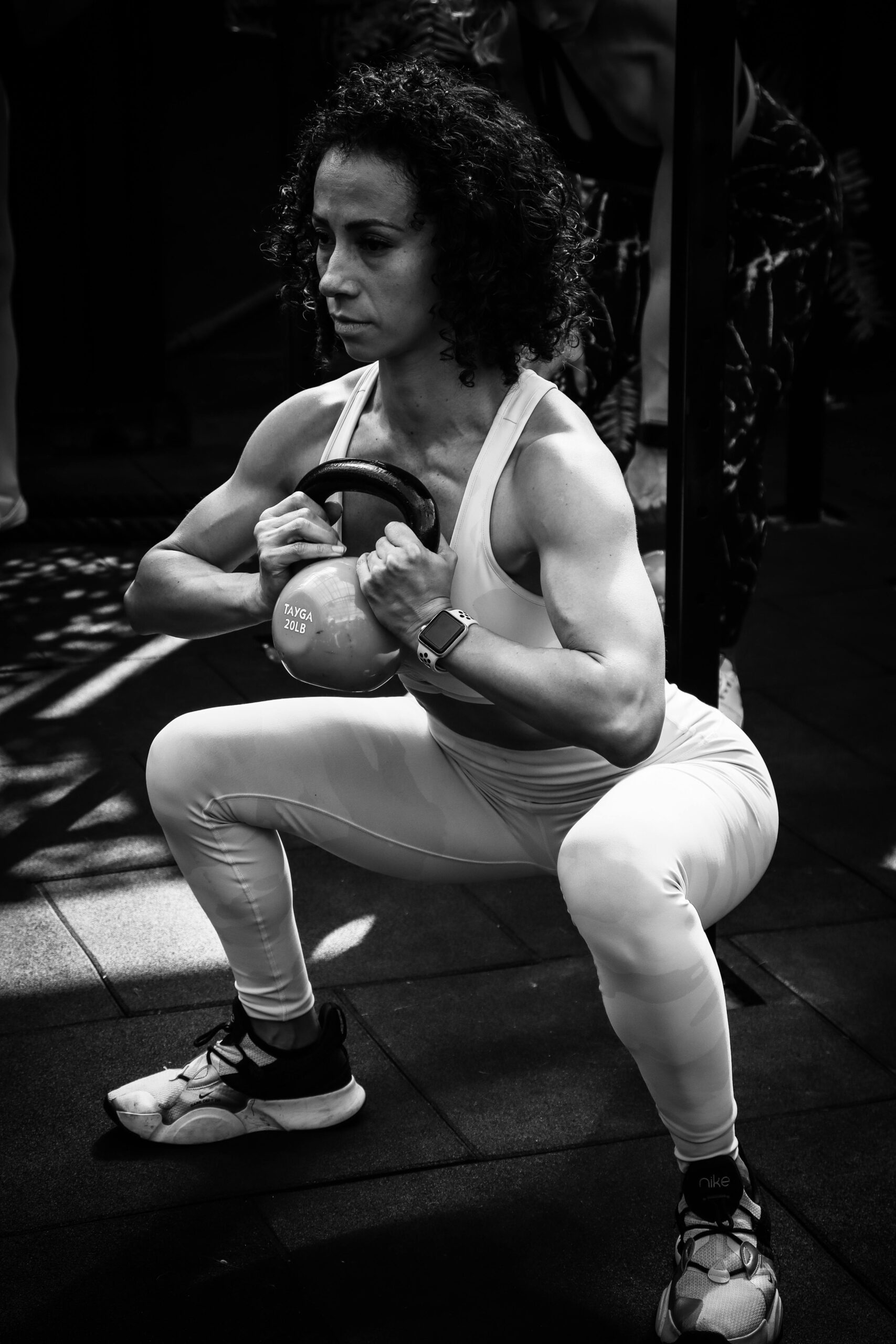
Sometimes reducing depth, slowing down movement, or using support can make an exercise much more tolerable without losing the benefit.
- Use a chair for squats — lower only as far as comfortable.
- Reduce squat depth rather than skipping squats entirely.
- Use a wall or counter for balance support.
- Slow down movement tempo — control matters more than range.
4. Walking Still Counts
Many women completely stop moving once knee pain starts. But often, controlled movement is still beneficial — and complete rest can sometimes make stiffness and weakness worse, not better.
- Walking supports circulation and joint lubrication.
- Movement helps maintain mobility and range of motion.
- Consistency matters more than intensity.
- Low-impact movement can build confidence over time.
Read: The Simple Strength Plan for Women Over 40 That Actually Works
A Complete Knee-Friendly Workout
Here is how to put the exercises above together into one session. Do this 2–3 times per week on non-consecutive days.
| Exercise Box Squats | Sets × Reps 3 × 8–10 | Tip Lower only to a comfortable depth |
| Exercise Glute Bridges | Sets × Reps 3 × 12–15 | Tip Zero knee stress, squeeze at the top |
| Exercise Band Walks | Sets × Reps 2 × 10 steps each way | Tip Keep a slight squat throughout |
| Exercise Hip Hinges | Sets × Reps 2–3 × 10 | Tip Soft knee bend, hinge from hips |
| Exercise Wall Sit | Sets × Reps 2–3 × 15–20 sec | Tip Comfortable angle, not full 90° |
Rest 45–60 seconds between sets. If any exercise causes sharp pain rather than mild effort, stop that movement and try a gentler modification or skip it for that session.
Simple Knee-Friendly Weekly Plan
You do not need intense workouts every day to make progress.
| Monday Lower-Impact Strength | Tuesday Walking or Mobility | Wednesday Glute & Core Focus |
| Thursday Recovery Movement | Friday Modified Strength Workout | Weekend Walking or Stretching |
The Bottom Line
Knee pain does not automatically mean you have to stop strength training completely.
Often, the key is learning how to modify movement and build strength more carefully — focusing on the hips and glutes, choosing lower-impact options, and adjusting range of motion as needed.
Strength training with knee pain should focus on controlled movement, lower-impact exercises, proper modifications, and consistency over time.
Looking for Beginner-Friendly Home Workouts?
Inside Strength for Life, I focus on realistic workouts for real women — including modifications for knee pain and low-impact movement options.
- Simple strength workouts
- Beginner-friendly routines
- Low-impact movement options
- Home-friendly training
Frequently Asked Questions About Strength Training with Knee Pain
Many women can continue strength training with knee pain by modifying exercises, reducing impact, and focusing on movements that feel controlled and tolerable. Persistent or worsening pain should be evaluated by a healthcare provider.
Glute bridges, box squats, step-ups, hip hinges, band walks, and walking are generally more knee-friendly for most women because they involve controlled, limited range of motion with strong glute and hip engagement.
Squats should not cause sharp pain. Mild effort or muscle fatigue is normal, but sharp or pinching pain is a sign to reduce depth, use support, or substitute a different exercise like a box squat or hip hinge.
Often, yes. Weak glutes and hips can force the knees to compensate during everyday movement and exercise. Building strength in the glutes and hips helps share the load more evenly, which can reduce stress on the knee joint over time.
See a healthcare provider if you experience sharp or severe pain, swelling, a feeling of instability, locking or catching in the joint, or pain that continues to worsen despite modifications. These symptoms go beyond what general exercise adjustments can address.
Strength Training for Women Over 40 Resources


Build Stronger Glutes at Home
 Step 1
 Step 2
 Step 3
 Step 4
 Step 5
Ready to put this into action?
💪 Start Your Free 7-Day Trial
Free Home Workout Starter Guide
Download your free PDF and start building strength today.
- 3 beginner-friendly routines
- No equipment needed
- Just 20 minutes a day
Enter your email to download