How to Start Working Out Again After a Long Break
📋 Heather is an ISSA Certified Personal Trainer, not a doctor or medical professional. This article is for educational and motivational purposes only. Always check with your healthcare provider before starting a new fitness program.
If it has been months, or even years, since you worked out regularly, I want you to know something right away: you are not starting from zero.
You still have experience. You still have knowledge. You still have a body that can adapt, improve, and get stronger. Maybe you are not where you used to be — but that does not mean you are stuck. It simply means you need a smart, gentle restart.
Many women feel embarrassed when they decide to start exercising again. They remember what they used to be able to do, compare themselves to a younger version of themselves, and feel frustrated before they even begin. Please do not do that to yourself.
- You do not need to prove anything.
- You do not need to punish yourself for taking time off.
- You do not need to jump into a hard workout plan on day one.
- You just need to begin — gently, realistically, and without guilt.
The CDC recommends adults aim for regular weekly movement including aerobic activity and muscle-strengthening exercise. You do not have to do it all at once — building up slowly is not just allowed, it is the smart approach.

First, Stop Feeling Guilty
One of the biggest obstacles to restarting exercise is not physical — it is emotional. Many women carry guilt about the time they have been away from fitness. Life happened. Maybe work got demanding. Maybe you had children. Maybe stress, illness, injury, caregiving, or exhaustion pushed your own health to the side.
That does not make you lazy. It makes you human.
- Maybe you lost your routine during a hard season of life.
- Maybe your energy changed after 40 and the old approach stopped working.
- Maybe you simply got overwhelmed and stopped — and then stopping became the habit.
Instead of focusing on what you have not done, focus on what you are doing right now. You are here. You are thinking about moving again. That matters more than the gap.
Do Not Try to Make Up for Lost Time
After a long break, it is tempting to come back hard. You might feel like you need to make up for all the months or years you missed. That mindset almost always backfires.

Trying to do too much too soon leads to soreness, frustration, burnout, or injury — and then you are back to not working out. Your body needs time to readjust. That is not weakness. That is wisdom.
- Start with shorter workouts than you think you need.
- Use beginner-friendly exercises even if you were not a beginner before.
- Leave energy in the tank after each session.
- Build the habit before you chase intensity.
Start Smaller Than You Think You Need To
This may sound counterintuitive, but I often tell women to cut their first plan in half. If you think you should work out six days per week, start with three. If you think you need an hour, start with 20 minutes. If you think you need an advanced program, start with simple movements.
A realistic first-month starting point:
- Two strength workouts per week — 20–25 minutes each
- One or two short walks — 10–20 minutes
- One gentle stretching or recovery day
That is genuinely enough to begin building momentum. A plan you can repeat for four weeks is worth infinitely more than an impressive plan that falls apart after seven days.
For help staying consistent once you get started, read How to Stay Consistent With Exercise When You’re Tired, Busy, and Overwhelmed.
Your First Workout Back — Keep It Simple
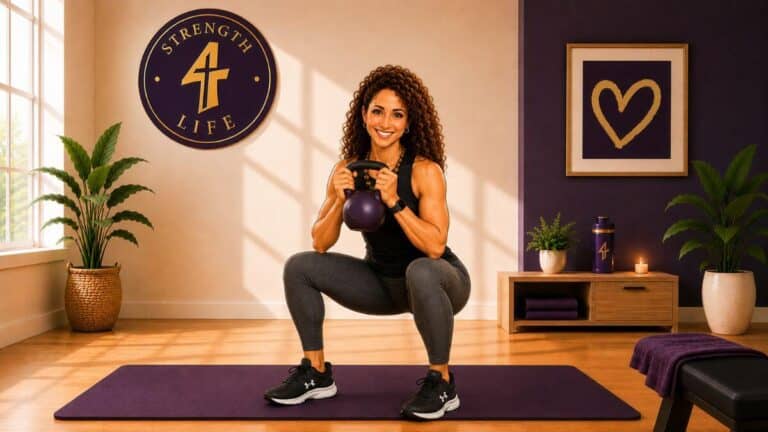
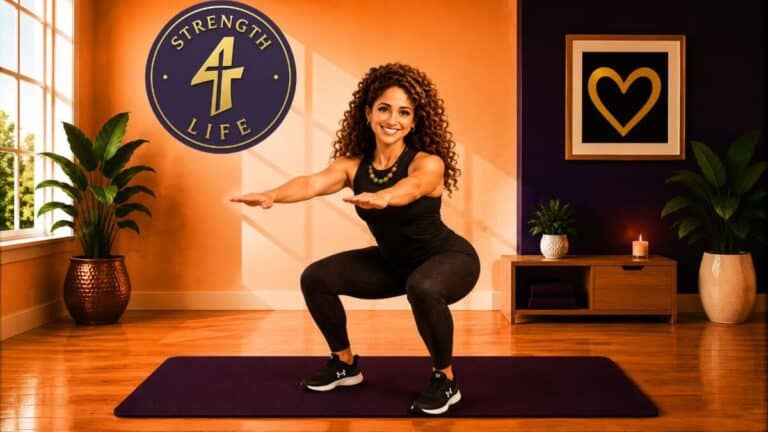
Here is a beginner restart workout you can do at home today. Do 2 sets of each exercise. Rest 60 seconds between sets. The whole thing should take about 20 minutes.
| Exercise Chair Squats | Sets × Reps 2 × 8–10 | Tip Lower until you touch the seat |
| Exercise Wall Push-Ups | Sets × Reps 2 × 8–10 | Tip Keep body in a straight line |
| Exercise Glute Bridges | Sets × Reps 2 × 10–12 | Tip Squeeze glutes at the top |
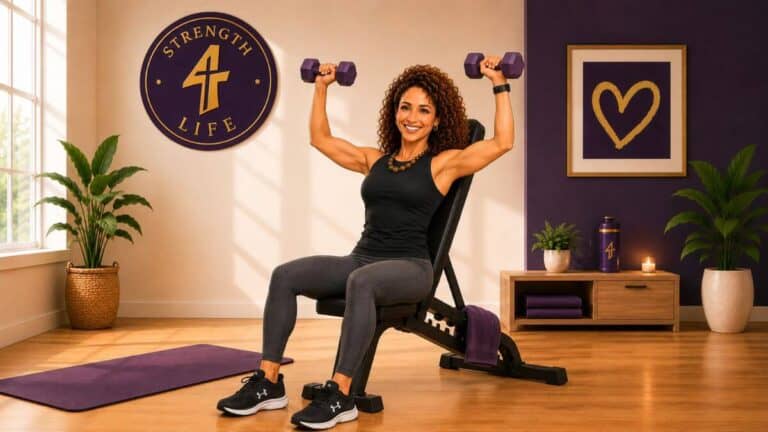
| Exercise Dumbbell Rows | Sets × Reps 2 × 8 per arm | Tip Lead with elbow, not hand |
| Exercise Marching in Place | Sets × Reps 2 × 30 sec | Tip Hold counter for balance if needed |
Finish feeling successful enough to come back again. That is the only goal for your first workout back.
For full how-to instructions on each exercise, read Best Beginner Strength Exercises for Women Over 40.
Choose Exercises That Build Confidence First
After a long break, confidence matters more than intensity. Pick exercises you can do with good form and a genuine sense of control. Beginner exercises are not “less than” — they are the foundation that everything else is built on.
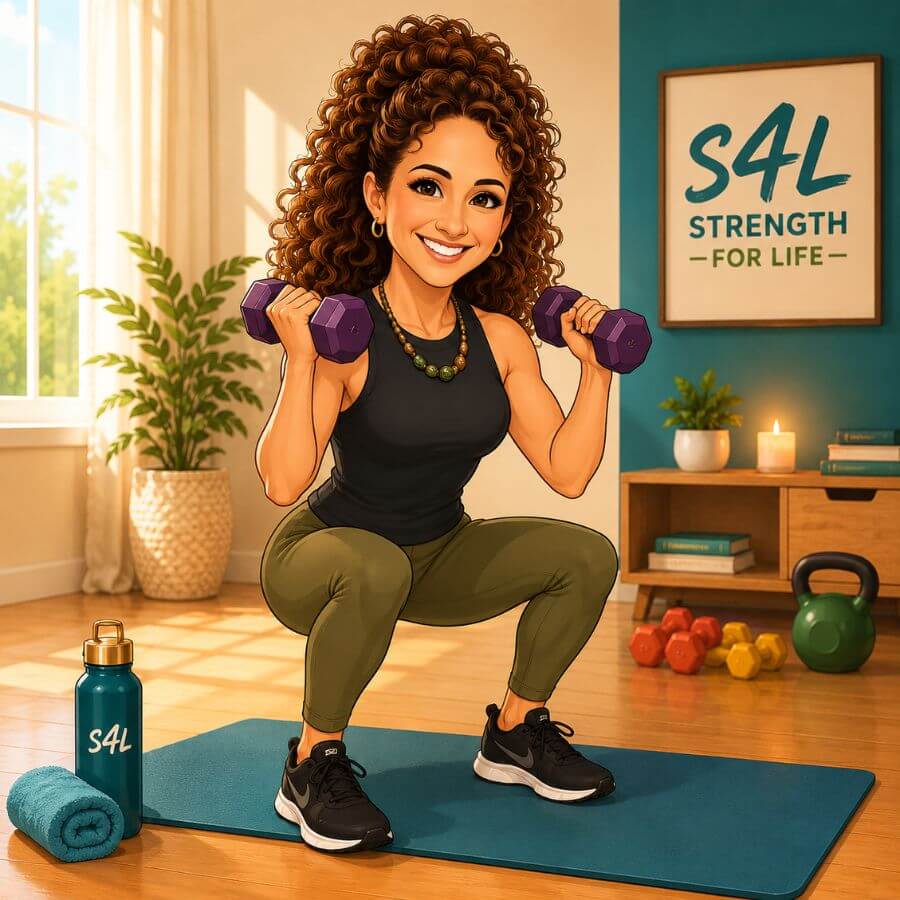
- Chair squats or bodyweight squats
- Wall push-ups or incline push-ups
- Glute bridges
- Marching in place or step touches
- Dumbbell rows with light weight
- Light shoulder presses
- Walking at a comfortable pace
When you build the foundation well, everything else gets stronger on top of it.
For upper body exercises, read: Beginner Upper Body Exercises for Women at Home
Walking Counts More Than You Think
Many women underestimate walking because it feels too simple. But walking is one of the best ways to ease back into exercise — especially after a long break. It rebuilds stamina without pounding your joints, improves mood, supports heart health, and makes movement feel normal again.
- Start with 10–15 minutes at a comfortable pace.
- Choose a speed where you can still hold a short conversation.
- Add 5 minutes per week as your endurance improves.
- Use walking as a low-pressure way to stay connected to movement.
For more joint-friendly cardio ideas to pair with your restart, read Low-Impact Cardio Exercises for Women Over 40.
Strength Training Should Be Part of Your Restart
Cardio is helpful, but strength training is one of the most important things you can do when getting back into fitness — especially after 40. As we age, maintaining muscle matters more with every passing year. Strength training supports posture, balance, bone density, daily movement, and confidence.
You do not need heavy weights to begin. Bodyweight exercises and light dumbbells are genuinely enough to start rebuilding.
- Strength training makes daily tasks feel noticeably easier.
- It supports healthy aging in ways cardio alone cannot.
- It improves how you feel in your body — not just how you look.
- It pairs naturally with walking and low-impact cardio.
Expect Some Soreness — But Do Not Chase It
A little soreness after your first few workouts is normal. Severe soreness that makes stairs, sitting, or basic movement miserable is not the goal — and it is not a sign you worked hard enough.
Your workout should challenge you, but it should not crush you. If you are so sore that you cannot exercise again for five days, the workout was probably too much for your current starting point. That is not failure — it is just information. Dial it back and build more gradually.
- Start with fewer sets than you think you need.
- Use lighter weights than feel challenging at first.
- Rest when needed between exercises.
- Increase gradually — add one set or a little weight every 1–2 weeks.
Focus on Consistency Before Results
One of the best mindset shifts you can make when restarting is this: stop measuring success only by the scale or how you look. For the first month, measure success by showing up.
Did you walk twice this week? Did you finish two strength workouts? Did you stretch when your body felt tight? Those are wins. Real ones.
- Consistency always comes before transformation.
- Confidence grows from small promises kept — not from perfect workouts.
- Results are built through repeated action over months, not days.
When you focus only on the scale, it is easy to get discouraged early. When you focus on the habit, you start building something that actually lasts.
A Simple First-Month Restart Plan
Here is a realistic four-week approach to getting back into exercise. Adjust the days to fit your schedule — the structure matters more than the specific days.
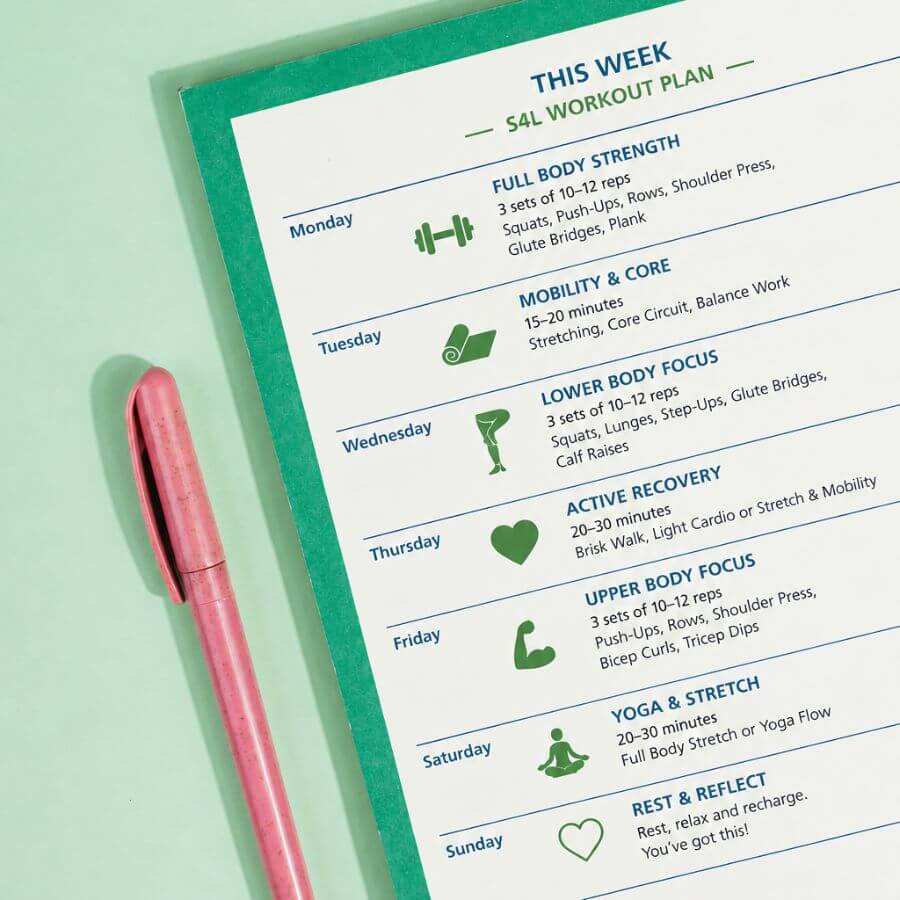
- Week 1: Focus purely on showing up. Two short workouts, two walks. Nothing more.
- Week 2: Repeat the same workouts. Build familiarity and confidence with the movements.
- Week 3: Add one extra set per exercise or 5 minutes to your walks if you feel ready.
- Week 4: Celebrate consistency and plan what comes next.
Do not rush this. A slow, steady restart is far more powerful than a dramatic comeback that disappears after two weeks.
Sample Weekly Schedule
This simple schedule gives you strength training, cardio, and recovery without making exercise feel overwhelming.
| Monday Beginner strength workout | Tuesday 10–20 min walk | Wednesday Rest or gentle stretching |
| Thursday Beginner strength workout | Friday Low-impact cardio or walk | Weekend Recovery, mobility, or optional walk |
For a more complete weekly structure as you progress, read A Realistic Strength Training Schedule for Women Over 40.
What If You Miss a Workout?
You probably will at some point. Everyone does. Missing one workout does not mean you failed. Missing a week does not mean you ruined everything. The most important skill in fitness is learning how to return — without turning it into a big emotional event.

- Do not punish yourself with a harder workout to compensate.
- Do not wait until Monday for a “fresh start.”
- Do not call the whole week a failure because of one missed day.
- Just return with the next simple step — today if possible.
A missed workout is not a broken identity. It is just a missed workout. Return without drama.
Listen to Your Body Without Quitting on Yourself
There is a real difference between needing rest and avoiding discomfort. Learning that difference takes practice — and it is one of the most valuable fitness skills you can develop.
- On low-energy days: walk instead of strength training.
- On sore days: stretch gently and let muscles recover.
- On busy days: do 10 minutes — it still counts.
- On strong days: do the full workout and enjoy it.
This is how fitness becomes sustainable. You stop treating every day the same and start working with your real life instead of against it.
Final Thoughts
You do not need to get in shape before you start working out again.
You get stronger by starting where you are and giving yourself permission to build slowly — without guilt, without punishment, and without comparing yourself to who you used to be.
One workout. One walk. One small promise kept. That is how every real comeback begins.
Ready for Simple Workouts That Fit Real Life?
Strength 4 Life was created for women who want to get stronger at home without feeling intimidated, overwhelmed, or pushed into workouts that do not fit their lives.
- Beginner-friendly strength workouts designed for real life
- Low-impact options for sensitive joints
- Simple guidance you can follow from home
- A supportive approach that helps you stay consistent
Frequently Asked Questions
Start with short, beginner-friendly workouts two days per week plus regular walking. Focus on good form, build slowly, and resist the urge to make up for lost time. A consistent restart beats an intense one that burns out after two weeks.
15–25 minutes is plenty for your first workouts back. The goal is to finish feeling successful and energized enough to come back again — not completely exhausted. You can build duration gradually over the first month.
Both are valuable — a good restart plan includes both. Start with two short strength workouts per week plus walking on the other days. Strength training is especially important for women over 40 because it supports muscle, posture, balance, and everyday function.
Return with the next simple workout — without guilt and without trying to make up for everything at once. Missing one workout or even one week does not erase your progress. Just come back to the next session and keep going.
Mild soreness in the first week or two is normal. If you are so sore that daily tasks become difficult, you did too much too soon — dial back the weight, sets, or intensity. The workout only helps if you can recover and come back again.
Beginner Strength Training Resources








Continue Your Strength Journey
 Step 1
 Step 2
 Step 3
 Step 4
 Step 5
Ready to put this into action?
💪 Start Your Free 7-Day Trial
Free Home Workout Starter Guide
Download your free PDF and start building strength today.
- 3 beginner-friendly routines
- No equipment needed
- Just 20 minutes a day
Enter your email to download