Can Women Build Muscle After 40?
📋 Heather is an ISSA Certified Personal Trainer, not a doctor or medical professional. This article is for educational and motivational purposes only. Always check with your healthcare provider before starting a new fitness program.
Short answer: yes, absolutely. Women can build real, meaningful muscle after 40 — and after 50, 60, and beyond. If you’ve heard that strength is something you lose and never get back once you hit a certain age, that’s simply not true. Your body remains fully capable of getting stronger at any stage of life, as long as you give it the right kind of stimulus.
That said, the question deserves a more complete answer than just “yes.” Building muscle after 40 works a little differently than it did in your twenties, and understanding those differences is what actually helps you succeed — rather than getting discouraged by comparing your results to someone half your age.
- Yes, women over 40 can build real, visible muscle
- The process works slightly differently than it did when you were younger
- Consistency and recovery matter more than intensity at this stage
- You do not need a gym, heavy barbells, or hours of free time to see results
- The research on this is clear and consistently encouraging
If you’ve felt discouraged thinking it’s “too late” to build strength — this is exactly the article to read before giving up on that idea.

What Happens to Muscle as Women Age
Starting somewhere in your 30s, the body begins a gradual process of muscle loss if that muscle isn’t actively maintained through use. This process — sometimes called sarcopenia — tends to accelerate somewhat after 40, partly due to hormonal shifts as estrogen levels begin to decline, and partly due to reduced activity levels that come naturally with the demands of midlife.
Estrogen plays a bigger role in muscle health than most women realize. Research shows that estrogen works directly with muscle satellite cells — the cells responsible for repairing and rebuilding muscle tissue — to maintain, repair, and build healthy muscles. As estrogen levels decline, this process requires more deliberate support through training and nutrition.
- Estrogen decline directly influences muscle tone, strength, and body composition after 40.
- Fast-twitch muscle fibers — responsible for power, balance, and quick reactions — decline without resistance training stimulus.
- Muscle loss is not inevitable or irreversible — it responds directly to strength training.
- The earlier you address it, the easier it is to maintain strength long-term.
For a deeper look at why this matters so much during this stage of life, read Why Strength Training Gets More Important After 40.
What the Research Actually Shows
This isn’t a “trust me” claim — there’s a solid body of research specifically on women over 40 building muscle through resistance training, and it’s consistently encouraging.

A PubMed study on resistance training in women ages 40–60 found that training with free weights twice per week for ten weeks was effective in counteracting both the age-related and menopause-related loss of muscle mass and strength. Women in this study showed significant improvements in strength capacity and body composition.
Research from IDEA Health & Fitness found that for each additional day per week of strength training in women over 40, muscle mass increased by an average of 656 grams while body fat decreased meaningfully — a direct, measurable relationship between training frequency and muscle gains.
Additionally, a meta-analysis of 26 studies published in PMC found that resistance training consistently produced real gains in lean muscle mass across women ranging from 50 to 80 years old.
How Building Muscle After 40 Is Different
Building muscle after 40 follows the same fundamental principles as at any age, but with some important adjustments that make the difference between progress and plateau.
1. Higher Training Volume Benefits This Age Group More
Research suggests that women over 40 benefit more from higher-volume training — meaning more total sets per session — than from lower-volume, high-intensity approaches. This runs counter to the popular “lift heavy, rest, repeat” minimalist advice that works better for younger trainees.
2. Recovery Takes Longer and Matters More
The body’s ability to repair muscle tissue between sessions slows somewhat after 40. This doesn’t mean training less — it means spacing sessions appropriately (at least 48 hours between sessions targeting the same muscles) and taking sleep and nutrition seriously as active components of the program.
3. Protein Needs Increase, Not Decrease
Older adults require more protein per pound of body weight to achieve the same muscle-building response as younger adults. Getting a quality protein source at most meals becomes increasingly non-negotiable — eggs, chicken, fish, Greek yogurt, cottage cheese, legumes all count.
4. Warming Up Requires More Time
Joints and connective tissue need more preparation before loaded movements than they did at 25. Budget ten to fifteen minutes of movement preparation before getting into working sets — not as wasted time, but as the investment that keeps you training consistently without interruption.
5. Consistency Over Months Is the Real Variable
Muscle building rewards consistency far more than intensity. A moderate program followed faithfully for six months will always outperform an intense program abandoned after three weeks.
What “Building Muscle” Actually Looks Like at This Age
Muscle-building after 40 doesn’t usually look like dramatic before-and-after transformation photos. It looks more like steady, compounding progress that shows up in how you feel and function before it shows up in the mirror.

- Weeks 1–3: Improved energy, better mood, exercises feel slightly more manageable. Neurological adaptations happening before visible changes.
- Weeks 4–8: Noticeably more strength — heavier weights feel lighter. Daily tasks start feeling easier.
- Weeks 8–12: Visible changes in muscle tone and posture begin to show. Clothes fit differently.
- Months 3–6+: Continued strength gains, more defined muscle, compounding improvements in daily function.
This timeline varies from woman to woman — but the pattern of “feels better first, looks different later” holds true for most beginners.
Common Myths About Building Muscle After 40
A few persistent myths keep women from even attempting to build muscle at this stage of life. Worth addressing them directly.
- “It’s too late to start.” The research says otherwise. Studies show women building meaningful muscle and strength at 50, 60, and 70+ through consistent resistance training. The starting point doesn’t disqualify you from progress.
- “Lifting weights will make me bulky.” Building visibly “bulky” muscle requires specific genetics, very high training volume, significant calorie surplus, and often years of dedicated effort. What consistent strength training actually produces is a leaner, more toned, stronger appearance.
- “I should just focus on cardio at this age.” Cardio has cardiovascular benefits, but it doesn’t build or preserve muscle the way resistance training does. Relying on cardio alone after 40 often means losing muscle even while losing weight — and works against bone density preservation.
- “My hormones make it impossible.” Hormonal shifts can affect how the body responds to training, but as the research consistently shows, they don’t prevent muscle building. They’re a reason to train smarter and more consistently — not a reason to stop.
Read: Best Beginner Strength Exercises for Women Over 40
A Simple Starter Workout
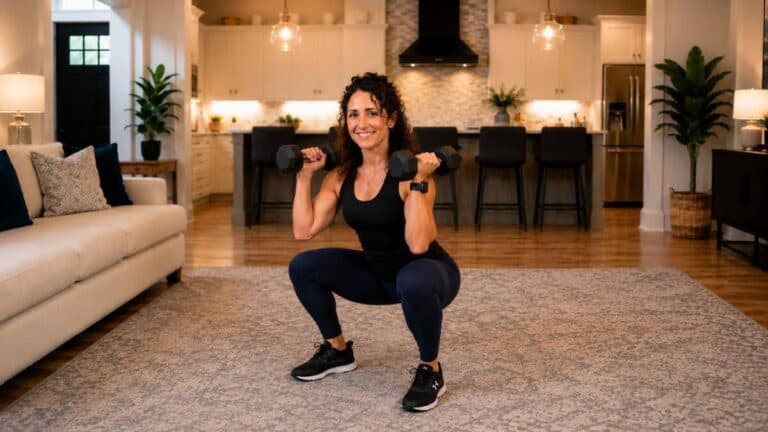
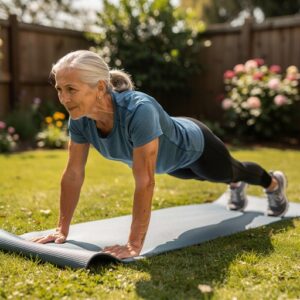
Here’s a complete beginner workout covering all five fundamental movement patterns. Start with two rounds and build to three over the first few weeks. Rest 60 seconds between sets. Total time: 25–35 minutes.
| Exercise Bodyweight or Goblet Squat | Sets × Reps 2–3 × 10–12 | Tip Use a chair for support if needed |
| Exercise Wall or Floor Push-Up | Sets × Reps 2–3 × 8–12 | Tip Keep body in a straight line |
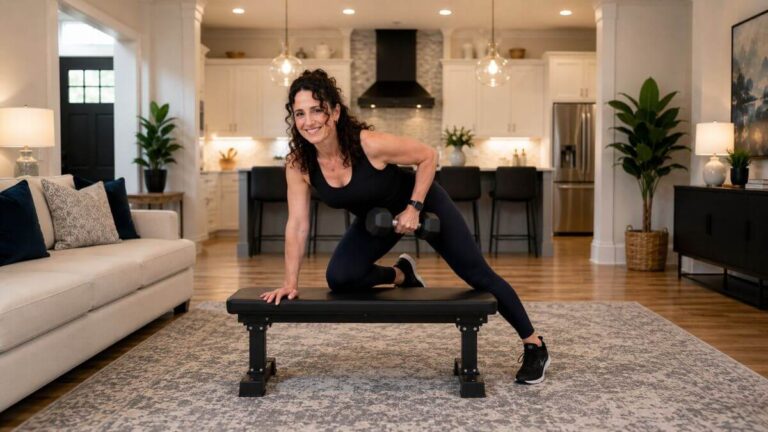
| Exercise Dumbbell Row | Sets × Reps 2–3 × 10 per arm | Tip Lead with your elbow |
| Exercise Glute Bridge | Sets × Reps 2–3 × 12–15 | Tip Squeeze glutes at the top |
| Exercise Dead Bug | Sets × Reps 2 × 8 per side | Tip Lower back stays on the floor |
A Note on Health and Individual Differences
Every woman’s body responds to strength training a little differently, especially when factors like hormonal changes, prior injuries, or existing health conditions are part of the picture. If you have any underlying health concerns, are navigating significant hormonal changes, or are returning to exercise after a long break or medical event, it’s a good idea to check with your healthcare provider before starting a new strength training program. This is general coaching guidance, not personalized medical advice.
The Bottom Line
Yes, women can absolutely build muscle after 40. The research backs it up clearly, and the women who do it consistently prove it every day. The process works a little differently than it did at 25 — it requires more attention to recovery, protein, and training volume — but the ability to get stronger doesn’t disappear with age.
Start where you are. Train consistently. Give your body what it needs to recover. The strength you’re capable of building after 40 is real — and it’s available to you starting with your very next workout.
Ready to Start Building Real Strength?
Inside Strength for Life, I help women build muscle and strength at home with realistic workouts that fit real life — no gym, no extreme programming, no guesswork about what to do next.
- Beginner-friendly strength training designed for women over 40
- Progressive programming that builds real muscle over time
- Home-friendly workouts under 40 minutes
- Supportive coaching from a certified trainer
Frequently Asked Questions About Building Muscle After 40
Women can genuinely build new muscle after 40, not just maintain existing muscle. Multiple studies specifically examining women in their 40s, 50s, and beyond consistently show meaningful gains in lean muscle mass and strength through resistance training. The process responds to consistent stimulus at any age.
For the vast majority of women, no. Building visibly “bulky” muscle requires specific genetics, very high training volume, and a significant calorie surplus that most strength training routines don’t involve. Most women experience a leaner, more toned, stronger appearance instead.
Two to three strength training sessions per week, with at least 48 hours of recovery between sessions targeting the same muscle groups, is the optimal frequency for most women over 40. Research on this population specifically supports this range as the sweet spot between sufficient stimulus and adequate recovery.
No. Many women build real, meaningful strength and muscle at home using bodyweight exercises, resistance bands, or a simple set of dumbbells. A gym membership is helpful but not required.
Most women notice improved strength and energy within two to three weeks of consistent training. Visible changes in muscle tone typically appear around six to eight weeks, with more significant changes continuing to build over three to six months.
Hormonal changes during and after menopause affect how the body responds to training and recovers, but research consistently shows women continue building muscle through and after this transition with consistent resistance training and adequate protein. The strategy shifts slightly — more volume, more attention to recovery — but the capacity remains.
The core principles are the same, but recovery requirements increase and warm-up becomes more important in your 50s. Protein needs also increase slightly. For specific guidance on training in your 50s, read How to Build Muscle After 50.
Strength Training for Women Over 40 Resources






Explore More Fitness Over 40 Resources
 Step 1
 Step 2
 Step 3
 Step 4
 Step 5
Ready to put this into action?
💪 Start Your Free 7-Day Trial
Free Home Workout Starter Guide
Download your free PDF and start building strength today.
- 3 beginner-friendly routines
- No equipment needed
- Just 20 minutes a day
Enter your email to download