No-Equipment Workout for Women at Home
📋 Heather is an ISSA Certified Personal Trainer, not a doctor or medical professional. This article is for educational and motivational purposes only. Always check with your healthcare provider before starting a new fitness program.
If you’ve been putting off working out because you don’t have a gym membership or a closet full of equipment, here’s some good news: you don’t need any of that to get stronger.
A no-equipment workout for women at home can be just as effective as a gym session — especially when you’re consistent with it. All you need is a little floor space and your own bodyweight. No dumbbells, no resistance bands, no fancy machines required.
- No gym membership needed
- No equipment to buy or store
- Works in any room with a little open space
- Every exercise can be modified to match your fitness level
The workout itself doesn’t need to be complicated to be effective. Simple, repeatable movements done consistently will always outperform a complicated routine you only do once.

Why a No-Equipment Workout Works
A lot of women assume that without weights, a workout “doesn’t count” or won’t build real strength. That’s not true. Your own bodyweight provides plenty of resistance to build strength, especially if you’re just getting started or returning to exercise after time away.
- Bodyweight training teaches your body to move well before adding external load.
- It builds the foundation for squatting, hinging, pushing, and pulling with good form.
- It sets you up for success later if you decide to add dumbbells or bands.
- It requires zero setup, which makes it easier to actually finish.
If you want to understand why building strength matters more as you get older, read Why Strength Training Gets More Important After 40.
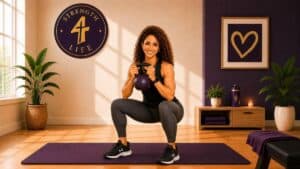
1. Bodyweight Squats
Squats build strength in your legs, glutes, and core all at once. They also train a movement you already do dozens of times a day — sitting down and standing back up.
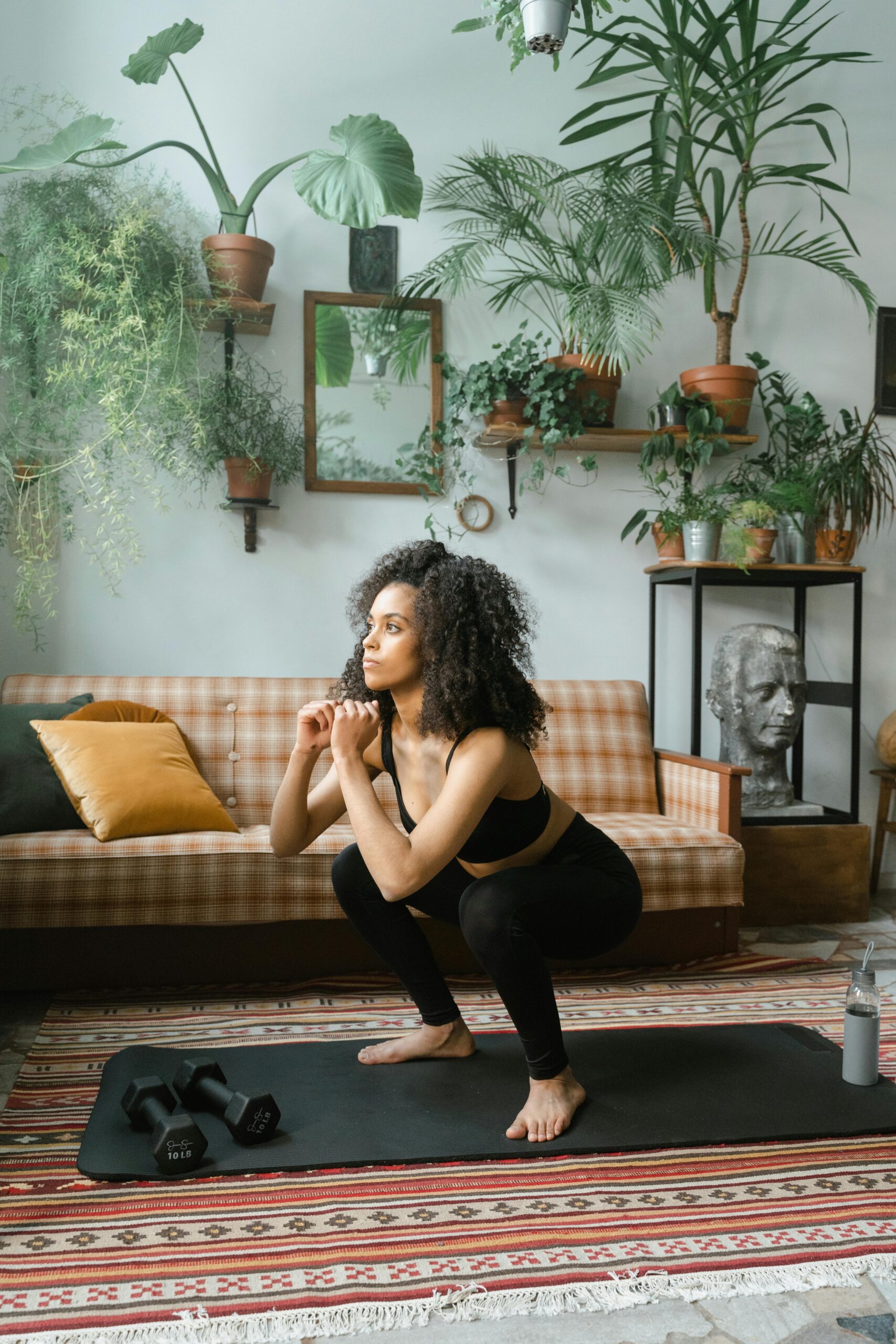
How to do it: Stand with feet shoulder-width apart. Push your hips back and lower down as if sitting into a chair, keeping your chest lifted. Press through your heels to stand back up.
Sets and reps: 3 sets of 10–12 reps
- Builds lower-body strength and stability.
- Trains a movement pattern you use every day.
- Can be modified for any fitness level.
2. Wall or Incline Push-Ups
Push-ups build upper body strength in the chest, shoulders, and arms. Starting against a wall or an elevated surface lets you build strength gradually without straining your wrists or shoulders.
How to do it
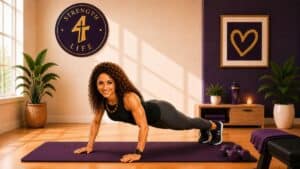
Place your hands on a wall or sturdy countertop, slightly wider than shoulder-width. Step your feet back, keep your body in a straight line, and bend your elbows to lower your chest toward the surface. Press back to start.
- Sets and reps: 3 sets of 8–12 reps
- Builds chest, shoulder, and arm strength safely.
- Easy to scale — the lower the surface, the harder it gets.
As this gets easier, move to an incline surface that’s lower to the ground, then eventually try a push-up on the floor.
3. Glute Bridges
This is one of the most beginner-friendly exercises around because it’s gentle on the joints while still building real strength in the glutes and lower back.
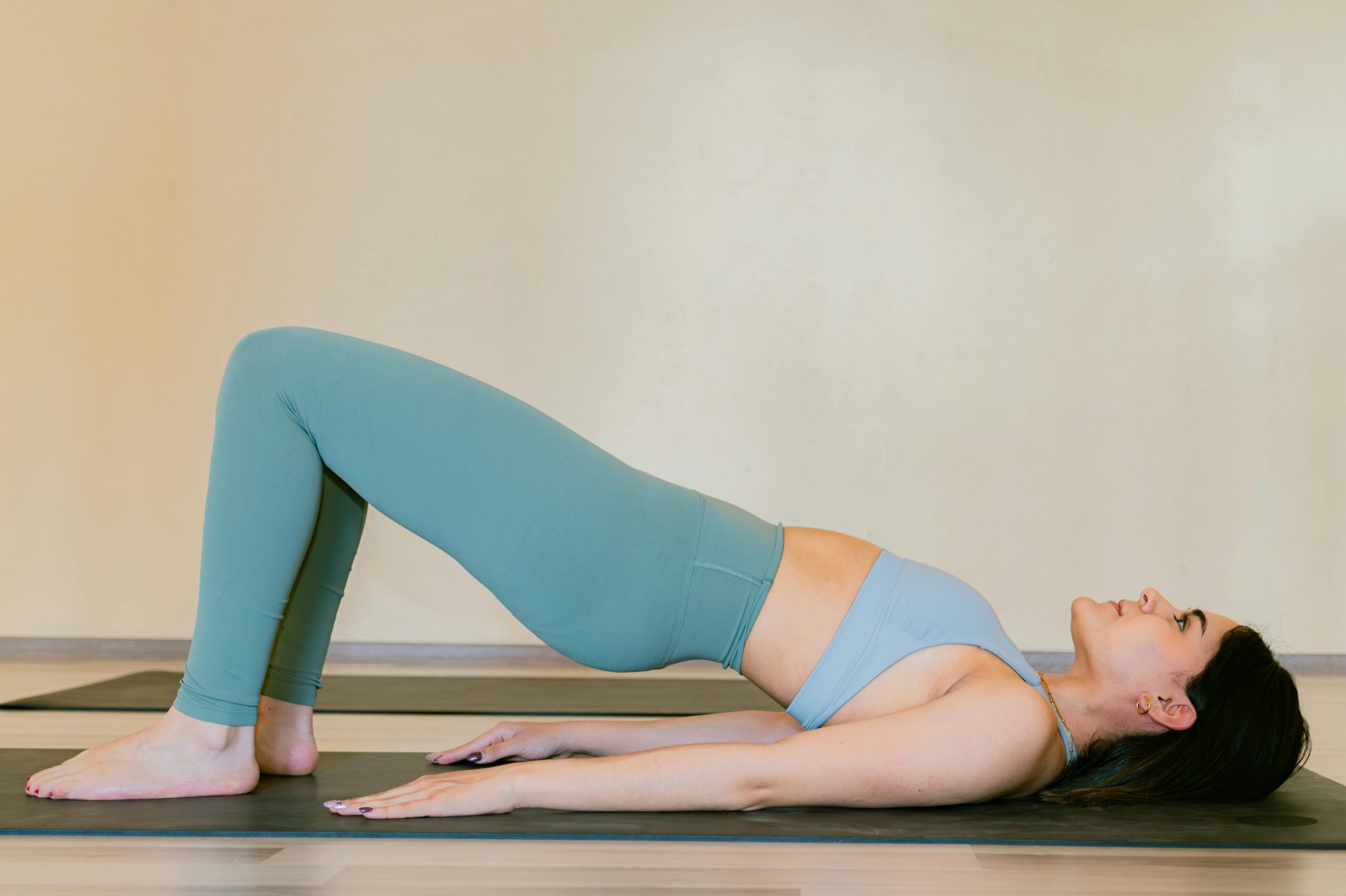
How to do it: Lie on your back with knees bent and feet flat on the floor. Press through your heels to lift your hips toward the ceiling, squeezing your glutes at the top. Lower slowly and repeat.
- Sets and reps: 3 sets of 12–15 reps
- Targets the glutes with zero impact on the knees.
- Helps support the lower back and hips.
4. Standing Marches or Step-Ups
This exercise raises your heart rate gently while also building coordination and balance — both of which matter more as you get older.
How to do it: Stand tall and lift one knee up toward your hip, then lower it and switch sides, like a slow march. If you have a sturdy step or stair, you can step up onto it instead for added intensity.
- Sets and reps: 2–3 sets of 30–45 seconds
- Builds balance and coordination gently.
- Hold onto a wall or counter for balance if needed.
There’s no rush to do this quickly — controlled movement matters more than speed.
5. Dead Bug
A gentle but effective way to build core stability without straining your neck or back the way traditional crunches sometimes do.
How to do it: Lie on your back with your arms reaching toward the ceiling and knees bent at 90 degrees. Slowly lower one arm and the opposite leg toward the floor, keeping your lower back pressed down. Return to start and switch sides.
- Sets and reps: 2–3 sets of 6–10 reps per side
- Trains deep core stability, not just surface muscles.
- Helps protect and support the lower back.
For a deeper breakdown of beginner strength exercises with more variety to add to your routine, read Best Beginner Strength Exercises for Women Over 40.
A Simple No-Equipment Workout to Try Today
Put these five exercises together and you have a complete, full-body workout that takes about 20–25 minutes.
| Exercise Bodyweight Squats | Sets × Reps 3 × 10–12 | Tip Use a chair for support if needed |
| Exercise Wall Push-Ups | Sets × Reps 3 × 8–12 | Tip Keep body in a straight line |
| Exercise Glute Bridges | Sets × Reps 3 × 12–15 | Tip Squeeze glutes at the top |
| Exercise Standing Marches | Sets × Reps 2–3 × 30–45 sec | Tip Hold a counter for balance if needed |
| Exercise Dead Bug | Sets × Reps 2–3 × 6–10 per side | Tip Keep lower back pressed to the floor |
Rest for about 45–60 seconds between sets. If you’re brand new to exercise, one full round through all five is plenty for your first few sessions. As your strength builds, you can add a second or third round.
Want a version of this routine that includes a few dumbbell or band options too? Try this Full Body Strength Workout for Beginners at Home for a similar structure with a little more variety.
How Often Should You Do This Workout?
Two to three times per week, with at least one rest day in between, is a great place to start. That gives your muscles time to recover and adapt, which is actually when the strength-building happens — not during the workout itself.
- Two days per week is plenty for beginners.
- Add a third day once the routine starts to feel manageable.
- Rest days are part of the plan, not a setback.
If you want a complete plan that maps out a full week, including rest and recovery days, read The Best Strength Training Plan for Women Over 40.
You Don’t Need Equipment to Get Started
It’s easy to feel like you need the “right” setup before you can start working out — a gym membership, a rack of dumbbells, a home gym in the garage. None of that is true. Strength comes from consistent effort, not from the equipment in front of you.
Start with what you have, which in this case is simply your own body and a little bit of floor space.
Show up for these five exercises a couple of times a week, and you’ll be building real strength before you know it.
Once bodyweight feels easy and you want to add some resistance, Best Beginner Dumbbell Exercises for Women is a great next step.
Want a Realistic Workout Plan You Can Actually Follow?
Inside Strength for Life, I help women build strength at home with realistic workouts that fit real life — no gym, no equipment required, no extreme fitness culture.
- Simple home workouts
- Beginner-friendly guidance
- No-equipment and equipment-based options
- Supportive coaching that fits real life
Looking for a broader bodyweight routine not specific to age? Try this Bodyweight Exercises for Women: A Complete Home Workout Guide.
Frequently Asked Questions About No-Equipment Workouts for Women
Yes. Bodyweight exercises like the ones above can build genuine strength, especially for beginners. Your body provides plenty of resistance on its own, and you can always add equipment later if you want more of a challenge.
Many women notice improvements in energy and how exercises feel within a few weeks of consistent training. Visible changes in strength and muscle tone typically take longer, often around six to eight weeks of regular effort.
Some mild soreness is common, especially when you’re new to a movement or coming back after time away. It usually fades within a day or two. Sharp or lasting pain is different and worth paying attention to — back off and modify the exercise if that happens.
It’s better to give your muscles a rest day between sessions, especially when you’re starting out. Two to three times a week with rest days in between allows your body to recover and actually build strength.
That’s completely normal, and every exercise above has a simpler version. Use a chair for support during squats, do push-ups against a higher surface, or shorten the time on marching. Start where you are and build up gradually.
Home Workouts for Women Resources



Build Your Home Workout Routine
 Step 1
 Step 2
 Step 3
 Step 4
 Step 5
Ready to put this into action?
💪 Start Your Free 7-Day Trial
Free Home Workout Starter Guide
Download your free PDF and start building strength today.
- 3 beginner-friendly routines
- No equipment needed
- Just 20 minutes a day
Enter your email to download