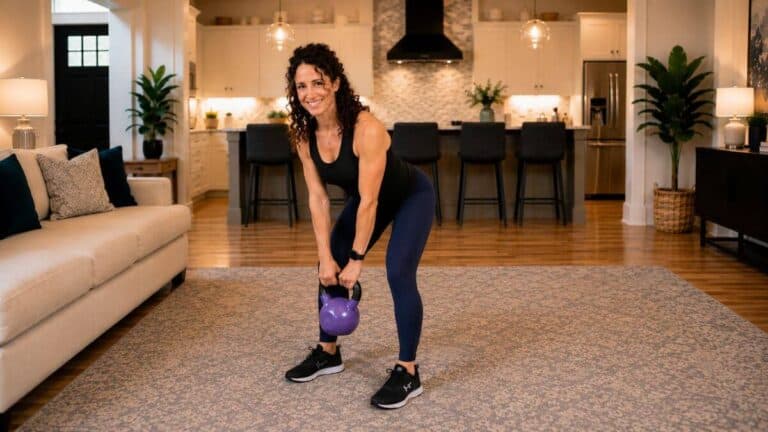
How Much Weight Should a Beginner Woman Lift?
📋 Heather is an ISSA Certified Personal Trainer, not a doctor or medical professional. This article is for educational and motivational purposes only. Always check with your healthcare provider before starting a new fitness program.
One of the most common questions women ask when they’re starting strength training is also one of the most practical: how much weight should I actually be lifting?
It’s a good question — and the honest answer is that it depends on the exercise, your current strength level, and what you’re trying to accomplish. But there are clear guidelines that take the guesswork out of it, and this article walks through all of them.
- There’s no single “right” number — it depends on the exercise and your body
- The goal in the beginning is learning movement, not lifting maximum weight
- A simple test tells you exactly whether a weight is right for you
- Most beginners start between 5 and 15 pounds depending on the exercise
Getting this right from the beginning matters because the habits you build in your first few weeks of training tend to stick. Good form at an appropriate weight builds a foundation that makes everything easier as you progress.

Why Choosing the Right Weight Matters
Using too little weight means your muscles aren’t being challenged enough to get stronger. Using too much weight means your form breaks down — which increases injury risk and trains the wrong movement patterns from the start.
- Too light: muscles aren’t challenged, no real progress happens.
- Too heavy: form breaks down, injury risk increases, results stall.
- Just right: the last 2–3 reps feel genuinely challenging but still controlled.
- The sweet spot is where effort meets control — not comfort, not struggle.
For a complete breakdown of the best beginner exercises to apply these principles to, read Best Beginner Strength Exercises for Women Over 40.
The Simple Test for Finding Your Starting Weight
Before memorizing any numbers, learn this test — it works for every exercise and every fitness level. Pick up a weight and do 10 reps of the exercise. Then ask yourself two questions:

- Could you have done 5 more reps easily? — the weight is too light. Go up.
- Did the last 2–3 reps feel challenging but controlled? — that’s your working weight.
- Could you not complete all 10 reps with good form? — the weight is too heavy. Go down.
Starting Weight Guidelines by Exercise Type
These are realistic starting ranges for most women with no prior strength training experience. Use them to know which weights to pick up and try — then apply the test above to dial it in precisely.
Upper Body Exercises
Upper body muscles — particularly shoulders and triceps — tend to be undertrained and often need lighter starting weights than expected.
- Bicep curls: 5–10 lbs
- Shoulder press: 5–8 lbs
- Lateral raises: 3–5 lbs
- Tricep exercises: 5–8 lbs
- Chest press: 8–12 lbs
- Dumbbell rows: 8–15 lbs
Lower Body Exercises
Lower body muscles are generally stronger than upper body for most women — especially if you’ve been active at all in daily life.
- Goblet squats: 10–20 lbs
- Dumbbell lunges: 8–15 lbs per hand
- Romanian deadlifts: 10–20 lbs
- Glute bridges with dumbbell: 10–25 lbs
- Step-ups with dumbbells: 8–15 lbs per hand
Core Exercises
Most core exercises are done with bodyweight only, or very light resistance. The goal is stability, not load.
- Weighted core work: 3–8 lbs if adding any resistance
- Most core exercises: bodyweight only to start
How to Know When to Increase the Weight
A lot of beginners find a comfortable weight and stay there indefinitely. But “manageable” and “challenging” are different things — and only challenging weights produce ongoing strength gains.

- The signal: when you can complete all sets and reps with good form and the last few reps no longer feel difficult.
- How much to increase: the smallest increment available — usually 2.5 to 5 pounds.
- How often: roughly every 1–3 weeks for beginners. The body adapts quickly at this stage.
- The goal: steady, consistent progress over months — not dramatic jumps week to week.
Common Beginner Mistakes With Weight Selection
Most weight selection mistakes fall into one of four patterns — knowing them helps you avoid them from the start.
- Going too light and never progressing. Comfortable weights don’t build strength. If you’ve used the same weight for over a month without it ever feeling difficult, something needs to change.
- Going too heavy too soon. Choosing a weight based on what you think you should lift — rather than what you can actually control — is counterproductive and risky.
- Using the same weight for every exercise. Your back is significantly stronger than your shoulders. Your legs are significantly stronger than your arms. One weight doesn’t fit all movements.
- Comparing your weight to other people. Starting weights vary enormously based on body size, training history, age, and individual muscle development. The only weight that matters is the one that challenges you appropriately right now.
Read: Bodyweight Exercises for Women: A Complete Home Workout Guide
Quick Reference: Starting Weights at a Glance
Use this as a starting point — then apply the rep-feel test to dial in your exact working weight for each exercise.
| Exercise Lateral Raises | Starting Range 3–5 lbs | Notes Lighter than you expect |
| Exercise Shoulder Press | Starting Range 5–8 lbs | Notes Shoulder joint is sensitive |
| Exercise Bicep Curls | Starting Range 5–10 lbs | Notes Keep elbows pinned |
| Exercise Dumbbell Rows | Starting Range 8–15 lbs | Notes Back is stronger than arms |
| Exercise Goblet Squats | Starting Range 10–20 lbs | Notes Legs handle more load |
| Exercise Glute Bridges | Starting Range 10–25 lbs | Notes Glutes are a large muscle |
A Simple Starting Point
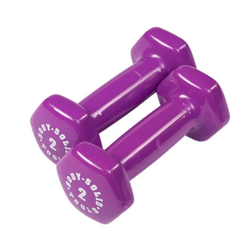
If you want one concrete recommendation to walk into your first session with: pick up a pair of 8-pound dumbbells and a pair of 5-pound dumbbells. Use the 8s for rows and lower body work. Use the 5s for shoulder and arm exercises. Apply the rep-feel test and adjust from there.
Two pairs of dumbbells and one simple test is all you need to get started — and get started right.
Want a Plan That Takes All the Guesswork Out?
Inside Strength for Life, I help women build real strength at home with beginner-friendly workouts — including guidance on exactly what weights to use and when to increase them.
- Done-for-you beginner programs with clear weight guidance
- Progressive programming that tells you exactly when to go heavier
- Home-friendly routines under 40 minutes
- Supportive coaching from a certified trainer
Frequently Asked Questions About Starting Weights for Women
Most beginners start between 5 and 15 pounds depending on the exercise. Upper body exercises like shoulder press and lateral raises typically start at 5–8 pounds, while lower body exercises like goblet squats often start at 10–20 pounds. The right weight is one where the last 2–3 reps feel challenging but controlled.
It depends on the exercise. For lateral raises or shoulder press, 10 pounds may actually be appropriate or slightly heavy for many beginners. For rows or goblet squats, 10 pounds is often too light. Use the exercise-specific guidelines and the rep-feel test rather than a single blanket number.
Signs you’re lifting too heavy: your form breaks down before finishing the set, you’re swinging the weight to complete reps, you’re holding your breath, or you feel joint pain rather than muscle effort. Drop the weight by 20–25% and rebuild from there.
Not forever. Keep the same weight as long as it still challenges you appropriately. Once you can complete all your sets and reps with good form and the last few reps feel easy, increase by 2.5–5 pounds.
For beginners, a moderate weight done for 8–15 reps per set is the most effective range for building strength and learning movement patterns. As you advance, varying rep ranges becomes more useful — but in the beginning, consistency in the 8–15 range with gradually increasing weight is the priority.
For many beginners, yes. If a bodyweight squat or push-up still feels challenging, stay there longer before picking up a dumbbell. The movement quality is the prerequisite — not a calendar timeline. There’s no requirement to add weight by a certain date.
Beginner Strength Training Resources



Continue Your Strength Journey
 Step 1
 Step 2
 Step 3
 Step 4
 Step 5
Ready to put this into action?
💪 Start Your Free 7-Day Trial
Free Home Workout Starter Guide
Download your free PDF and start building strength today.
- 3 beginner-friendly routines
- No equipment needed
- Just 20 minutes a day
Enter your email to download