Full Body Strength Workout for Beginners at Home
📋 Heather is an ISSA Certified Personal Trainer, not a doctor or medical professional. This article is for educational and motivational purposes only. Always check with your healthcare provider before starting a new fitness program.
If you’re looking for one workout that covers your whole body without needing a gym or a complicated plan, a full body strength workout is exactly what you need. Instead of splitting your training into separate days for legs, arms, and core, a full body session trains everything in one go — which makes it one of the most efficient and beginner-friendly ways to start building strength.
This kind of workout works especially well if you’re new to strength training, short on time, or just want something simple you can repeat without overthinking it.
- Trains your whole body in one session
- No gym or equipment required to get started
- Simple enough to repeat two to three times a week
- Easy to modify for any fitness level
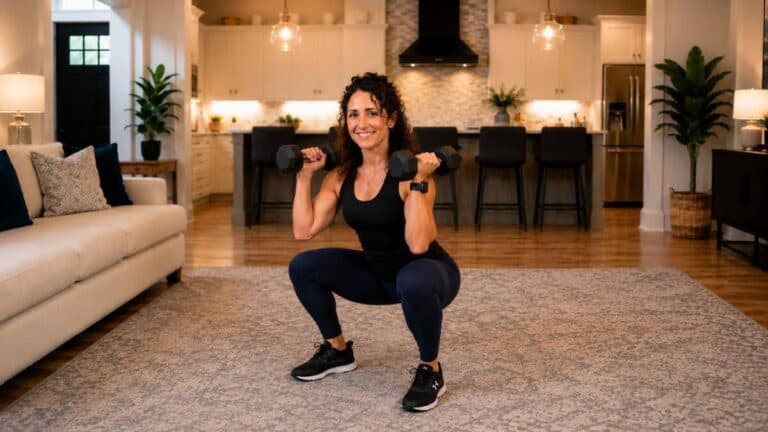
A well-rounded full body workout for beginners covers five basic movement patterns — a squat, a push, a pull, a hip hinge, and a core movement. Below you’ll find each one explained, plus a complete routine to try today.

Why Full Body Workouts Work So Well for Beginners
A lot of beginners assume they need a different workout for every muscle group, done on different days. That approach can work for more experienced lifters, but it’s usually unnecessary — and sometimes counterproductive — when you’re just starting out.
- Full body workouts train multiple muscle groups in a single session.
- You don’t need to exercise every day to see progress.
- Two or three sessions a week is plenty to cover legs, upper body, and core.
- It builds the foundational coordination needed before adding more complexity later.
If you want a deeper look at why building this kind of strength matters as you get older, read Why Strength Training Gets More Important After 40.
What a Full Body Workout Should Include
A well-rounded full body workout for beginners covers five basic movement patterns. You don’t need more than that — covering these consistently is what builds real, functional strength over time.
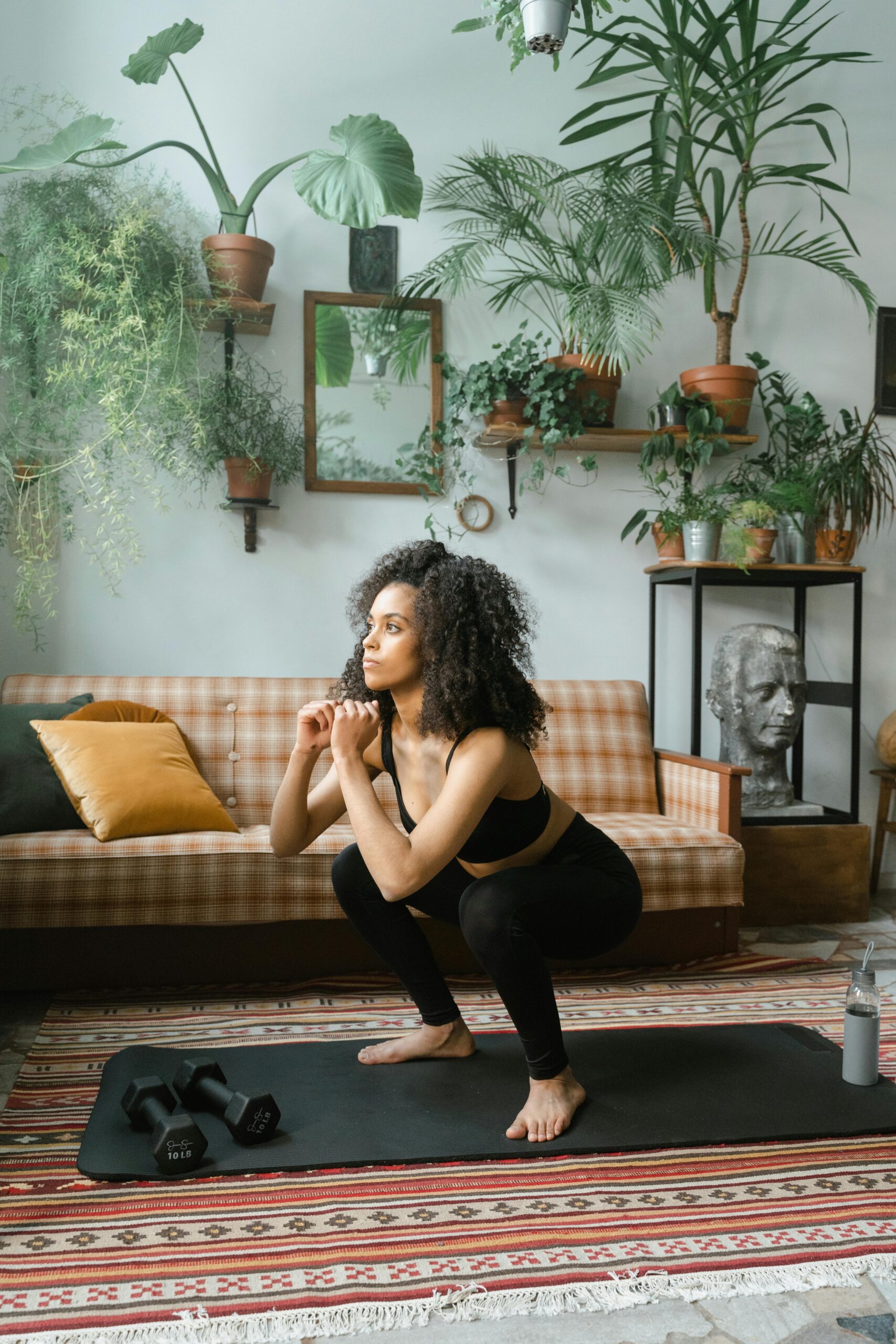
- A squat or lower body movement — works your legs and glutes
- A push movement — works your chest, shoulders, and arms
- A pull movement — works your back and arms
- A hip hinge or glute movement — works your glutes and hamstrings
- A core movement — works your midsection and stability
If you’d like to add a few dumbbells to this routine for extra challenge, Best Beginner Dumbbell Exercises for Women walks through six simple movements you can swap in.
A Simple Full Body Workout for Beginners
Here’s a complete beginner-friendly routine you can do at home with little or no equipment.
| Exercise Bodyweight Squats | Sets × Reps 3 × 10–12 | Tip Use a chair for support if needed |
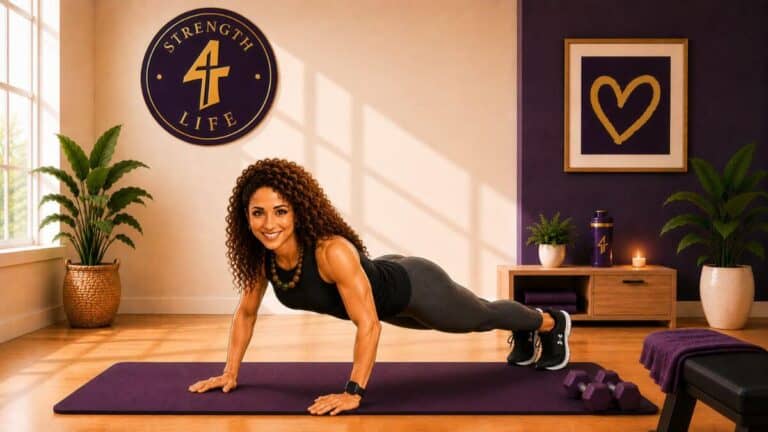
| Exercise Wall or Incline Push-Ups | Sets × Reps 3 × 8–12 | Tip Keep body in a straight line |
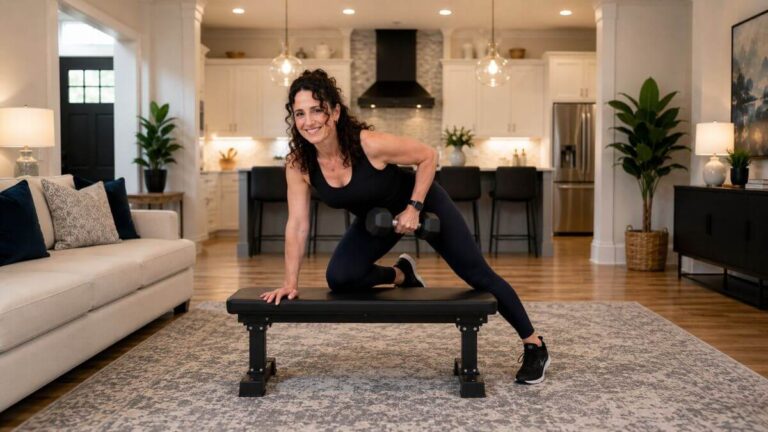
| Exercise Dumbbell or Band Rows | Sets × Reps 3 × 10 per side | Tip Lead with your elbow, not your hand |
| Exercise Glute Bridges | Sets × Reps 3 × 12–15 | Tip Squeeze glutes at the top |
| Exercise Dead Bug | Sets × Reps 2–3 × 6–10 per side | Tip Keep lower back pressed to the floor |
Rest for about 45–60 seconds between sets. If you’re brand new, start with one full round through all five exercises. As your strength builds, work up to two or three rounds.
For a deeper breakdown of beginner-friendly exercises with how-to instructions, read Best Beginner Strength Exercises for Women Over 40.
How Often Should You Do a Full Body Workout?
Two to three times per week, with at least a day of rest in between, is a great starting point. That gives your muscles time to recover and rebuild, which is when the actual strength gains happen.
A simple weekly rhythm might look like this:
- Monday: Full body strength workout
- Tuesday: Walk or rest
- Wednesday: Full body strength workout
- Thursday: Rest or light movement
- Friday: Full body strength workout
- Weekend: Walk, stretch, or rest
How to Make This Workout Harder as You Progress
Once the workout starts to feel easier, you don’t need to change everything at once. Small adjustments are enough:
- Add one or two more reps per exercise.
- Add an extra round to the workout.
- Use slightly heavier dumbbells if you’re using them.
- Slow down the movement for more control.
Change one thing at a time. If you add more weight, don’t also add more rounds in the same week. Give your body time to adjust to each new challenge before adding another.
You Don’t Need a Complicated Plan to Get Stronger
It’s easy to feel like a serious workout has to be long, intense, or complicated to actually work. It doesn’t. A simple full body routine, done consistently two or three times a week, builds real strength — and it’s a lot more sustainable than a complicated plan you can’t keep up with.
Start with the basics. Repeat them. Let your strength build one workout at a time.
Want a Realistic Workout Plan You Can Actually Follow?
Inside Strength for Life, I help women build strength at home with realistic workouts that fit real life — no gym, no complicated programming, no guesswork.
- Simple home workouts
- Beginner-friendly guidance
- Full body and split routine options
- Supportive coaching that fits real life
Frequently Asked Questions About Full Body Workouts for Beginners
For beginners, yes. Full body workouts let you train everything with fewer sessions per week, which makes consistency easier. Split routines can work well later, once you have more experience and want to train more frequently.
A beginner full body workout like the one above typically takes 20 to 35 minutes, depending on how many rounds you do and how much rest you take between sets.
No. Every exercise in this routine has a bodyweight-only version. Light dumbbells or resistance bands can add extra challenge once the bodyweight version starts to feel easy.
Some mild soreness is common, especially if you’re new to exercise or coming back after time away. It usually fades within a day or two. Sharp or lasting pain is different — if that happens, scale back and modify the exercise that caused it.
Many people notice improved energy and easier movement within a few weeks of consistent training. Visible changes in strength and muscle tone typically take longer, often around six to eight weeks of regular effort.
Beginner Strength Training Resources





Continue Your Strength Journey
 Step 1
 Step 2
 Step 3
 Step 4
 Step 5
Ready to put this into action?
💪 Start Your Free 7-Day Trial
Free Home Workout Starter Guide
Download your free PDF and start building strength today.
- 3 beginner-friendly routines
- No equipment needed
- Just 20 minutes a day
Enter your email to download